
Why Families Often Hear About Inflammation During Cancer Care
After a cancer diagnosis, patients quickly become familiar with scans, laboratory testing, treatment schedules, and physician consultations.
Another topic often enters these conversations as treatment progresses:
Inflammation.
Many families hear physicians discuss inflammation but are unsure how it relates to cancer itself.
Is inflammation simply part of the body’s response to disease, or does it play a larger role in cancer care?
Researchers continue studying the relationship between inflammation and cancer, particularly how inflammatory activity may influence recovery, immune responses, and the biological environment surrounding tumors.
Understanding these concepts may help patients and caregivers approach treatment discussions with greater clarity.
Why Inflammation Is Part of the Body’s Natural Defense System
Inflammation is often misunderstood.
In many situations, inflammation serves a beneficial purpose.
It helps the body respond to:
- injury
- infection
- tissue damage
- physical stress
The immune system uses inflammatory signals to coordinate responses and support healing.
Problems may arise when inflammatory activity continues longer than intended.
Researchers continue investigating how chronic inflammation may influence long-term health conditions, including cancer.
The National Cancer Institute explains that inflammation is a normal biological process, but prolonged inflammation may contribute to changes within tissues and cellular environments over time.
This relationship helps explain why inflammation remains an important topic throughout cancer care.
What Families Learn From Real Immune Patterns
In our ebook, “NATURAL KILLER CELLS – A GUIDE FOR FAMILIES AND LOVED ONES OF STAGE 4 CANCER PATIENTS”, we explain that immune activity continues changing throughout treatment.
Families are often surprised to learn that inflammation does not operate separately from immune function.
Instead, inflammation and the immune system remain closely connected.
Changes involving recovery demands, tissue stress, immune signaling, and disease activity may all influence inflammatory responses.
Understanding these relationships may help patients better interpret discussions involving immune health during cancer care.
Why Understanding Inflammation May Improve Treatment Discussions
Many people think inflammation is simply a laboratory finding.
In reality, inflammatory activity may influence multiple aspects of the treatment experience.
Understanding inflammation may help patients better navigate conversations involving:
- recovery
- nutritional status
- immune responses
- symptom management
- ongoing monitoring
The goal is not to memorize scientific terminology.
The goal is to better understand one of the biological processes physicians continue evaluating throughout cancer care.
5 Known Immune Stress Patterns Linked to Disease Progression
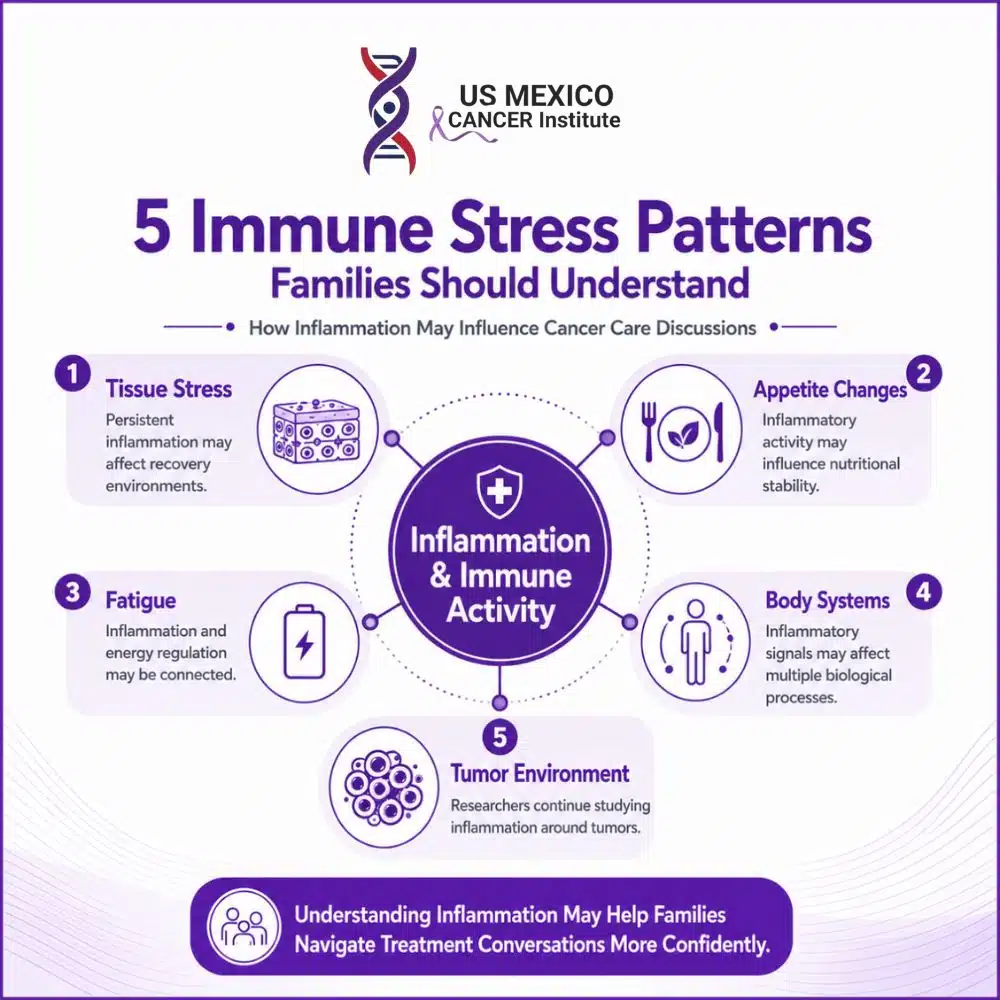
1. Persistent Inflammation May Create Ongoing Tissue Stress
Inflammation is designed to help the body respond to injury and potential threats.
However, when inflammatory activity continues for extended periods, tissues may remain under constant biological stress.
Researchers continue studying how chronic inflammation may influence:
- cellular environments
- tissue repair
- recovery processes
- disease progression
This does not mean inflammation causes every change that occurs during cancer care.
Instead, it highlights why physicians continue monitoring inflammatory activity throughout treatment.
Understanding persistent inflammation helps families recognize why inflammation remains an important topic during cancer discussions.
2. Appetite Changes May Reflect Broader Inflammatory Activity
Many patients assume appetite changes are caused only by treatment.
In reality, inflammatory activity may also influence appetite regulation.
Researchers continue exploring how inflammation may affect:
- hunger signals
- metabolism
- nutritional stability
- overall energy balance
Because nutrition plays an important role in recovery, physicians often monitor appetite changes throughout care.
For some patients, appetite fluctuations become one of the earliest noticeable signs that the body is responding to ongoing physical stress.
3. Fatigue and Inflammation Often Occur Together
One of the most commonly reported inflammation symptoms is fatigue.
Unlike ordinary tiredness, cancer-related fatigue may not improve completely with rest.
Researchers continue examining how inflammatory signaling may contribute to:
- reduced stamina
- lower energy levels
- slower recovery
- increased physical exhaustion
Because many factors can contribute to fatigue, inflammatory activity is only one part of a much larger picture.
However, understanding this connection helps explain why inflammation is frequently discussed during long-term cancer care.
4. Inflammatory Signals Can Affect Multiple Body Systems
Inflammation is not limited to a single organ or location.
The body’s inflammatory response involves communication between numerous biological systems.
Researchers studying inflammation and the immune system continue examining how inflammatory signals may influence:
- immune activity
- metabolism
- tissue repair
- recovery processes
This broad reach helps explain why inflammation can sometimes affect how patients feel physically, even when changes are not immediately visible.
5. Chronic Inflammation May Influence the Tumor Environment
Researchers continue investigating the relationship between inflammation and cancer because inflammatory activity may affect the environment surrounding tumors.
This environment includes:
- immune cells
- blood vessels
- signaling molecules
- surrounding tissues
Understanding these interactions has become an important area of cancer research.
While many questions remain under investigation, scientists continue exploring how inflammatory environments may influence disease progression and treatment response.
This ongoing research is one reason inflammation remains a major focus in modern oncology.
Why Immunotherapy Discussions Often Include Inflammation
Many patients researching how immunotherapy works focus primarily on treatment selection.
However, immune-related discussions often include inflammation as well.
The relationship between the immune system and cancer remains active throughout treatment.
Families researching how does immunotherapy work frequently discover that inflammation, immune signaling, and treatment adaptation may all become part of broader care conversations.
The American Cancer Society explains that different types of immunotherapy interact with immune processes in different ways depending on the treatment approach being used.
Understanding these concepts may help patients better navigate resources focused on cancer immunotherapy explained and the broader immunotherapy treatment process.
Why Natural Killer Cells Continue Receiving Attention
Natural killer cells remain an important area of immune research because they are part of the body’s innate immune defense system.
Unlike some immune cells that require prior exposure to threats, natural killer cells may respond more rapidly to abnormal cellular activity.
Researchers continue studying how natural killer cells interact with inflammatory environments and broader immune responses.
Understanding these immune relationships may help families better interpret conversations involving immune function throughout cancer care.
Why Patients Evaluate More Than Treatment Categories
Families researching cancer care often compare therapies first.
However, many patients also begin evaluating:
- treatment coordination
- recovery support
- physician communication
- timing considerations
- overall treatment environment
At the US Mexico Cancer Institute, our approach includes:
• NK cells are always delivered fresh with zero cryopreservatives
• Molecular hydrogen support designed to reduce immune interference
• Physician-guided treatment coordination
• Treatment protocols guided by COFEPRIS-aligned safety standards recognized by Mexico’s federal health regulatory authority
• Personalized support focused on recovery, timing, and patient experience
These factors may help families approach treatment decisions with greater clarity before care begins.
Why Understanding Inflammation Matters During Cancer Care
Inflammation is more than a laboratory finding.
It is part of the body’s ongoing response to injury, stress, immune activity, and disease.
Throughout cancer care, inflammatory activity may influence recovery patterns, appetite, fatigue, immune communication, and broader treatment discussions.
At the US Mexico Cancer Institute, we believe understanding the relationship between inflammation and immune function helps families approach treatment conversations with greater awareness and confidence.
A clearer understanding of inflammation may not answer every question about cancer care, but it can help patients better understand some of the biological processes that continue throughout treatment.
FAQs
1. What is the relationship between inflammation and cancer?
Researchers continue studying how inflammation and cancer interact, particularly how inflammatory activity may influence immune responses, tissue environments, and disease progression.
2. What is chronic inflammation?
Chronic inflammation refers to inflammatory activity that continues over an extended period rather than resolving after a short-term response.
3. What are common inflammation symptoms?
Common inflammation symptoms may include fatigue, reduced appetite, discomfort, and changes in overall well-being depending on the underlying cause.
4. How does inflammation affect the immune system?
Inflammation helps coordinate immune responses, but prolonged inflammatory activity may influence immune communication and recovery processes.
5. Why are natural killer cells important?
Natural killer cells are part of the body’s innate immune response and remain an important area of cancer and immunology research.

- NK Cell Therapy in Mexico: Patient Guide for Cancer Treatment in Tijuana - August 25, 2026
- NK Cell Therapy Mexico 6 Essential Standards Patients Should Evaluate Before Treatment - August 18, 2026
- Alternative Cancer Treatments Mexico 6 Essential Questions Patients Should Ask About Evidence and Safety - August 11, 2026