
If you are researching NK cell therapy Mexico, the biggest question is not simply, “Which clinic offers NK cells?”
It is:
What should I look for before I trust a clinic with my treatment?
That question changes the search.
Instead of comparing promises, prices, or treatment names, patients can compare six practical standards: medical evaluation, evidence, cell preparation, physician oversight, monitoring, and follow-up.
NK cells are immune cells that can recognize and destroy certain abnormal cells. They are part of the body’s innate immune system. Researchers continue to study how NK cells may be used in cancer treatment.
For families considering NK cell therapy Mexico, understanding these standards can make the decision clearer and help you ask better questions before traveling.
Why the Clinic Matters as Much as the Therapy
Many patients begin by searching for the best cancer treatment in Mexico.
But a treatment name tells you very little by itself.
Two clinics may offer NK cell therapy while using different cell sources, preparation methods, treatment plans, medical screening, and follow-up systems.
That is why patients should look beyond the treatment label.
A strong program should explain:
- Who reviews your medical records
- Why you may be considered for treatment
- Where the NK cells come from
- How the cells are prepared
- How your treatment is monitored
- What happens after you return home
This approach is especially useful when comparing NK cell treatment Mexico programs.
6 Standards to Evaluate Before NK Cell Therapy Mexico
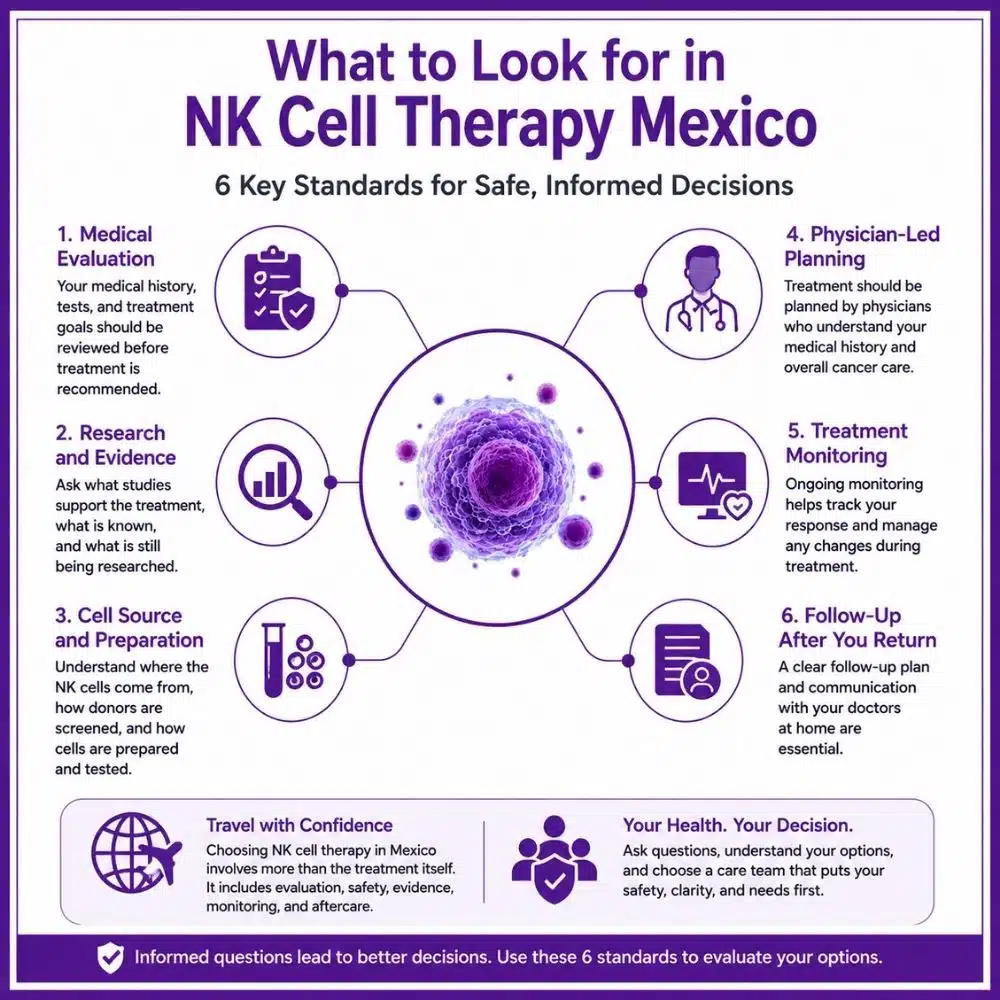
1. A Medical Review Should Come Before Treatment
The first standard is simple:
The clinic should evaluate the patient before recommending treatment.
Not every patient is the same. Cancer type, stage, previous treatment, current health, laboratory results, and treatment goals can all affect medical decisions.
Ask whether the clinic reviews:
- Pathology reports
- Imaging
- Laboratory results
- Previous cancer treatments
- Current medicines
- Medical history
- Overall health
You should also know who reviews your records and whether more information is needed.
This matters because NK cell therapy Mexico is not one universal treatment. Research has examined different NK-cell sources, doses, preparation methods, and treatment combinations. A recent review of NK cell therapy in solid tumors found promising results across 31 trials involving 600 patients, while also noting that more research is needed.
A medical review helps put the treatment into the right context.
2. The Clinic Should Be Clear About the Evidence
This is where patients should slow down.
A treatment can have promising research without being proven for every cancer or every patient.
When considering NK cell therapy Mexico, ask:
- Has this treatment been studied in people?
- Has it been studied for my cancer?
- How many patients were included?
- What did researchers measure?
- Was the study controlled?
- What is still unknown?
The current research is encouraging, but NK cell therapy remains an evolving field. Reviews continue to identify challenges involving NK-cell persistence, tumor environments, and how to improve the activity of these cells against cancer.
That distinction matters.
Promising does not mean guaranteed.
A trustworthy clinic should be willing to explain both what the research suggests and where the evidence is still developing.
For patients comparing natural killer cell therapy Mexico, this can be one of the most useful questions to ask.
3. You Should Know Where the NK Cells Come From
The cells used in NK therapy can come from different sources. Knowing where they come from and how they are prepared can help you compare treatment programs.
Ask the clinic:
- Are the cells donor-derived or patient-derived?
- How are donors screened?
- Where are the cells prepared?
- How are they expanded?
- What quality checks are performed?
- How are the cells handled before infusion?
Different NK-cell therapies use different cell sources and preparation methods. Research has studied donor-derived cells, patient-derived cells, cell lines, and engineered NK cells. These approaches are not the same, so patients should ask about the specific cells used in their treatment.
At the US Mexico Cancer Institute, the current approach uses donor-derived NK cells from screened donors, with fresh cells prepared for treatment rather than frozen cells.
If you are comparing NK cell therapy Mexico providers, ask each clinic to explain its cell source and preparation process in clear, simple terms.
4. Physician-Led Planning Should Guide Your Treatment
NK cell therapy should be considered as part of your overall cancer care, not as a stand-alone procedure.
Your medical team should review your previous treatments, current health, and treatment goals before recommending an approach.
Ask:
- Why is NK therapy being considered for me?
- How could it fit into my current care?
- Could my previous treatments affect the plan?
- What medical information does the physician need?
- Who will make the final treatment decision?
This matters when researching immunotherapy treatment Mexico because immunotherapy includes many different approaches. NK cell therapy is different from checkpoint inhibitors, CAR-T therapy, monoclonal antibodies, and other immune-based treatments.
Patients should understand what type of treatment is being offered and why it may be considered for their individual situation.
For families comparing cancer care in Mexico, physician involvement should be an important part of the decision. A clear treatment plan should explain the purpose of the therapy, how it fits the patient’s medical history, and what happens next.
5. Treatment Monitoring Should Be Part of the Plan
A good treatment plan does not end when the infusion begins.
Before choosing NK cell therapy Mexico, ask how the clinic will monitor your care.
Ask:
- Who oversees the treatment?
- What is checked before treatment?
- How is your health monitored?
- What happens if your condition changes?
- How are treatment records maintained?
- Who answers questions during your visit?
Monitoring matters because the response to cellular therapy can differ between patients.
It is also useful to understand the difference between regulatory oversight and clinical evidence.
COFEPRIS, Mexico’s federal health authority, has responsibilities that include the regulation, control, and surveillance of health services and health-related products. Its official site also provides information about health-service procedures and regulatory requirements.
However, regulatory oversight does not by itself prove that a particular treatment will work for every cancer.
Patients should evaluate both.
6. Follow-Up Care Should Be Planned Before You Travel
This is the standard many international patients forget.
If you are planning cancer treatment abroad, ask what happens after you leave Mexico.
Before traveling, ask:
- Will I receive my treatment records?
- What follow-up information will I receive?
- Can my doctor at home communicate with the clinic?
- Who reviews follow-up results?
- When should I have my next medical review?
- Who can I contact after returning home?
A clear plan can make communication easier once you are back with your local healthcare team.
This is also important when comparing cancer clinics in Mexico. Do not evaluate only what happens during treatment. Evaluate what happens afterward.
What Families Should Know Before Choosing NK Cell Therapy Mexico
Our ebook, Natural Killer Cells – A Guide for Families and Loved Ones of Stage 4 Cancer Patients, was created to help families understand NK cells, the treatment process, patient questions, and the broader role of immune-based care.
One important message from the guide is that families need information before making major treatment decisions.
The ebook explains that NK cells are part of the innate immune system and discusses donor-derived NK cells, treatment preparation, patient evaluation, and questions families may have before treatment.
For someone considering NK cell therapy Mexico, the ebook can serve as an educational starting point before speaking with a medical team.
Why Patients Compare More Than the Treatment Name
When patients search for NK cell therapy Mexico, they are often comparing more than a therapy.
They may also be comparing:
- Physician experience
- Patient screening
- Cell preparation
- Laboratory practices
- Treatment monitoring
- Communication
- Travel support
- Follow-up care
That is why the search for the best cancer treatment in Mexico should include the full patient experience.
At the US Mexico Cancer Institute, the focus is on physician-led evaluation, individualized treatment planning, fresh donor-derived NK cells, and coordinated care for patients traveling to Tijuana.
The goal is not to promise a specific outcome.
The goal is to help patients understand the treatment being considered and make a more informed decision based on their medical situation.
A Simple Checklist for Comparing Clinics
Before choosing an NK cell treatment Mexico program, use this checklist:
| Standard | What to Ask |
| Medical evaluation | How do you determine if I am a candidate? |
| Evidence | What research supports the treatment? |
| Cell source | Where do the NK cells come from? |
| Cell preparation | How are the cells prepared and tested? |
| Physician oversight | Who guides my treatment plan? |
| Monitoring | How will my care be followed? |
| Follow-up | What happens after I return home? |
These questions can help you compare cancer care in Mexico based on the actual care process rather than promotional claims.
What Patients Should Know Before Choosing NK Cell Therapy
NK cell therapy Mexico is an area of growing cancer research, but it is not a one-size-fits-all treatment.
Research has produced encouraging findings, while important questions remain about the best cell sources, treatment methods, patient selection, and long-term clinical use.
That is why the smartest starting point is not:
“Does this clinic offer NK cells?”
It is:
“How does this clinic prove that it has a thoughtful process for evaluating, preparing, delivering, and following up on the treatment?”
If you are considering NK cell therapy Mexico, use these six standards before making your decision.
Frequently Asked Questions
Is NK cell therapy proven to cure cancer?
No. NK cell therapy is an active area of cancer research. Studies have reported promising findings, but researchers are still studying how different NK-cell approaches should be used and which patients may benefit.
What is the difference between NK cell therapy and other immunotherapy?
NK cell therapy uses Natural Killer cells, which are part of the innate immune system. Other immunotherapies may work through different mechanisms, such as releasing immune checkpoints, using antibodies, or modifying immune cells.
How do I compare NK cell treatment Mexico programs?
Compare the medical evaluation, evidence, cell source, cell preparation, physician oversight, monitoring, and follow-up plan. These factors can tell you more about a program than its treatment name alone.
Is natural killer cell therapy Mexico the same at every clinic?
No. NK-cell programs may differ in cell source, preparation, expansion, dose, treatment schedule, and monitoring. Ask the clinic to explain its specific approach.
What should I ask before traveling for NK cell therapy?
Ask whether you are a candidate, what evidence supports the treatment, where the cells come from, how they are prepared, how treatment is monitored, and what follow-up care is available after you return home.

- NK Cell Therapy in Mexico: Patient Guide for Cancer Treatment in Tijuana - August 25, 2026
- NK Cell Therapy Mexico 6 Essential Standards Patients Should Evaluate Before Treatment - August 18, 2026
- Alternative Cancer Treatments Mexico 6 Essential Questions Patients Should Ask About Evidence and Safety - August 11, 2026