
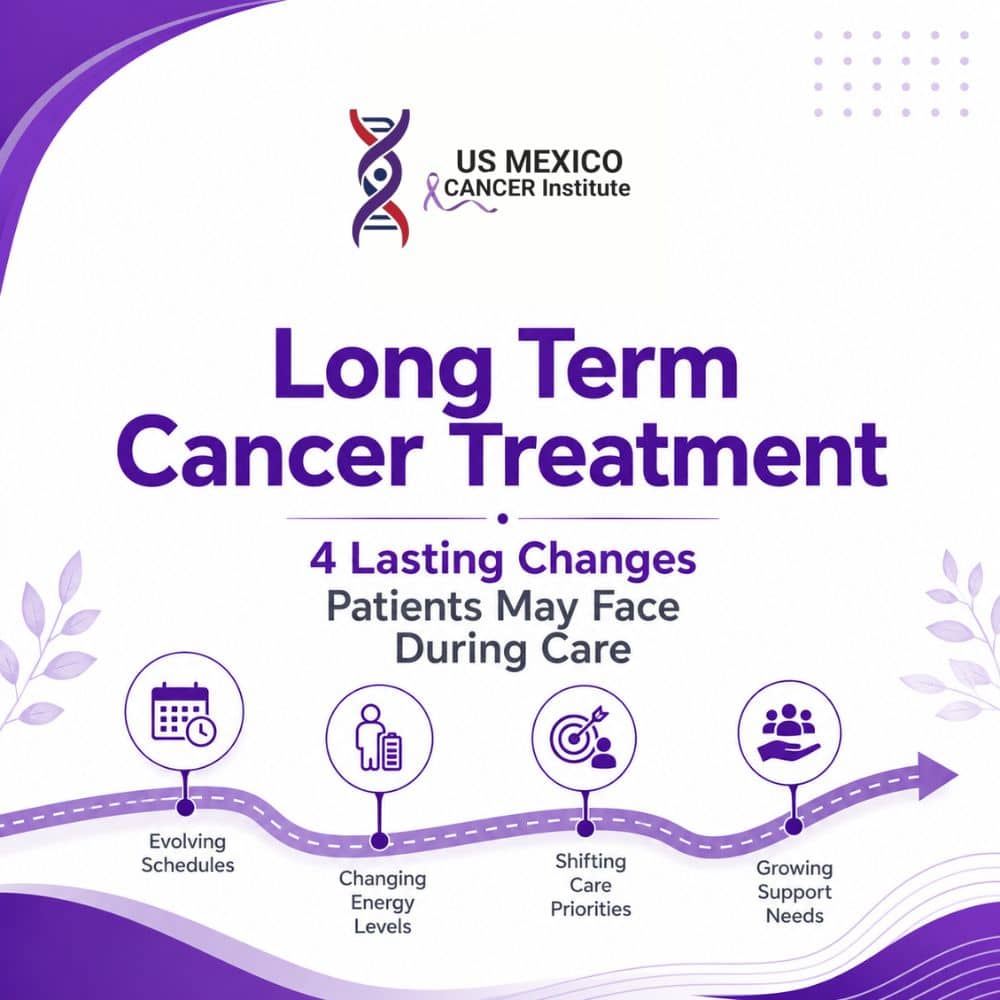
Why Long-Term Cancer Care Often Feels Different Than Expected
When treatment begins, most patients focus on the next appointment.
A scan. An infusion. A physician visit.
Few people think about what cancer care may look like six months from now.
Yet for many patients receiving long term cancer treatment, the experience gradually becomes less about individual appointments and more about adapting to an ongoing healthcare journey.
At the US Mexico Cancer Institute, families often tell us that the most difficult part of treatment was not the first week. It was learning how to adjust when treatment became part of everyday life.
Understanding these changes early may help patients and caregivers feel more prepared as treatment continues.
Why Long-Term Treatment Is Different From Short-Term Care
Cancer treatment is often described as a series of therapies.
However, patients living through ongoing cancer treatment frequently discover that care affects much more than medical schedules.
Over time, treatment may influence:
- daily routines
- work schedules
- family responsibilities
- energy management
- personal priorities
This is one reason advanced cancer care often requires ongoing adjustments rather than a fixed plan.
The National Cancer Institute explains that treatment plans may continue evolving based on patient needs, treatment goals, and clinical findings.
Understanding this reality may help families approach care with more realistic expectations.
What Families Learn From Long-Term Care Experiences
In our ebook, “NATURAL KILLER CELLS – A GUIDE FOR FAMILIES AND LOVED ONES OF STAGE 4 CANCER PATIENTS”, we discuss how treatment experiences often change over time.
Families are frequently surprised to learn that the challenges they expected at the beginning of treatment are not always the same challenges they encounter months later.
Many patients become comfortable with treatment itself.
What often changes is how treatment affects everyday life.
Recognizing this distinction can help families prepare for the broader realities of long-term care.
Why Preparing for Change Can Reduce Stress
One of the most valuable lessons patients learn is that long-term care rarely remains static.
Needs change.
Priorities change.
Recovery patterns change.
Planning for those changes does not mean expecting problems.
It means understanding that flexibility is often part of successful cancer care.
Patients who anticipate adjustments often feel more confident when new decisions arise throughout treatment.
4 Lasting Changes Patients May Face During Care
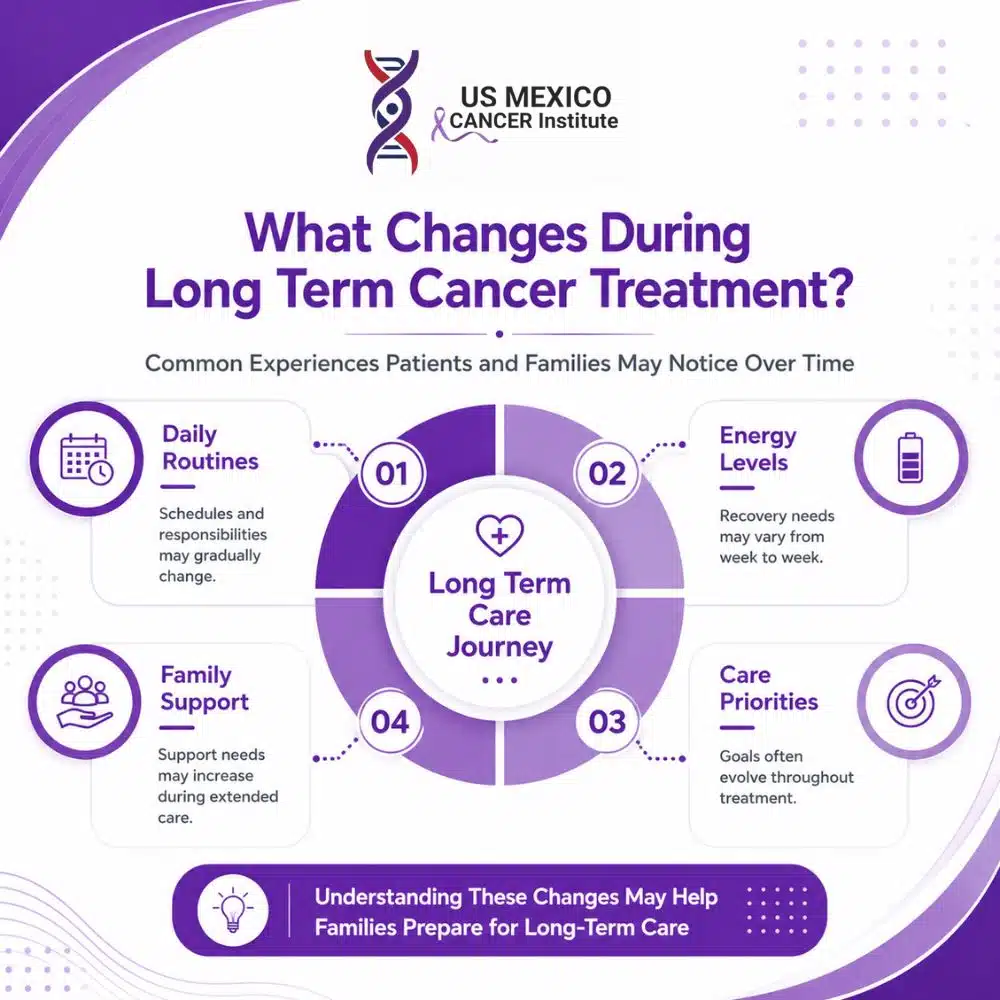
1. Daily Routines Often Change More Than Expected
Many patients begin treatment expecting temporary disruptions.
However, long-term treatment may gradually reshape everyday schedules.
Patients may need to adjust:
- work commitments
- travel plans
- social activities
- household responsibilities
These changes are often subtle at first but may become more noticeable as treatment continues.
Creating realistic expectations can help reduce frustration during extended care.
2. Energy Levels May Fluctuate Throughout Treatment
Energy is rarely consistent during long-term treatment.
Some weeks may feel manageable.
Others may require additional recovery time.
Patients often discover that pacing daily activities becomes an important part of maintaining quality of life.
Family members may also need to understand that energy levels can vary significantly even when treatment plans remain unchanged.
Recognizing these fluctuations early may help patients better manage expectations throughout care.
3. Care Priorities Can Shift Over Time
The priorities patients have at diagnosis are not always the same priorities they have several months later.
Some patients become more focused on:
- maintaining independence
- preserving routines
- managing recovery
- improving daily comfort
This is one reason treatment discussions often become more personalized as care continues.
Effective care planning allows physicians and patients to reassess priorities as circumstances evolve.
4. Family Support Needs May Grow During Extended Care
Long-term treatment affects more than the patient.
Caregivers and family members often experience changes as well.
Extended treatment may require support with:
- transportation
- scheduling
- daily activities
- emotional encouragement
- care coordination
Families who prepare for these responsibilities early often feel more confident navigating extended treatment periods.
This is one of the most overlooked realities of long-term cancer care.
Why Immunotherapy Discussions Often Continue During Long-Term Care
Many patients researching how immunotherapy works assume immune-related discussions end once treatment begins.
In reality, immune activity remains an important part of ongoing care conversations.
The relationship between the immune system and cancer continues throughout treatment.
Families researching how does immunotherapy work often discover that physicians may continue evaluating immune-related factors as treatment progresses.
The American Cancer Society provides educational resources explaining how different types of immunotherapy are used across cancer care.
Understanding these concepts may help patients better interpret discussions involving the immunotherapy treatment process and broader treatment planning.
Why Natural Killer Cells Continue Receiving Attention
Researchers continue studying natural killer cells because they remain an important part of the body’s innate immune response.
Unlike some immune cells that require prior exposure, natural killer cells may respond more rapidly to abnormal cellular activity.
Ongoing research continues exploring how natural killer cells interact with broader immune environments during cancer care.
Understanding these concepts may help families better navigate conversations about immune-based treatment approaches.
Why Patients Evaluate More Than Treatment Categories
Families researching cancer care often compare therapies first.
However, many patients also begin evaluating:
- treatment coordination
- recovery support
- physician communication
- timing considerations
- overall treatment environment
At the US Mexico Cancer Institute, our approach includes:
• NK cells are always delivered fresh with zero cryopreservatives
• Molecular hydrogen support designed to reduce immune interference
• Physician-guided treatment coordination
• Treatment protocols guided by COFEPRIS-aligned safety standards recognized by Mexico’s federal health regulatory authority
• Personalized support focused on recovery, timing, and patient experience
These factors may help families approach treatment decisions with greater clarity before care begins.
Why Long-Term Care Requires a Different Perspective
Long-term cancer treatment is not defined only by therapy.
It is also shaped by routines, recovery patterns, family support, and changing priorities.
Patients who understand these realities often feel better prepared for the months ahead.
At the US Mexico Cancer Institute, we believe understanding the long-term experience of cancer care helps families make more informed decisions as treatment continues.
Preparing for long-term care may not eliminate uncertainty, but it can help patients move forward with greater confidence and awareness.
FAQs
1. What is long term cancer treatment?
Long term cancer treatment refers to cancer care that continues over an extended period because of treatment goals, disease characteristics, or ongoing monitoring needs.
2. Why does cancer treatment duration vary?
Cancer treatment duration may vary based on treatment response, recovery patterns, physician evaluation, and changing care goals.
3. What is ongoing cancer treatment?
Ongoing cancer treatment includes continued therapy, monitoring, follow-up evaluations, and supportive care provided throughout a patient’s cancer journey.
4. How does immunotherapy fit into long-term care?
Immunotherapy may be incorporated into broader care plans depending on diagnosis, treatment history, and physician recommendations.
5. Why are natural killer cells important?
Natural killer cells remain an active area of research because they play a role in the body’s innate immune response and immune surveillance.

- NK Cell Therapy in Mexico: Patient Guide for Cancer Treatment in Tijuana - August 25, 2026
- NK Cell Therapy Mexico 6 Essential Standards Patients Should Evaluate Before Treatment - August 18, 2026
- Alternative Cancer Treatments Mexico 6 Essential Questions Patients Should Ask About Evidence and Safety - August 11, 2026