
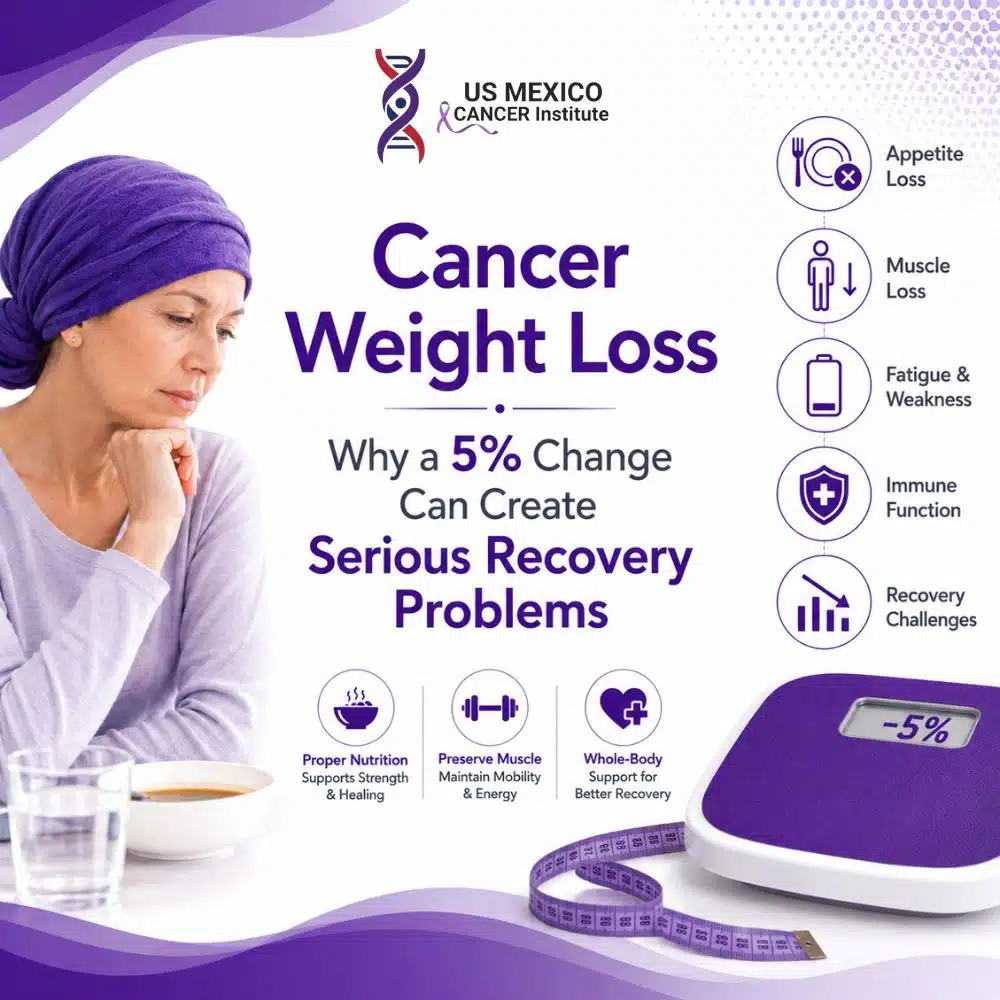
Why Small Changes on the Scale Often Matter More Than Patients Realize
Many patients expect some weight fluctuation after a cancer diagnosis.
What often surprises families is how quickly a relatively small amount of weight loss can affect strength, recovery, and overall well-being.
A person who loses only 5% of their body weight may not appear dramatically different. However, that change can sometimes signal important shifts occurring inside the body.
This is why cancer weight loss remains an important topic throughout cancer care.
Researchers and clinicians continue studying how weight changes influence recovery, treatment tolerance, physical function, and quality of life.
Understanding these patterns may help patients recognize potential concerns earlier and have more informed conversations with their healthcare team.
Why Weight Loss During Cancer Is Different From Ordinary Weight Loss
Many people spend years trying to lose weight.
Cancer-related weight loss is different.
Unlike intentional dieting, weight loss during cancer often occurs when the body is under significant physical stress.
Patients may experience changes involving:
- appetite
- metabolism
- digestion
- inflammation
- energy production
As a result, the body may lose muscle along with fat.
This distinction matters because muscle plays an important role in movement, strength, recovery, and resilience during treatment.
The National Cancer Institute explains that nutrition and maintaining body weight can become important parts of supportive cancer care.
What Families Learn From Real Recovery Patterns
In our audiobook, Natural Killer Cells: A Guide for Families and Loved Ones of Stage 4 Cancer Patients, we discuss how many families begin noticing changes in energy, appetite, and physical strength long before major clinical changes become visible. Some patients report appetite improvements and gradual gains in strength as immune and recovery patterns are monitored throughout care.
Patients often assume weight loss is simply part of the cancer journey.
However, physicians frequently view ongoing weight loss as a valuable clinical signal.
Changes involving nutrition, appetite, inflammation, and overall physical condition may all contribute to body weight changes over time.
Recognizing these patterns early may allow patients to address concerns before they become more difficult to manage.
Why Early Attention to Weight Loss Can Matter
Many patients do not become concerned until weight loss becomes obvious.
By that point, important muscle reserves may already have been lost.
Early intervention may help support:
- strength
- physical function
- nutritional status
- treatment readiness
- overall quality of life
Understanding the causes of weight loss does not eliminate the challenge, but it may help patients and families respond more effectively.
5 Reasons a 5% Weight Change Can Create Serious Recovery Problems
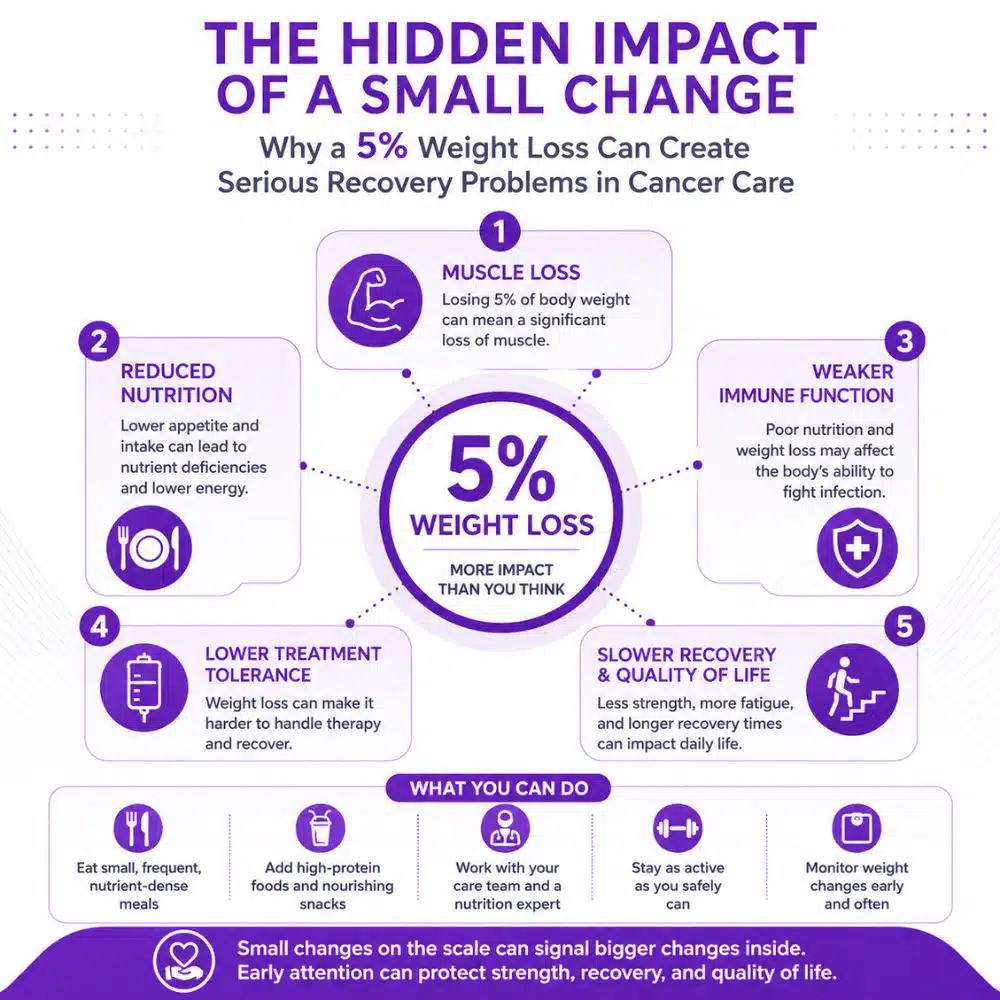
1. Muscle Loss May Occur Faster Than Expected
The number on the scale does not tell the entire story.
Many patients lose muscle tissue along with body fat.
Muscle helps support:
- mobility
- balance
- physical endurance
- recovery capacity
When muscle reserves decline, patients may find everyday activities becoming more difficult.
This is one reason clinicians monitor weight trends carefully during cancer care.
2. Appetite Changes May Reduce Nutritional Intake
One of the most common contributors to appetite loss and cancer is a reduced desire to eat.
Patients may notice:
- early fullness
- altered taste perception
- reduced interest in food
- nausea
- difficulty maintaining regular meals
When calorie and protein intake decline, weight loss may accelerate.
Because nutrition supports healing and recovery, maintaining adequate intake often becomes an important goal throughout treatment.
3. Weight Loss During Cancer Treatment Can Affect Recovery
Many patients experience weight loss during cancer treatment even when they are actively trying to maintain their weight.
Several factors may contribute, including:
- reduced appetite
- inflammation
- digestive changes
- increased metabolic demands
As nutritional reserves decline, some patients report increased fatigue and reduced physical stamina.
For this reason, ongoing monitoring remains an important part of supportive cancer care.
4. Advanced Cancer Weight Loss May Involve More Than Reduced Eating
In some situations, advanced cancer weight loss occurs even when patients continue eating regularly.
Researchers continue studying cancer-related cachexia, a complex condition involving:
- muscle wasting
- altered metabolism
- inflammation
- reduced physical function
Because multiple biological processes are involved, increasing food intake alone may not fully address the problem.
Early recognition often allows patients to explore additional supportive strategies with their healthcare team.
5. Nutritional Stability Supports Treatment Readiness
Maintaining weight is not simply about appearance.
Body weight often reflects broader aspects of physical health.
Effective cancer nutrition support may help patients preserve:
- muscle mass
- energy levels
- recovery capacity
- overall resilience
Many cancer centers incorporate nutrition specialists into patient care because nutritional health can influence the overall treatment experience.
The American Cancer Society provides educational information regarding cancer-related weight loss and cachexia for patients seeking additional guidance.
Why Discussions About Immunotherapy Often Include Nutrition
Patients researching treatment options frequently focus on therapies themselves.
However, overall health and nutritional status may also influence treatment planning discussions.
Families researching how immunotherapy works often discover that immune function depends on many interconnected biological systems.
The relationship between the immune system and cancer continues to be an important area of medical research.
When patients ask how does immunotherapy work, physicians may explain that different approaches are designed to help the immune system recognize and respond to abnormal cells more effectively.
Today, several types of immunotherapy are used in oncology, including checkpoint inhibitors, monoclonal antibodies, cellular therapies, and other immune-based approaches.
Understanding cancer immunotherapy explained resources may help patients better navigate conversations about the broader immunotherapy treatment process.
Why Natural Killer Cells Continue Receiving Attention
Among the many immune cells being studied, natural killer cells remain an important focus of cancer research.
Natural killer cells are part of the body’s innate immune response and help identify stressed or abnormal cells through a process known as immune surveillance. Researchers continue studying how these cells contribute to immune defense and how they may interact with broader cancer treatment strategies.
As knowledge about immune function expands, natural killer cells continue receiving attention within the growing field of cancer immunology.
Learning More About Recovery and Immune Health
Patients and families seeking educational resources often look beyond treatment discussions alone.
Two resources frequently explored by patients include:
- Natural Killer Cells: A Guide for Families and Loved Ones of Stage 4 Cancer Patients
- Coherent Awareness: As God Sees — Where Faith Meets Physics
These audiobooks discuss immune health, recovery perspectives, patient experiences, and broader conversations about resilience during serious illness.
Why Patients Evaluate More Than Weight Alone
Families researching cancer care often focus on treatment options first.
However, many patients also begin evaluating:
- nutritional support
- recovery planning
- physician communication
- treatment coordination
- overall care experience
At the US Mexico Cancer Institute, our approach includes:
• NK cells are always delivered fresh with zero cryopreservatives
• Molecular hydrogen support designed to reduce immune interference
• Physician-guided treatment coordination
• Treatment protocols guided by standards aligned with Mexico’s federal health regulatory authority, COFEPRIS
• Personalized support focused on recovery, nutrition, timing, and patient experience
These factors may help patients evaluate care decisions more comprehensively.
Why Cancer Weight Loss Deserves Early Attention
Cancer weight loss is more than a change in appearance.
Even a 5% decline in body weight may reflect important changes involving nutrition, muscle mass, inflammation, metabolism, and overall physical resilience.
Understanding the causes of weight loss during cancer treatment, recognizing the signs of advanced cancer weight loss, and prioritizing cancer nutrition support may help patients maintain strength throughout care.
At the US Mexico Cancer Institute, we believe education empowers patients and families to make more informed decisions.
A small change on the scale may not always indicate a serious problem, but it is often worth understanding because recovery depends on much more than weight alone.
FAQs
Is cancer weight loss always a sign that cancer is progressing?
Not necessarily. Cancer weight loss may result from reduced appetite, metabolic changes, inflammation, treatment-related challenges, or disease progression. Ongoing monitoring helps physicians better understand the cause.
How much weight loss is considered concerning during cancer treatment?
Many healthcare professionals consider an unintentional loss of 5% or more of body weight within six to twelve months clinically significant.
Why does appetite loss happen during cancer?
Appetite loss and cancer are often linked through inflammation, altered metabolism, digestive changes, nausea, taste changes, and reduced hunger signals.
Can cancer nutrition support help prevent weight loss?
Cancer nutrition support may help patients maintain muscle mass, nutritional intake, energy levels, and overall physical resilience throughout treatment.
How does immunotherapy work?
Immunotherapy helps the immune system identify and respond to abnormal cells more effectively. Different therapies work through different immune mechanisms depending on the treatment approach.
What are natural killer cells?
Natural killer cells are immune cells involved in early immune defense and surveillance. They help identify stressed or abnormal cells and remain an important area of cancer research.

- NK Cell Therapy in Mexico: Patient Guide for Cancer Treatment in Tijuana - August 25, 2026
- NK Cell Therapy Mexico 6 Essential Standards Patients Should Evaluate Before Treatment - August 18, 2026
- Alternative Cancer Treatments Mexico 6 Essential Questions Patients Should Ask About Evidence and Safety - August 11, 2026