
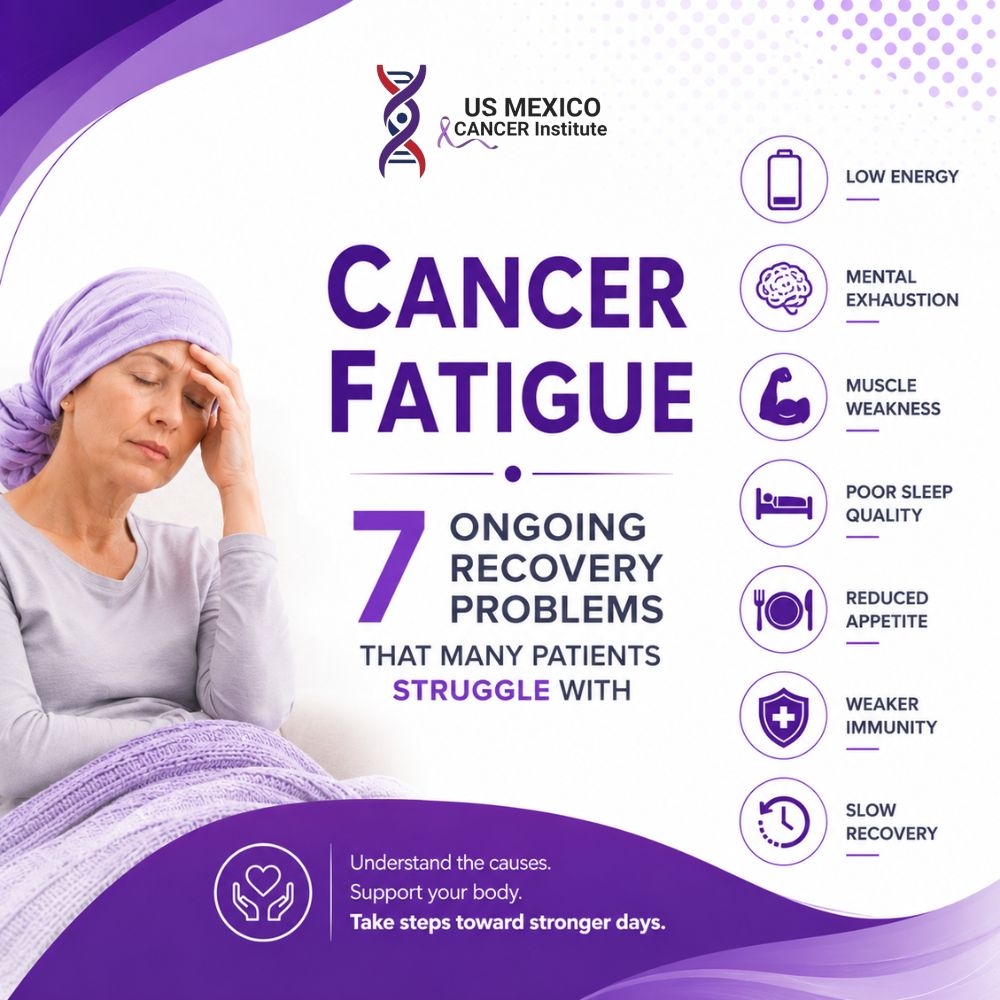
Why Cancer Fatigue Feels Different From Everyday Tiredness
Most people expect to feel tired after a busy day.
Cancer fatigue is different.
Many patients describe it as an overwhelming lack of energy that rest alone cannot fully relieve. Even after a full night’s sleep, simple activities like walking across a room, preparing a meal, or holding a conversation may feel exhausting.
Unlike ordinary tiredness, cancer fatigue often develops from multiple physical and biological factors working together.
Understanding why this happens may help patients and families recognize that fatigue is more than simply “feeling worn out.” It is one of the most common challenges experienced throughout cancer care.
Why Fatigue Can Continue Throughout Cancer Care
Energy is produced through a complex interaction between nutrition, muscles, sleep, hormones, inflammation, and the immune system.
Cancer and its treatment may affect several of these systems simultaneously.
As a result, patients may experience:
- reduced physical stamina
- mental exhaustion
- slower recovery
- decreased motivation
- difficulty completing everyday activities
The National Cancer Institute explains that fatigue is one of the most frequently reported symptoms experienced by people receiving cancer treatment.
Understanding these contributing factors may help patients better prepare for changes that occur throughout treatment.
What Families Learn From Recovery Patterns
Many families expect fatigue to improve immediately after treatment sessions.
Instead, recovery often occurs gradually.
Energy levels may fluctuate from day to day depending on nutrition, sleep quality, inflammation, physical activity, emotional stress, and overall health.
These changing patterns explain why physicians continue monitoring fatigue throughout treatment rather than viewing it as a temporary inconvenience.
Recognizing these patterns may help patients discuss fatigue earlier instead of assuming it is simply something they must tolerate.
Why Understanding Fatigue May Improve Recovery
Cancer fatigue cannot always be eliminated.
However, understanding what contributes to fatigue may help patients make practical decisions about nutrition, activity, rest, and supportive care.
Early conversations with healthcare providers may also identify contributing factors that can be addressed before fatigue becomes more limiting.
The goal is not simply to increase energy.
The goal is to improve overall quality of life throughout treatment.
7 Ongoing Recovery Problems That Many Patients Struggle With
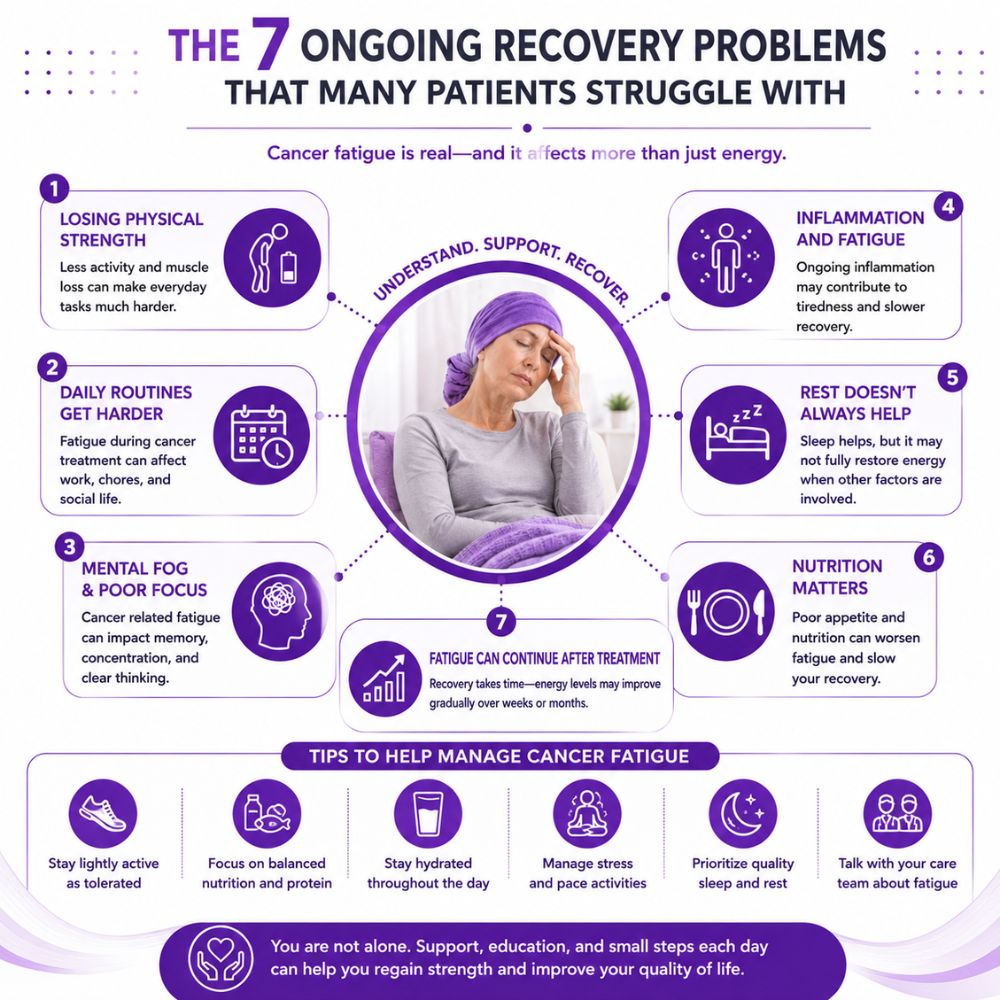
1. Physical Strength May Gradually Decline
Fatigue often develops alongside reduced muscle strength.
Patients who become less active may gradually lose muscle mass, making daily activities require more effort.
Even climbing stairs, carrying groceries, or standing for extended periods may become increasingly difficult.
Maintaining safe levels of physical activity, when medically appropriate, may help support strength during recovery.
2. Fatigue During Cancer Treatment May Affect Daily Routines
Many patients experience fatigue during cancer treatment that extends well beyond treatment appointments.
Simple routines may require additional planning.
Patients sometimes need more time for:
- dressing
- preparing meals
- attending appointments
- household responsibilities
- social activities
Understanding these changes may help families adjust expectations while supporting recovery.
3. Cancer Related Fatigue May Affect Mental Focus
Fatigue is not always physical.
Many patients experiencing cancer related fatigue also describe difficulty with:
- concentration
- memory
- decision-making
- maintaining attention
Mental fatigue may occur even when physical activity has been limited.
This combination can make work, reading, or everyday conversations feel more challenging than expected.
4. Inflammation and Fatigue May Occur Together
Researchers continue studying the relationship between inflammation and fatigue during cancer care.
Inflammation helps coordinate normal immune responses, but prolonged inflammatory activity may also contribute to reduced energy levels and slower recovery.
Because inflammation affects multiple biological systems, fatigue may sometimes reflect broader physiological changes occurring throughout treatment.
Ongoing research continues exploring this relationship.
5. Sleep Alone May Not Fully Restore Energy
Many patients assume that sleeping longer will completely resolve fatigue.
Unfortunately, cancer fatigue often behaves differently.
Even after adequate sleep, patients may continue experiencing reduced stamina because fatigue may also involve metabolism, inflammation, nutrition, immune responses, and muscle loss.
This explains why physicians often evaluate fatigue from several different perspectives rather than focusing only on sleep quality.
6. Nutrition Plays an Important Role in Recovery
Energy production depends on adequate nutrition.
Reduced appetite, digestive changes, and unintended weight loss may all contribute to worsening fatigue.
Maintaining appropriate nutritional intake may help support:
- muscle preservation
- physical function
- recovery
- overall well-being
The American Cancer Society recommends discussing nutrition concerns early, particularly when fatigue begins affecting eating habits or daily activities.
7. Fatigue May Continue Even After Active Treatment Ends
Many patients expect fatigue to disappear immediately after treatment is completed.
Recovery often takes longer.
Some individuals notice gradual improvement over weeks or months, while others require ongoing rehabilitation, nutritional support, and activity adjustments.
Understanding this timeline may help patients approach recovery with more realistic expectations.
Why Immunotherapy Discussions Often Include Energy and Recovery
Patients researching how immunotherapy works often focus on the treatment itself.
However, physicians also evaluate the patient’s overall physical condition before, during, and after therapy.
When families ask how does immunotherapy work, discussions frequently include nutrition, inflammation, recovery, immune function, and overall treatment readiness.
Several types of immunotherapy are used today depending on the patient’s diagnosis and treatment goals.
Understanding cancer immunotherapy explained resources may help patients better understand the broader immunotherapy treatment process rather than focusing on the treatment alone.
The relationship between the immune system and cancer continues to be one of the most active areas of oncology research.
Why Natural Killer Cells Continue Receiving Attention
Among the many immune cells studied in cancer research, natural killer cells remain an important area of investigation.
Natural killer cells are part of the body’s innate immune system and help identify abnormal cells through continuous immune surveillance.
Researchers continue exploring how these cells interact with cancer biology and how they may contribute to future immune-based treatment strategies.
As knowledge of immune science grows, natural killer cells continue receiving attention within the expanding field of cancer immunology.
What Families Learn Beyond Fatigue
Many families discover that understanding cancer fatigue requires looking beyond energy levels alone.
In our audiobooks, Natural Killer Cells: A Guide for Families and Loved Ones of Stage 4 Cancer Patients and Coherent Awareness: As God Sees — Where Faith Meets Physics, we discuss how nutrition, immune health, inflammation, recovery, and resilience often work together throughout the cancer journey. These educational resources help patients and caregivers better understand the biological changes that may influence strength, energy, and overall well-being during treatment.
Learning more about these interconnected recovery patterns may help families approach cancer care with greater understanding and more informed questions for their healthcare team.
Why Patients Evaluate More Than Treatment Options
Families researching cancer care often compare treatments first.
However, many patients also evaluate:
- recovery support
- nutritional guidance
- physician communication
- treatment coordination
- overall patient experience
At the US Mexico Cancer Institute, our approach includes:
- NK cells are always delivered fresh with zero cryopreservatives
- Molecular hydrogen support designed to reduce immune interference
- Physician-guided treatment coordination
- Treatment protocols guided by standards aligned with Mexico’s federal health regulatory authority, COFEPRIS
- Personalized care focused on recovery, timing, nutrition, and patient support
These factors help patients evaluate the complete treatment experience rather than focusing on therapy alone.
Why Cancer Fatigue Should Never Be Ignored
Cancer fatigue is one of the most common and challenging experiences reported during cancer care.
Although it may seem like a normal part of treatment, persistent fatigue can influence physical strength, nutrition, mental focus, recovery, and overall quality of life.
Understanding the many factors that contribute to fatigue—including inflammation, nutrition, muscle loss, and immune activity—may help patients seek appropriate support earlier.
At the US Mexico Cancer Institute, we believe education helps families better understand the recovery process so they can approach treatment with greater confidence and realistic expectations.
Frequently Asked Questions
1. What is cancer fatigue?
Cancer fatigue is a persistent feeling of physical, emotional, or mental exhaustion related to cancer or its treatment that is often not fully relieved by rest.
2. Why does fatigue during cancer treatment happen?
Fatigue during cancer treatment may result from inflammation, nutritional changes, altered metabolism, reduced muscle mass, emotional stress, and the body’s response to treatment.
3. Is cancer related fatigue different from normal tiredness?
Yes. Cancer related fatigue is typically more severe, lasts longer, and often affects daily functioning even after adequate sleep.
4. Can inflammation cause fatigue?
Researchers continue studying the relationship between inflammation and fatigue because inflammatory activity may influence energy production and recovery.
5. How does immunotherapy work?
Immunotherapy helps the immune system recognize and respond to abnormal cells more effectively. Different therapies work through different immune mechanisms depending on the treatment approach.
6. What are natural killer cells?
Natural killer cells are immune cells that help identify stressed or abnormal cells and remain an important area of ongoing cancer research.

- NK Cell Therapy in Mexico: Patient Guide for Cancer Treatment in Tijuana - August 25, 2026
- NK Cell Therapy Mexico 6 Essential Standards Patients Should Evaluate Before Treatment - August 18, 2026
- Alternative Cancer Treatments Mexico 6 Essential Questions Patients Should Ask About Evidence and Safety - August 11, 2026