
Why Families Begin Asking About Tumor Immune Response
Many families researching cancer eventually encounter a difficult question:
Why does the immune system sometimes struggle to recognize abnormal cellular behavior during cancer growth?
This question often appears after patients begin learning how immunotherapy works or reviewing broader cancer treatment discussions online.
At the US Mexico Cancer Institute, we frequently see families trying to understand how the immune system and cancer continue interacting throughout disease progression. Patients may already understand the diagnosis itself. However, uncertainty often remains around:
- immune coordination
- inflammation
- treatment timing
- recovery patterns
- how tumors affect surrounding tissue
These concerns matter because cancer does not grow in isolation.
Tumors continue interacting with immune cells, inflammatory signals, and surrounding tissue throughout disease development.
Understanding these changes may help families approach treatment discussions with greater clarity before care begins.
Why Immune Responses Change During Cancer Growth
Many online discussions simplify cancer immunotherapy explained into a single concept:
the immune system attacks abnormal cells.
In reality, immune behavior during cancer growth is far more complex.
The body constantly responds to:
- inflammation
- tissue stress
- cellular signaling
- metabolic demands
- immune communication changes
This explains why understanding tumor immune response requires more than reviewing treatment categories alone.
The National Cancer Institute explains that tumors may interact with surrounding immune cells and signaling pathways throughout disease progression. These interactions may affect how the body responds during treatment.
At the US Mexico Cancer Institute, we encourage families to understand that immune activity continues evolving during cancer care rather than remaining static over time.
What Families Learn From Real Immune Patterns
In our ebook, “NATURAL KILLER CELLS – A GUIDE FOR FAMILIES AND LOVED ONES OF STAGE 4 CANCER PATIENTS”, we explain that immune coordination may continue changing throughout advanced disease.
Families are often surprised to learn that tumors interact with surrounding immune environments continuously. Immune cells may still remain active during cancer growth, but inflammatory stress and tissue changes may affect how effectively those immune responses coordinate over time.
Research from the National Institute of Allergy and Infectious Diseases continues examining how immune cells communicate during inflammatory stress and prolonged disease activity.
Understanding these broader immune patterns may help patients approach treatment discussions with more realistic expectations.
Why Tumor Behavior Involves More Than Cell Growth
Many patients initially think tumors grow independently from the rest of the body.
However, tumors often influence surrounding immune behavior during every stage of disease progression.
At the US Mexico Cancer Institute, we frequently explain that tumors interact with:
- inflammatory pathways
- nearby tissue
- immune communication
- recovery systems
- cellular signaling networks
This interaction may influence:
- treatment readiness
- recovery patterns
- inflammation levels
- physical resilience
- broader immune coordination
Understanding this environment helps families move beyond simplified treatment discussions and develop a broader understanding of how cancer continues affecting the body over time.
6 Documented Immune Changes Seen During Cancer Growth
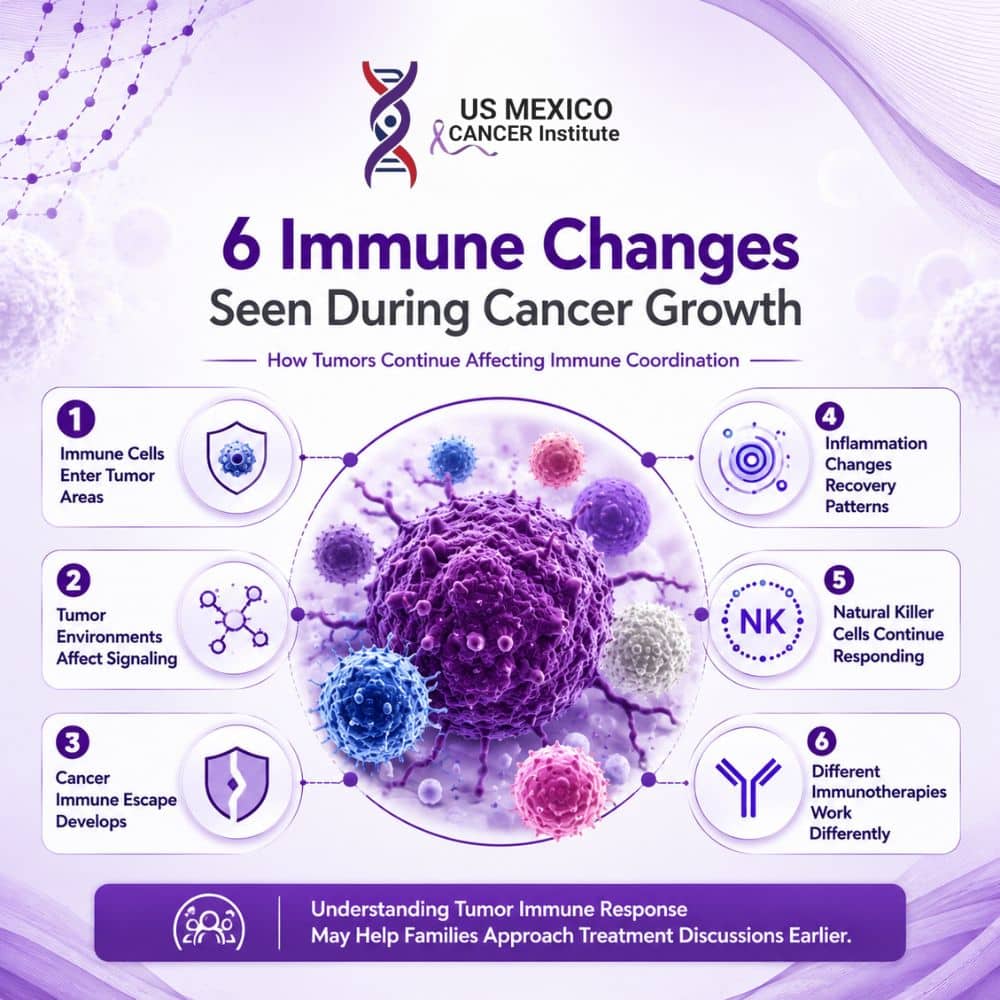
1. Immune Cells May Continue Entering Tumor Areas
Many patients assume tumors completely block immune activity.
However, researchers continue studying how immune cells in tumors may remain present throughout cancer growth.
Some immune cells may still attempt to recognize abnormal activity within tumor environments. However, communication between immune cells may become less organized during prolonged inflammatory stress.
This helps explain why tumors and immune systems continue interacting throughout disease progression rather than functioning separately.
2. The Tumor Microenvironment May Influence Immune Coordination
The tumor microenvironment refers to the surrounding tissue, blood vessels, signaling molecules, inflammatory activity, and immune cells near tumors.
This environment may influence:
- inflammatory signaling
- tissue stress
- immune communication
- nutrient availability
- recovery patterns
Changes within the tumor microenvironment may affect how the body adapts during ongoing disease activity.
Understanding this broader environment helps families recognize why cancer growth often affects more than the tumor itself.
3. Cancer Immune Escape May Develop Gradually
Researchers continue studying how cancer immune escape develops during disease progression.
In some cases, tumors may gradually become harder for immune cells to recognize effectively.
This process may involve:
- altered cellular signaling
- inflammatory disruption
- immune communication changes
- tumor adaptation over time
This does not mean immune activity disappears completely.
Instead, immune coordination may become more difficult as disease environments continue changing.
4. Inflammatory Stress May Affect Immune Signaling
Inflammation remains closely connected to tumor immune response.
Persistent inflammatory stress may influence:
- tissue recovery
- immune coordination
- physical resilience
- treatment adaptation
Patients sometimes notice broader changes involving:
- appetite
- energy levels
- recovery stability
- physical endurance
These changes may reflect ongoing inflammatory activity rather than tumor growth alone.
This relationship helps explain why understanding inflammation remains important during cancer care discussions.
5. Natural Killer Cells Continue Receiving Research Attention
Natural killer cells remain an important area of immune research because of their role within innate immune responses.
Unlike some immune cells that require prior exposure, natural killer cells may respond earlier to abnormal cellular behavior.
Researchers continue studying how natural killer cells interact within tumor environments during prolonged disease activity.
At the US Mexico Cancer Institute, we explain that immune activity may still continue even during advanced disease. However, immune coordination and signaling patterns may continue shifting over time.
6. Different Types of Immunotherapy Work Through Different Pathways
Families researching types of immunotherapy sometimes assume all immune-based therapies function similarly.
They do not.
Different approaches may focus on:
- immune signaling
- inflammatory pathways
- cellular targeting
- immune communication
- treatment coordination
This is one reason understanding how does immunotherapy work requires more than reviewing treatment names alone.
The body’s immune environment also matters during treatment discussions.
The American Cancer Society continues publishing educational resources explaining how immune-based cancer therapies are being studied across multiple cancer types.
Why Immune Evasion in Cancer Continues Receiving Attention
Researchers continue studying immune evasion in cancer because tumors may gradually adapt within surrounding immune environments.
Understanding these changes may help explain why immune responses vary between patients even when diagnoses appear similar.
Why Families Often Search for Simpler Explanations
Many patients searching for how immunotherapy works are trying to understand broader immune behavior rather than treatment categories alone.
Educational discussions about tumor immune response may help families feel more informed before treatment begins.
Why Patients Choose Our Approach
We differentiate ourselves in ways most providers cannot replicate:
• NK cells are always delivered fresh with zero cryopreservatives for functional potency
• Molecular hydrogen support to reduce immune interference
• National-level medical leadership guiding decisions
• Treatment protocols guided by COFEPRIS-aligned safety standards
• White-glove care that protects timing and reduces stress
When families compare treatment environments, one truth often becomes clear:
Understanding immune coordination may help patients approach care decisions with greater clarity.
Why Understanding Tumor Immune Response Matters Earlier
Tumor immune response involves more than tumor growth alone.
The immune system continues responding throughout disease progression. Inflammatory activity changes over time. Immune communication shifts. Recovery patterns may become less predictable during ongoing stress.
At the US Mexico Cancer Institute, we believe families deserve a broader understanding of these immune patterns before treatment begins.
Understanding how tumors interact with surrounding immune environments may help patients approach:
- treatment planning
- recovery expectations
- immunotherapy discussions
- immune coordination
- long-term care decisions
with greater awareness and perspective.
FAQs
1. What is tumor immune response?
Tumor immune response refers to how immune cells interact with tumors during cancer growth and disease progression.
2. What is the tumor microenvironment?
The tumor microenvironment includes surrounding tissue, inflammatory signals, blood vessels, and immune cells located near tumors.
3. What is cancer immune escape?
Cancer immune escape refers to changes that may make tumors harder for immune cells to recognize over time.
4. Why are natural killer cells important?
Natural killer cells remain important because researchers continue studying how they respond to abnormal cellular behavior during cancer growth.
5. How does immunotherapy work during cancer treatment?
Immunotherapy supports immune activity during treatment, but immune coordination and inflammatory signaling may continue changing throughout care.

- NK Cell Therapy in Mexico: Patient Guide for Cancer Treatment in Tijuana - August 25, 2026
- NK Cell Therapy Mexico 6 Essential Standards Patients Should Evaluate Before Treatment - August 18, 2026
- Alternative Cancer Treatments Mexico 6 Essential Questions Patients Should Ask About Evidence and Safety - August 11, 2026