
Why Families Begin Researching Immunotherapy Earlier
Families preparing for immunotherapy sessions often focus first on schedules, travel arrangements, infusion timing, and physician appointments. Yet many patients still begin treatment without fully understanding how the body itself may respond during care.
At the US Mexico Cancer Institute, we often hear the same concern before treatment begins:
What should patients really expect during immunotherapy treatment?
The answer involves more than the infusion itself.
The immune system continues adapting throughout treatment. Recovery patterns change over time. Inflammation may influence resilience. Nutritional stability can affect how the body responds during ongoing care.
Understanding these patterns helps families approach treatment decisions with greater clarity instead of viewing immunotherapy as a fixed routine.
Why the Body Responds Differently During Treatment
Many online discussions simplify the immunotherapy treatment process into a straightforward sequence:
consultation, infusion, monitoring, and follow-up.
However, preparing for immunotherapy involves more than understanding appointment timing alone.
The body’s condition before treatment may influence:
- recovery stability
- immune coordination
- physical resilience
- treatment adaptation
- overall treatment readiness
This is one reason families researching how immunotherapy works often continue searching long after reviewing treatment basics.
The National Cancer Institute explains that immunotherapy supports the immune system’s ability to recognize and respond to abnormal cells. However, immune activity depends on ongoing biological communication throughout care.
At the US Mexico Cancer Institute, we encourage families to understand both the treatment process and the body’s response before immunotherapy begins.
What Families Learn From Real Immune Patterns
In our ebook, “NATURAL KILLER CELLS – A GUIDE FOR FAMILIES AND LOVED ONES OF STAGE 4 CANCER PATIENTS”, we explain that immune coordination may continue changing throughout treatment.
Patients are often surprised to learn that recovery patterns, inflammation, nutritional stability, and immune signaling may all influence how the body adapts during care.
Research from the National Institute of Allergy and Infectious Diseases continues examining how immune cells respond during inflammatory stress and immune activation.
Understanding these changes helps families approach immunotherapy sessions with more realistic expectations.
Why Treatment Readiness Involves More Than Scheduling
Many patients begin treatment believing the most important step is simply receiving therapy on schedule.
In reality, treatment readiness often begins earlier.
At the US Mexico Cancer Institute, we frequently explain that the body continues responding during every phase of treatment. This includes:
- before infusion
- during treatment cycles
- throughout recovery periods
- during schedule adjustments
Understanding these patterns helps families evaluate:
- treatment timing
- inflammatory stress
- nutritional support
- recovery stability
- overall resilience
This broader perspective often improves treatment discussions before care begins.
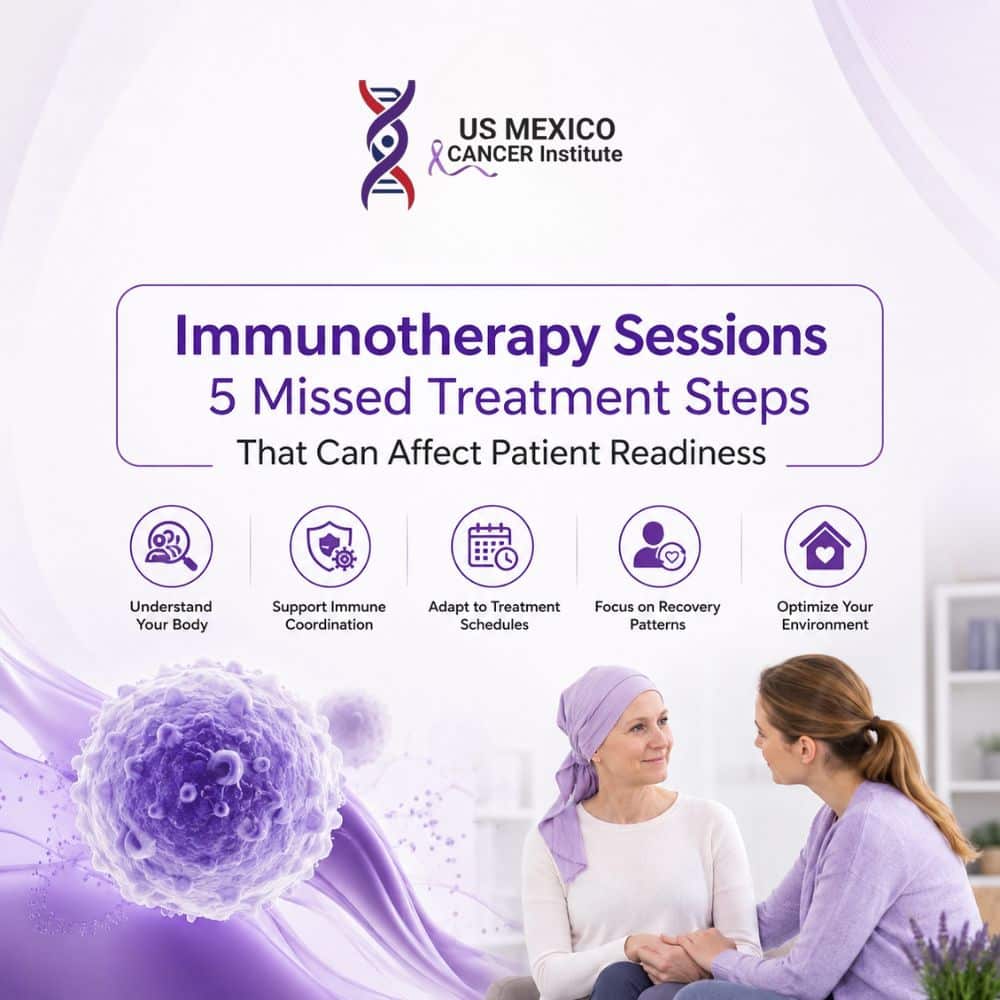
5 Missed Treatment Steps That Can Affect Patient Readiness
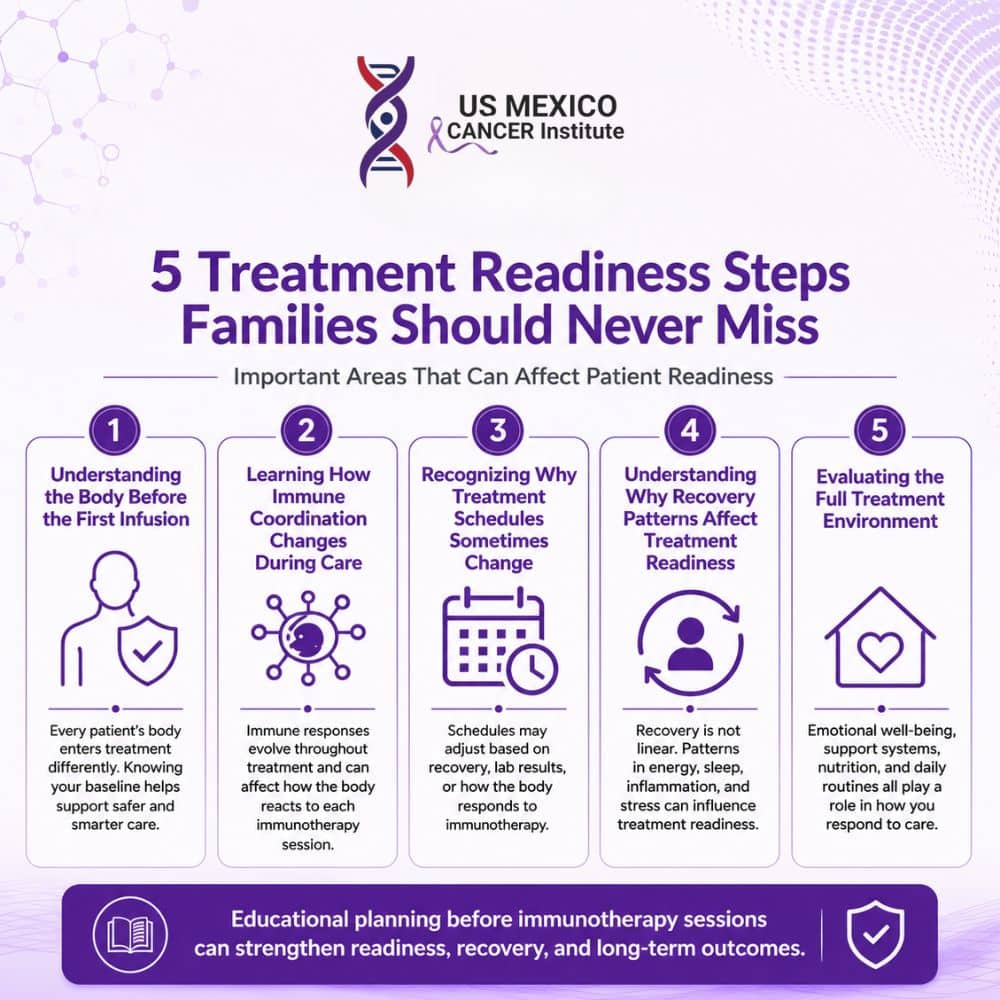
1. Understanding the Body Before the First Infusion
Many patients focus only on the first immunotherapy infusion appointment.
However, the body may already be experiencing:
- inflammation
- nutritional stress
- reduced recovery capacity
- immune disruption
This is one reason preparing for immunotherapy involves more than reviewing medications or appointment details.
The immune system and cancer continue interacting before treatment begins.
Understanding the body’s condition early may help patients approach treatment discussions more clearly.
2. Learning How Immune Coordination Changes During Care
Families researching how does immunotherapy work often expect a simple explanation.
However, immune responses continue shifting throughout treatment.
This includes changes involving:
- inflammation
- immune communication
- recovery timing
- physical resilience
At the US Mexico Cancer Institute, we explain that immune activity alone does not always determine treatment readiness.
How immune cells coordinate during care also matters.
This is one reason natural killer cells continue receiving attention within modern immune research.
3. Recognizing Why Treatment Schedules Sometimes Change
Patients often expect their immunotherapy schedule to remain completely predictable.
In reality, schedules may change because of:
- recovery patterns
- inflammation
- nutritional stability
- treatment tolerance
- physician evaluation
This is why what to expect during immunotherapy treatment may vary between patients even when therapies appear similar.
The immunotherapy treatment process is rarely identical from one individual to another.
Understanding this early helps reduce confusion during ongoing care.
4. Understanding Why Recovery Patterns Affect Treatment Readiness
Patients frequently underestimate how strongly recovery influences treatment planning.
Recovery stability may affect:
- energy levels
- nutritional balance
- resilience
- physical adaptation
- ongoing treatment readiness
Some patients experience fatigue during treatment cycles while others notice appetite changes or slower recovery periods.
These patterns do not always reflect disease progression alone.
Inflammation, immune stress, and treatment demands may also influence how the body responds over time.
This broader understanding helps families approach cancer immunotherapy explained discussions with greater context.
5. Evaluating the Full Treatment Environment
Families often compare only treatment categories while researching types of immunotherapy.
However, the treatment environment itself may also influence patient experience.
At the US Mexico Cancer Institute, we focus on:
- timing awareness
- precision immune evaluation
- treatment coordination
- recovery support
- patient-centered care
Understanding the full treatment environment helps families evaluate care decisions more clearly before treatment begins.
Why Natural Killer Cells Continue Receiving Attention
Natural killer cells remain part of the body’s innate immune response.
Researchers continue studying how natural killer cells communicate during prolonged inflammatory stress and ongoing treatment.
This growing interest reflects a broader shift toward understanding immune coordination instead of focusing only on treatment categories.
Why Educational Preparation Matters Before Treatment
Patients preparing for immunotherapy often feel pressure to absorb large amounts of information quickly.
Understanding:
- treatment timing
- recovery expectations
- immune coordination
- nutritional stability
may help families feel more prepared before treatment begins.
Why Patients Choose Our Approach
We differentiate ourselves in ways most providers cannot replicate:
• NK cells are always delivered fresh with zero cryopreservatives for functional potency
• Molecular hydrogen support to reduce immune interference
• National-level medical leadership guiding decisions
• Treatment protocols guided by COFEPRIS-aligned safety standards
• White-glove care that protects timing and reduces stress
When families compare options, one truth often becomes clear:
Precision and timing shape what remains possible.
Why Understanding Treatment Readiness Earlier Matters
Immunotherapy sessions involve more than infusion timing alone.
The body continues adapting during every stage of care. Recovery patterns change. Immune communication shifts. Inflammation may influence resilience throughout treatment.
At the US Mexico Cancer Institute, we believe families should understand these patterns before treatment begins rather than discovering them during ongoing care.
Understanding treatment readiness more clearly may help patients approach:
- immunotherapy schedules
- treatment planning
- ongoing recovery
- immune coordination
- cancer care decisions
with greater confidence and awareness.
FAQs
1. What happens during immunotherapy sessions?
Patients typically receive treatment through an immunotherapy infusion while physicians monitor recovery patterns, treatment tolerance, and overall response.
2. Why is preparing for immunotherapy important?
Preparing for immunotherapy helps patients understand treatment timing, recovery expectations, and factors that may affect treatment readiness.
3. How does immunotherapy work during treatment?
Immunotherapy supports immune activity throughout care, but immune coordination and recovery patterns may continue changing during treatment.
4. Why can immunotherapy schedules change?
An immunotherapy schedule may change because of physician evaluation, recovery stability, inflammation, or treatment tolerance.
5. Why do natural killer cells matter in immune research?
Natural killer cells remain important because researchers continue studying how they respond during immune stress and ongoing cancer treatment.

- NK Cell Therapy in Mexico: Patient Guide for Cancer Treatment in Tijuana - August 25, 2026
- NK Cell Therapy Mexico 6 Essential Standards Patients Should Evaluate Before Treatment - August 18, 2026
- Alternative Cancer Treatments Mexico 6 Essential Questions Patients Should Ask About Evidence and Safety - August 11, 2026