
Cancer treatment is changing. Today, researchers are looking beyond treatments that destroy cancer cells. They are also studying ways to help the body’s natural immune system fight disease.
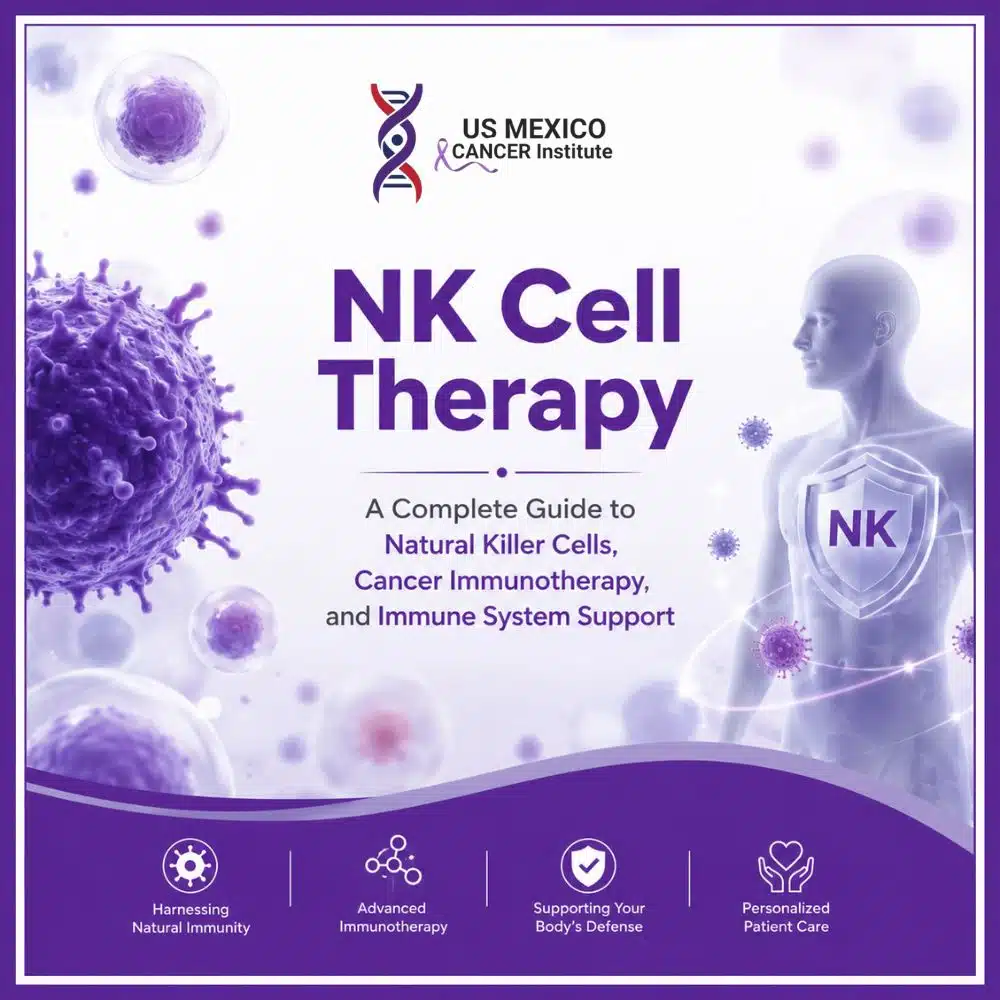
One area of growing interest is NK cell therapy. This treatment uses Natural Killer (NK) cells, a type of white blood cell that helps protect the body. These cells can quickly recognize and respond to abnormal cells, making them an important part of the immune system.
Researchers are studying how NK cell therapy may support existing cancer treatments. While early research is encouraging, this therapy is still being explored in clinical studies. It is not a cure for cancer, and not every patient is a candidate.
If you are considering NK cell treatment in Mexico, it is important to understand how this therapy works, what current research says, and how it may fit into your overall treatment plan.
In this guide, you’ll learn what Natural Killer cells are, how NK cell therapy works, its potential benefits, and what to expect before considering treatment.
What Is NK Cell Therapy?
NK cell therapy is a type of cancer immunotherapy that supports the body’s natural immune response. It uses Natural Killer cells, which are part of the immune system’s first line of defense.
Unlike chemotherapy or radiation therapy, NK cell therapy does not work by directly destroying cancer cells with drugs or radiation. Instead, it aims to improve the immune system’s ability to recognize and respond to abnormal cells.
Many treatment protocols use healthy donor-derived NK cells. These cells are expanded under controlled laboratory conditions before being given to the patient through an intravenous (IV) infusion. The exact process varies by medical provider and treatment plan.
Researchers continue to study how NK cell therapy may work alongside standard cancer treatments. Although the field is advancing, more research is needed to better understand which patients may benefit and how this therapy can be used most effectively.
What Are Natural Killer (NK) Cells?
Natural Killer (NK) cells are a type of white blood cell. They belong to the innate immune system, which is the body’s first line of defense against disease.
Their main role is called immune surveillance. NK cells travel throughout the body, looking for cells that appear damaged, infected, or abnormal. Unlike some immune cells, they do not need prior exposure to recognize a potential threat.
When NK cells detect abnormal cells, they release natural proteins that help destroy them. They also communicate with other immune cells to support a coordinated immune response.
Cancer cells can sometimes develop ways to avoid or weaken this natural defense. This may reduce the activity of NK cells and allow tumors to grow more easily. Because of this, researchers are studying therapies that may help improve NK cell function as part of a broader cancer treatment strategy.
Understanding how Natural Killer cells work is the first step in understanding NK cell therapy. Rather than replacing the immune system, this treatment is designed to support one of the body’s natural defense mechanisms.
How Does NK Cell Therapy Work?
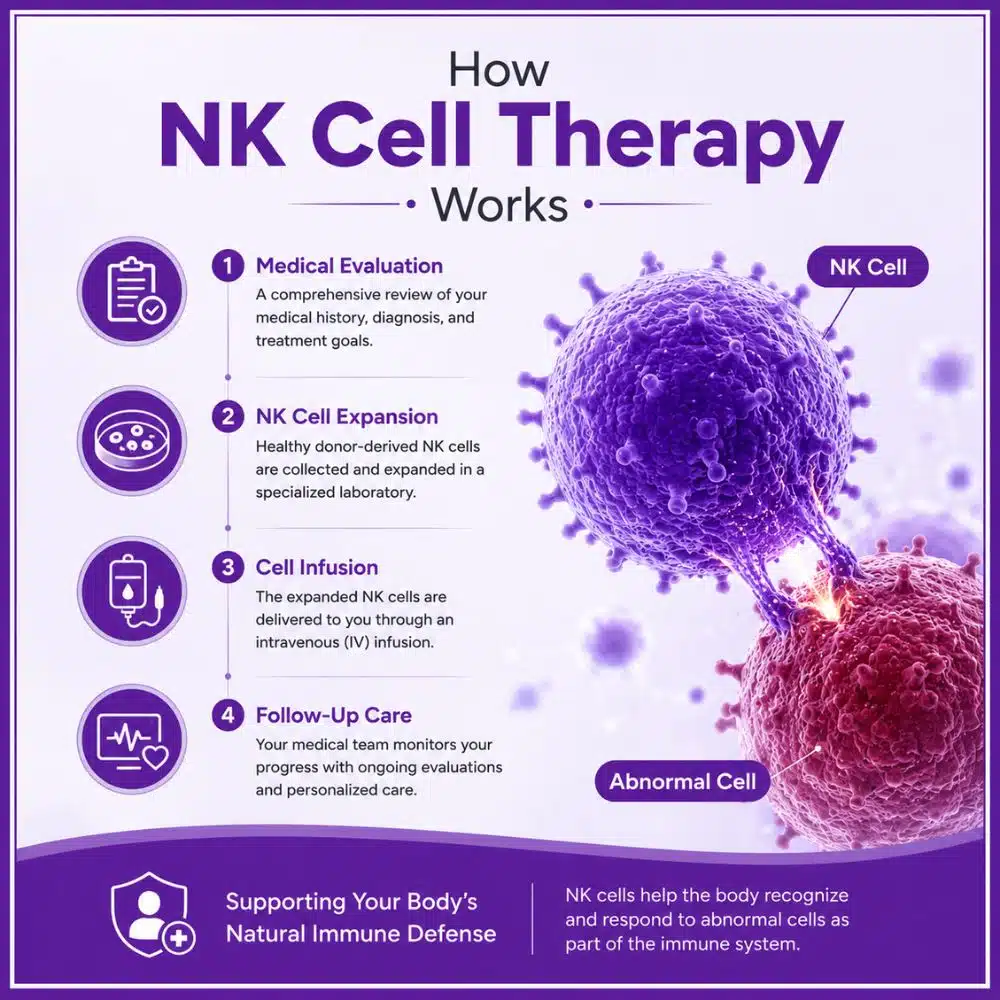
The goal of NK cell therapy is to increase the number of healthy, active Natural Killer cells in the body. These cells help support the immune system’s ability to recognize and respond to abnormal cells.
Although treatment plans vary, the process usually follows a few key steps.
1. Medical Evaluation
Treatment begins with a complete medical review. The care team looks at your diagnosis, medical history, test results, and current treatments. This helps determine whether NK cell therapy may be appropriate for your condition.
2. NK Cell Expansion
Healthy donor-derived NK cells are collected and expanded in a specialized laboratory. The cells are carefully tested for quality and safety before they are used for treatment.
3. Cell Infusion
The expanded NK cells are given through an intravenous (IV) infusion. The procedure is performed under medical supervision, and the treatment plan is tailored to each patient’s needs.
4. Follow-Up Care
After treatment, the medical team monitors your progress. Follow-up visits may include physical exams, laboratory tests, and imaging studies to evaluate your overall health and response to treatment.
Potential Benefits of NK Cell Therapy
Researchers continue to study NK cell therapy for many types of cancer. Early research suggests it may support the immune system in several ways, but results can vary from one patient to another.
Potential benefits being studied include:
- Supporting the body’s natural immune response
- Helping recognize abnormal cells
- Working alongside standard cancer treatments
- Providing a personalized treatment approach
It is important to understand that NK cell therapy is still an evolving field. Researchers are working to learn which patients are most likely to benefit and how this therapy can be combined with other cancer treatments.
According to peer-reviewed research on NK cell therapy, ongoing clinical studies continue to evaluate the safety, effectiveness, and future role of NK cell-based immunotherapy. While the findings are encouraging, additional research is needed before broader conclusions can be made.
Who May Be a Candidate for NK Cell Therapy?
NK cell therapy is not suitable for everyone. A physician must review each patient’s medical condition before recommending treatment.
Factors that may be considered include:
- Cancer type and stage
- Current and previous treatments
- Overall health
- Immune system function
- Treatment goals
A personalized medical evaluation helps determine whether NK cell therapy may be an appropriate option. Your physician may also discuss how it could fit alongside surgery, chemotherapy, radiation therapy, or other treatments as part of your overall care plan.
Why Consider NK Cell Treatment in Mexico?
Many patients travel to Mexico to explore advanced treatment options, including NK cell therapy. In addition to medical expertise, patients often want to understand how treatments are regulated and delivered.
In Mexico, healthcare products and many medical services are regulated by COFEPRIS (Federal Commission for the Protection Against Sanitary Risk). COFEPRIS helps oversee healthcare standards and promotes patient safety through regulatory oversight.
At the US Mexico Cancer Institute, every patient begins with a comprehensive medical evaluation. Our physicians review your diagnosis, treatment history, and overall health before recommending any therapy. This personalized approach helps determine whether NK cell therapy may be appropriate for your care plan.
Our treatment philosophy focuses on:
- Individualized physician-led care
- Fresh, laboratory-expanded NK cells
- Personalized treatment plans
- Patient safety and quality standards
- Ongoing medical monitoring throughout treatment
Learn More About NK Cell Therapy
Understanding your treatment options starts with reliable information. If you would like to learn more about Natural Killer cells, immune health, and the science behind NK cell therapy, download our free ebook, Natural Killer Cells – A Guide for Families and Loved Ones of Stage 4 Cancer Patients.
If you are considering NK cell treatment in Mexico, schedule a consultation with the US Mexico Cancer Institute. Our physicians can review your medical history, answer your questions, and discuss whether NK cell therapy may be an appropriate part of your personalized treatment plan.
Frequently Asked Questions
1. Is NK cell therapy approved for all cancers?
No. NK cell therapy is still being studied for many types of cancer. Whether it is appropriate depends on your diagnosis, overall health, and your physician’s evaluation.
2. Can NK cell therapy replace chemotherapy?
No. NK cell therapy is not considered a replacement for standard cancer treatments. Depending on the patient’s condition, it may be used alongside other therapies as part of a personalized treatment plan.
3. How is NK cell therapy given?
Most treatment protocols deliver NK cells through an intravenous (IV) infusion after the cells have been expanded in a specialized laboratory.
4. Are there risks with NK cell therapy?
Like any medical treatment, NK cell therapy may have risks and potential side effects. Your physician will discuss the possible benefits and risks based on your individual medical condition before treatment.
5. How do I know if I am a candidate?
The first step is a medical consultation. Your physician will review your diagnosis, medical history, and current treatments to determine whether NK cell therapy may be appropriate for you.

- NK Cell Therapy in Mexico: Patient Guide for Cancer Treatment in Tijuana - August 25, 2026
- NK Cell Therapy Mexico 6 Essential Standards Patients Should Evaluate Before Treatment - August 18, 2026
- Alternative Cancer Treatments Mexico 6 Essential Questions Patients Should Ask About Evidence and Safety - August 11, 2026