
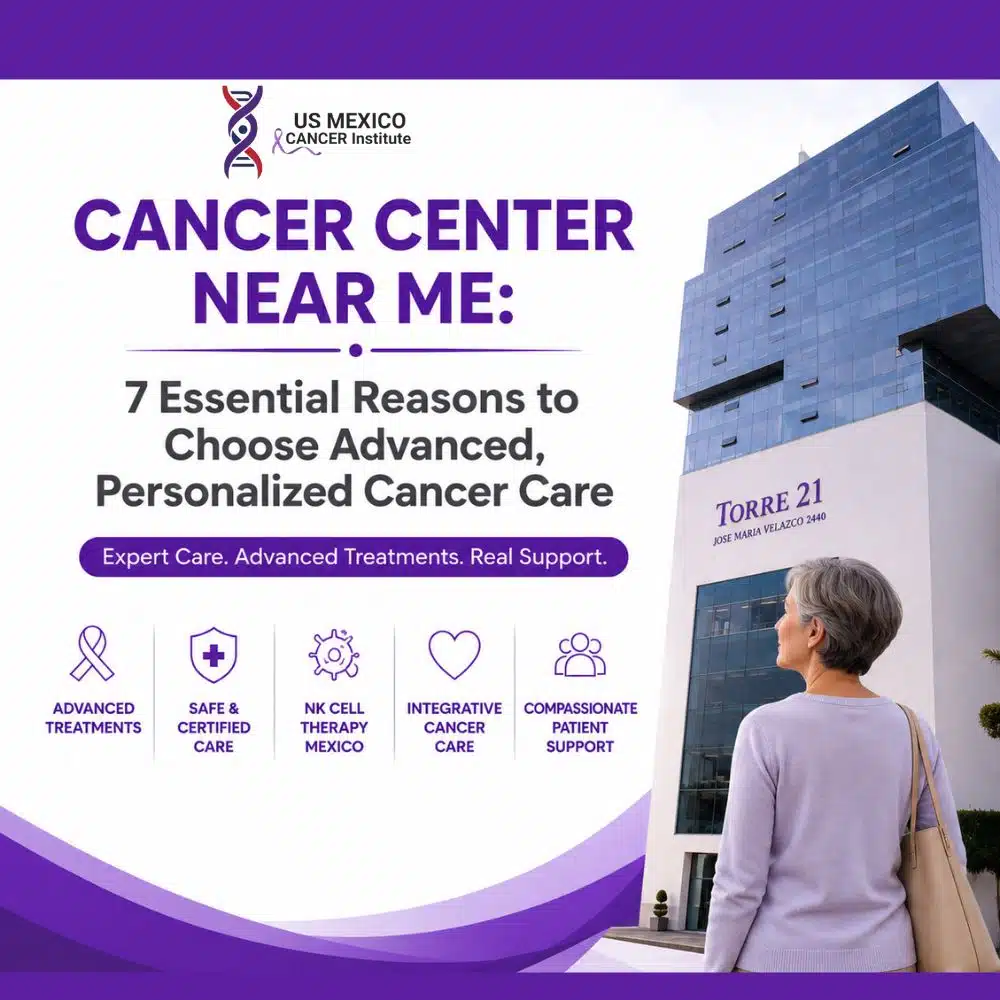
Finding Nearby Cancer Care Is Only the Beginning
Searching for a cancer center near me often begins with urgency. Patients and families want answers, experienced medical professionals, and access to treatment without unnecessary delays.
But the closest facility is not automatically the right cancer center for every patient.
The more important questions are whether physicians will review your individual diagnosis before recommending treatment, clearly explain potential benefits and safety considerations, follow appropriate safety standards, coordinate supportive services, and help you understand what happens before, during, and after treatment.
For some patients, these questions lead them to explore a Tijuana cancer clinic, particularly when seeking additional medical opinions or access to selected advanced cancer treatments.
At the US Mexico Cancer Institute, the process begins with physician-guided evaluation, patient education, and individualized treatment planning.
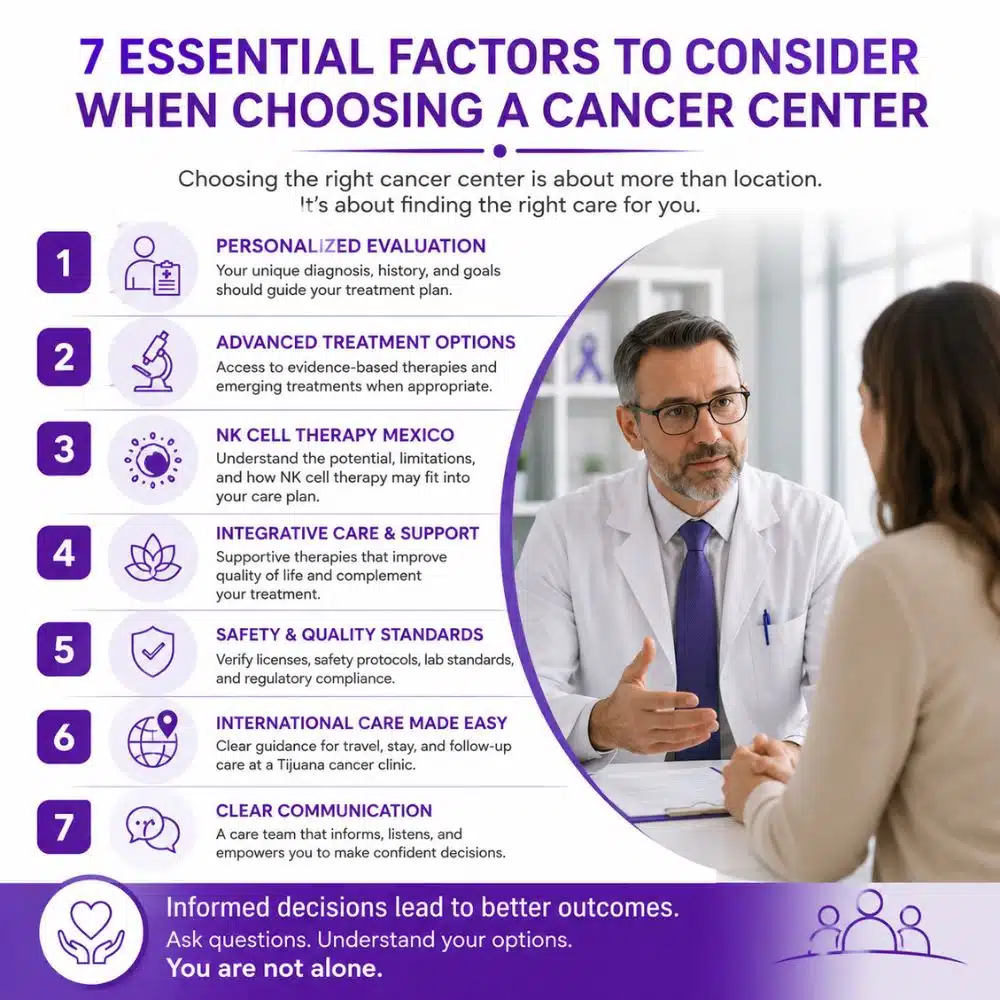
Here are seven essential factors to consider when comparing cancer care options.
1. Personalized Evaluation Should Come Before Treatment Recommendations
Cancer is not a single disease. Even patients with the same cancer type and stage may have different medical histories, previous treatments, overall health conditions, symptoms, tumor characteristics, and treatment goals.
Before recommending treatment, physicians may need to review:
- Pathology and imaging reports
- Laboratory results
- Previous treatments and responses
- Current medications and medical conditions
- Molecular or biomarker testing when clinically relevant
- The patient’s symptoms, concerns, and treatment goals
This information helps physicians determine which therapies may be appropriate to discuss.
When comparing a cancer center near me with other providers, ask whether your medical records and individual circumstances will be evaluated before a treatment plan is recommended.
Responsible cancer care should begin with the patient—not a standardized treatment package.
2. Advanced Cancer Treatments Matter Only When You Understand Why They Are Recommended
Modern cancer care may involve surgery, chemotherapy, radiation therapy, targeted treatments, immunotherapy, supportive care, and emerging therapeutic approaches.
More treatment options do not automatically mean better care.
The real value comes from understanding why a specific therapy is being considered for your situation.
Patients exploring advanced cancer treatments should ask:
- What is the goal of the proposed treatment?
- Why might I be an appropriate candidate?
- What evidence supports its use?
- Is the therapy established, emerging, or investigational?
- What are the potential safety considerations and limitations?
- What reasonable alternatives are available?
- How will treatment response be evaluated?
The National Cancer Institute’s cancer treatment overview provides evidence-based information about established cancer treatment approaches.
A trustworthy cancer center should help patients understand their options without exaggerating potential outcomes or guaranteeing results.
3. Understand the Potential and Limitations of NK Cell Therapy Mexico
Natural killer cells, commonly called NK cells, are part of the body’s innate immune system. They participate in immune surveillance and can recognize and respond to certain abnormal cells.
Researchers continue investigating how NK cells and other immune-based approaches may contribute to cancer treatment.
This growing area of research has increased patient interest in NK cell therapy Mexico.
However, NK cell therapies are not established cures for every cancer or every patient. The available evidence, treatment protocols, potential side effects, and patient eligibility can differ according to individual circumstances.
Patients should ask how the cells are sourced and processed, what laboratory quality controls are followed, why the therapy is being considered, what evidence supports the proposed protocol, and how treatment response will be monitored.
At the US Mexico Cancer Institute, discussions about NK cell therapy Mexico occur within a broader physician-guided evaluation rather than presenting cellular therapy as a guaranteed solution.
The goal is to help patients understand the treatment rationale, available evidence, potential limitations, and alternatives before making decisions.
Understand Natural Killer Cells Before Making Treatment Decisions
For patients and families facing advanced cancer, learning about emerging treatment approaches can make medical conversations easier to navigate. Questions about how natural killer cells function, why researchers are studying them, and where NK cell therapies may fit within a broader cancer care plan deserve clear, accessible explanations.
The eBook Natural Killer Cells: A Guide for Families and Loved Ones of Stage 4 Cancer Patients provides an educational resource for people who want to better understand natural killer cells and prepare more informed questions for their medical team.
The guide can help families continue learning about NK cells while evaluating advanced cancer treatments, but it should complement—not replace—individualized medical advice and physician-guided treatment planning.
Download the free guide to continue learning about natural killer cells and prepare informed questions for your cancer care consultation.
4. Integrative Cancer Care Should Strengthen the Overall Treatment Plan
Cancer can affect nutrition, energy levels, physical function, emotional well-being, sleep, and everyday quality of life.
That is why integrative cancer care can be an important component of coordinated cancer treatment.
Responsible integrative care supports—not replaces—appropriate oncology treatment.
Depending on individual medical needs, supportive services may include:
- Nutritional guidance
- Pain and symptom management
- Emotional support
- Rehabilitation and physical activity guidance
- Strategies for managing treatment-related side effects
- Patient and caregiver education
- Follow-up planning
The American Cancer Society’s supportive care resources provide additional information for patients and families seeking help with symptoms, side effects, and quality-of-life concerns.
At the US Mexico Cancer Institute, supportive strategies are considered within the patient’s broader medical circumstances and treatment plan.
5. Verify Safety Standards Before Choosing Any Cancer Treatment Provider
Whether evaluating a cancer center near me or considering international treatment, patients should understand who will provide their care, how therapies are handled, and which regulatory requirements apply.
Important questions include:
- Are the physicians appropriately licensed?
- What facility authorizations apply?
- How are medications or cellular products sourced and handled?
- What laboratory quality controls are followed?
- How are patients monitored?
- What happens if complications occur?
- How will follow-up care be coordinated?
In Mexico, COFEPRIS is the federal authority responsible for health regulation and protection against sanitary risks.
Patients should ask providers to clearly explain which licenses, permits, or authorizations apply rather than relying on broad marketing statements about regulatory approval.
Transparency is particularly important when considering cellular therapies and other advanced cancer treatments.
6. A Tijuana Cancer Clinic Should Make International Care Easier to Understand
For patients living in Southern California and other parts of the United States, choosing a Tijuana cancer clinic can provide geographic accessibility compared with more distant international treatment destinations.
However, responsible medical travel requires careful planning.
Patients should understand the expected treatment schedule, anticipated length of stay, transportation and accommodation requirements, border-crossing considerations, emergency procedures, medical-record sharing, and follow-up arrangements.
At the US Mexico Cancer Institute, helping international patients understand these practical considerations is part of the consultation and treatment-planning process.
Convenience can reduce logistical uncertainty, but medical appropriateness, safety, transparency, and continuity of care should remain the primary considerations.
7. Clear Communication Is One of the Strongest Signs of Patient-Centered Care
Before beginning treatment, patients should understand why a therapy is being recommended, the potential benefits and limitations, known safety concerns and possible side effects, reasonable alternatives, expected costs, treatment schedule, monitoring process, and follow-up requirements.
Patients should also feel comfortable asking questions, requesting clarification, and seeking a second opinion.
This is particularly important when considering NK cell therapy Mexico, international medical care, or other advanced cancer treatments.
At the US Mexico Cancer Institute, informed decision-making is an important part of the patient experience.
The objective is not simply to provide access to treatment. It is to help patients and families understand their options and participate meaningfully in healthcare decisions.
Explore Your Cancer Care Options With Greater Clarity
Choosing cancer care can feel overwhelming when comparing providers, locations, established treatments, and emerging therapies.
A physician-guided evaluation can help you better understand your medical circumstances, identify questions worth asking, and discuss treatment options that may be appropriate for your individual situation.
Request a consultation with the US Mexico Cancer Institute to have your medical records reviewed and take the next step with clearer information about your cancer care options.
Make Your Cancer Care Decision With Better Information
Searching for a cancer center near me is the beginning of an important healthcare decision—not the end of the search.
The right cancer center should evaluate your individual circumstances, explain available options clearly, maintain appropriate safety standards, coordinate supportive care, and help you understand what happens throughout the treatment journey.
For patients exploring a Tijuana cancer clinic, NK cell therapy Mexico, selected advanced cancer treatments, or coordinated integrative cancer care, informed decision-making should always come before treatment.
At the US Mexico Cancer Institute, patients can request physician-guided evaluations and discuss treatment options based on their individual medical circumstances.
Request a consultation today and take the next step with informed questions, clearer expectations, and a better understanding of your cancer care options.
Frequently Asked Questions
1. What should I consider when searching for a cancer center near me?
Consider physician expertise, individualized treatment planning, available therapies, safety standards, communication, supportive services, transparency, and follow-up care—not geographic distance alone.
2. What treatments may be available at a Tijuana cancer clinic?
Available treatments depend on the provider and individual medical circumstances. Patients may discuss conventional cancer treatments, immunotherapy approaches, targeted strategies, supportive services, integrative cancer care, and selected emerging therapies when medically appropriate.
3. Is NK cell therapy Mexico a guaranteed cure for cancer?
No. NK cell therapies remain an evolving area of research and should not be presented as guaranteed cures. Patients should discuss available evidence, potential side effects, limitations, alternatives, and realistic expectations with qualified physicians.
4. What is integrative cancer care?
Integrative cancer care coordinates appropriate supportive strategies with the patient’s broader medical treatment plan. Depending on individual needs, it may include nutritional guidance, symptom management, emotional support, rehabilitation, and patient education.
5. What should international patients ask before traveling for cancer treatment?
Ask about physician credentials, facility licensing, treatment rationale, potential side effects, costs, travel requirements, emergency procedures, medical documentation, and follow-up arrangements.

- NK Cell Therapy in Mexico: Patient Guide for Cancer Treatment in Tijuana - August 25, 2026
- NK Cell Therapy Mexico 6 Essential Standards Patients Should Evaluate Before Treatment - August 18, 2026
- Alternative Cancer Treatments Mexico 6 Essential Questions Patients Should Ask About Evidence and Safety - August 11, 2026