

Why Asking the Right Questions Matters Before Traveling
Choosing cancer treatment in Tijuana is a major decision that involves more than booking travel or comparing treatment options. Patients often focus on cost, location, or a specific therapy, but these factors alone do not determine the quality of care. The most important questions are often about safety, medical planning, and how well a clinic supports patients throughout their treatment journey.
Many people exploring cancer treatment abroad want access to experienced physicians, personalized care, and treatment options that may not be available closer to home. While these are valid reasons to consider traveling, every patient should understand how a clinic evaluates new patients, develops treatment plans, and coordinates care before making a commitment.
At the US Mexico Cancer Institute, we believe informed patients make better decisions. Knowing what to ask before traveling can help you compare providers with greater confidence and avoid common mistakes that may affect your care.
Why Careful Planning Comes Before Travel
Traveling for medical care requires preparation. Before choosing a provider, patients should understand how their diagnosis will be reviewed, who will oversee their care, and what support will be available before, during, and after treatment.
Patients seeking Tijuana cancer treatment should ask whether the medical team reviews pathology reports, imaging studies, laboratory results, and previous treatments before making recommendations. A personalized evaluation helps ensure that treatment decisions are based on the patient’s unique medical condition rather than a standard approach.
The National Cancer Institute explains that high-quality cancer care often involves a multidisciplinary team that works together to develop a coordinated treatment plan based on the patient’s complete medical picture.
What Families Learn Before Traveling for Cancer Treatment
In our ebook, “Natural Killer Cells – A Guide for Families and Loved Ones of Stage 4 Cancer Patients,” we explain why planning for cancer treatment involves more than choosing a destination. Families learn how a complete medical review, clear communication, and realistic treatment planning can help them make informed decisions before traveling.
Understanding these steps helps patients ask better questions, compare treatment options with greater confidence, and prepare for a safer, more coordinated care experience when considering cancer treatment in Tijuana or other forms of cancer treatment abroad.
Why a Personal Medical Review Should Always Come First
Many patients begin by searching for the best cancer treatment in Mexico, but the better question is whether a treatment is appropriate for their specific diagnosis.
At the US Mexico Cancer Institute, every patient starts with a comprehensive medical review. Our physicians carefully evaluate pathology reports, imaging studies, laboratory results, medical history, and previous treatments before discussing possible options.
This personalized process helps us provide thoughtful cancer care in Mexico instead of using the same treatment plan for every patient.
7 Smart Questions That Help Patients Avoid Costly Travel Mistakes
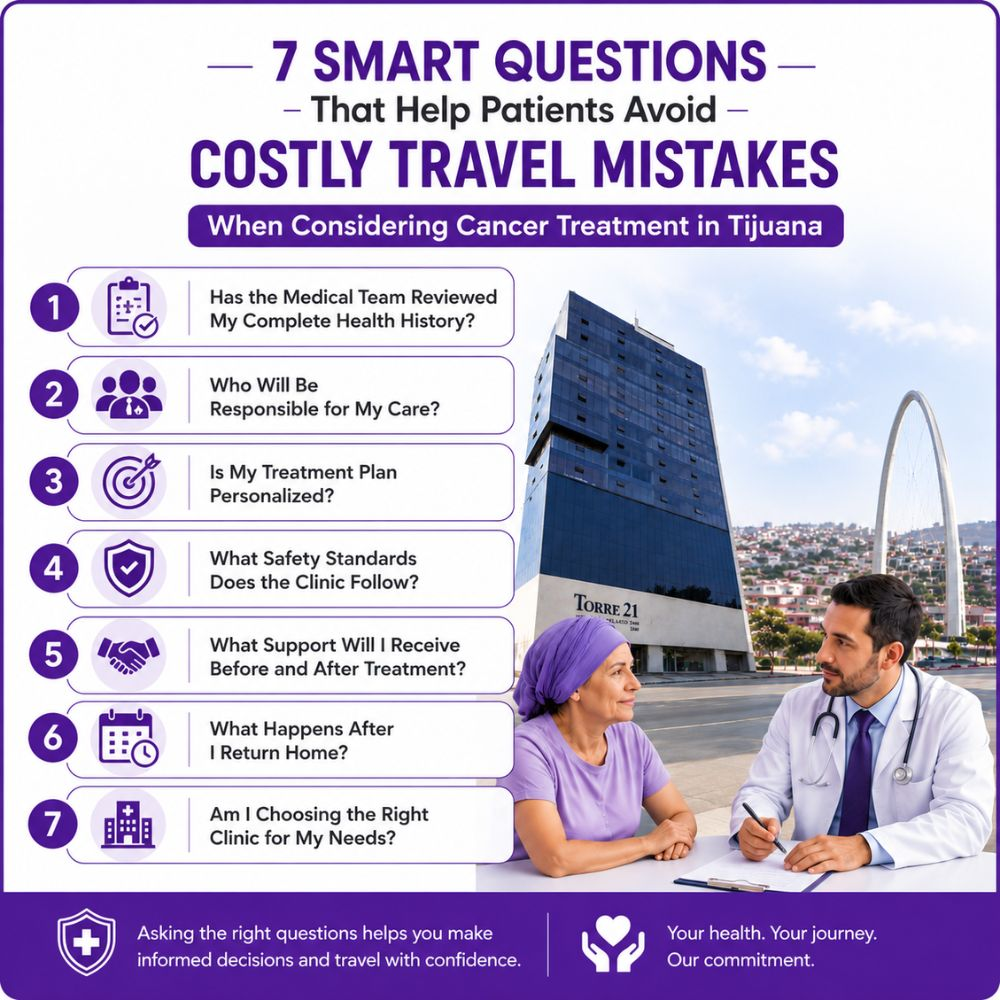
1. Has the Medical Team Reviewed My Complete Health History?
A trusted provider should never recommend treatment after only a brief conversation. Before making recommendations, physicians should review your pathology reports, imaging studies, laboratory findings, medical history, and previous cancer treatments.
This complete review helps the medical team understand your condition and determine whether additional testing or consultations are needed. It also supports safer and more personalized treatment planning.
2. Who Will Be Responsible for My Care?
Before choosing a cancer clinic Tijuana, ask who will oversee your treatment from beginning to end.
A well-coordinated center should clearly explain which physicians are involved, how specialists work together, and who will answer questions during your care. Knowing who is responsible for your treatment can improve communication and reduce confusion throughout your journey.
The American Cancer Society encourages patients to understand who is involved in their cancer care and how different specialists contribute to treatment planning.
3. Is My Treatment Plan Personalized?
Every cancer diagnosis is different. Your age, overall health, cancer type, stage, and previous treatments should all influence your care plan.
A trusted provider should explain why a treatment is recommended and how it fits your individual medical needs. Personalized planning helps patients make informed decisions instead of relying on one treatment approach for everyone.
4. What Safety Standards Does the Clinic Follow?
Patient safety should be part of every step of treatment. Ask how the clinic protects patients, monitors progress, and maintains quality standards throughout care.
Patients traveling for cancer care in Tijuana may also wish to learn about COFEPRIS, Mexico’s federal agency responsible for regulating healthcare products and medical standards. Understanding these regulations can help patients make informed decisions before receiving treatment in Mexico.
5. What Support Will I Receive Before and After Treatment?
Traveling for cancer care involves more than medical appointments. Patients often need help with travel planning, scheduling, medical records, and follow-up communication.
Before choosing cancer treatment in Tijuana, ask what support services are available. A well-organized care team should explain how they communicate before your arrival, coordinate your appointments, and provide guidance after you return home.
Strong patient support can make your treatment experience more organized and help reduce unnecessary stress for both patients and caregivers.
6. What Happens After I Return Home?
Many patients focus on the treatment itself but forget to ask about follow-up care. This is an important part of any treatment plan.
Ask how your progress will be monitored after you return home. Will your medical team review follow-up imaging or laboratory results? Will you have access to your physician if new questions arise?
Patients comparing Tijuana cancer treatment options should understand that ongoing communication is an important part of well-coordinated care.
7. Am I Choosing the Right Clinic for My Needs?
The best decision is not always the clinic offering the most treatments. Instead, choose a center that takes time to understand your diagnosis and explains why specific therapies may be appropriate.
When comparing cancer clinics in Mexico, ask how treatment plans are developed, how specialists work together, and how patient safety is maintained. A clinic that values careful planning and open communication is more likely to provide care that matches your individual needs.
Taking time to ask these questions can help you avoid costly travel mistakes and make more confident healthcare decisions.
Why Patients Choose the US Mexico Cancer Institute
At the US Mexico Cancer Institute, we believe every patient deserves personalized care built on careful planning and medical expertise.
Our approach includes:
- Comprehensive medical evaluations before treatment recommendations
- Personalized treatment plans based on each patient’s diagnosis and medical history
- Fresh Natural Killer (NK) cell therapy prepared without cryopreservatives
- Molecular hydrogen therapy as part of a supportive care approach
- Care provided under COFEPRIS-aligned medical standards
- White-glove patient support before, during, and after treatment
Our goal is to help patients understand their options and make informed decisions before traveling for care.
Plan First, Travel With Confidence
Choosing cancer treatment in Tijuana is about more than selecting a destination. It is about choosing a medical team that reviews your case carefully, communicates clearly, and supports you throughout your treatment journey.
Before making travel arrangements, take time to compare providers, ask thoughtful questions, and understand how your care will be planned. Patients who prepare well are often better equipped to make informed decisions and feel more confident throughout the treatment process.
Frequently Asked Questions
1. Why do patients travel for cancer treatment in Tijuana?
Many patients consider cancer treatment in Tijuana because of access to experienced physicians, personalized care, and treatment options that may complement their existing care. Treatment decisions should always be based on an individual medical evaluation.
2. What should I ask before choosing a cancer clinic in Tijuana?
Ask how your medical records will be reviewed, who will oversee your treatment, what safety standards are followed, and what follow-up care will be available after treatment.
3. Is every cancer clinic in Tijuana the same?
No. Every cancer clinic Tijuana has its own medical team, treatment approach, and patient support services. Comparing these factors can help you make a more informed decision.
4. Why is a personalized treatment plan important?
Every patient has a different diagnosis, medical history, and treatment goals. Personalized planning helps physicians recommend care that fits your specific needs.
5. How can I compare cancer treatment options before traveling?
Compare physician experience, medical evaluations, patient support, follow-up care, and how each provider develops individualized treatment plans. Looking beyond treatment availability alone can help you make a better-informed decision.

- NK Cell Therapy in Mexico: Patient Guide for Cancer Treatment in Tijuana - August 25, 2026
- NK Cell Therapy Mexico 6 Essential Standards Patients Should Evaluate Before Treatment - August 18, 2026
- Alternative Cancer Treatments Mexico 6 Essential Questions Patients Should Ask About Evidence and Safety - August 11, 2026