

When Pancreatic Cancer Requires Clear Direction, Not Delay
People rarely begin researching pancreatic cancer treatment casually. Most searches begin when important decisions are approaching and families are trying to understand what options remain available.
Pancreatic cancer often develops quietly, making early detection difficult and limiting the amount of time patients have to evaluate potential paths forward. As a result, treatment decisions frequently involve balancing timing, overall health, quality of life, and available medical options.
While conventional therapies remain important for many individuals, growing interest in immune-focused care has encouraged patients to learn more about emerging approaches that may complement broader treatment planning.
Understanding available pancreatic cancer treatment options can help patients and families make informed decisions while meaningful opportunities for intervention remain available.
At the US Mexico Cancer Institute, we frequently speak with patients and families who are seeking greater clarity about available treatment options before important treatment windows become more limited.
Why Timing Matters When Evaluating Pancreatic Cancer Treatment
Pancreatic cancer affects more than a single organ. It can influence digestion, energy levels, inflammation, metabolism, and immune coordination throughout the body.
As the disease progresses, biological systems responsible for recognizing and responding to abnormal cellular behavior may become less efficient.
One area receiving increasing scientific attention involves the natural killer cell, commonly known as an NK cell.
NK cells are part of the body’s innate immune system and help monitor tissues for abnormal cellular activity. Unlike certain immune cells that require prior exposure, NK cells can respond rapidly when irregular behavior is detected.
The educational resource “Natural Killer Cells – A Guide for Families and Loved Ones of Stage 4 Cancer Patients” explains how immune function may become disrupted over time and why preserving immune coordination continues to be an important area of investigation.
According to the World Health Organization (WHO), cancer outcomes are influenced by multiple factors including early evaluation, treatment access, overall health status, and coordinated care planning.
As scientific understanding evolves, researchers continue examining how immune-focused strategies may contribute to broader pancreatic cancer treatment planning.
5 Advanced Pancreatic Cancer Treatment Options Patients Should Understand
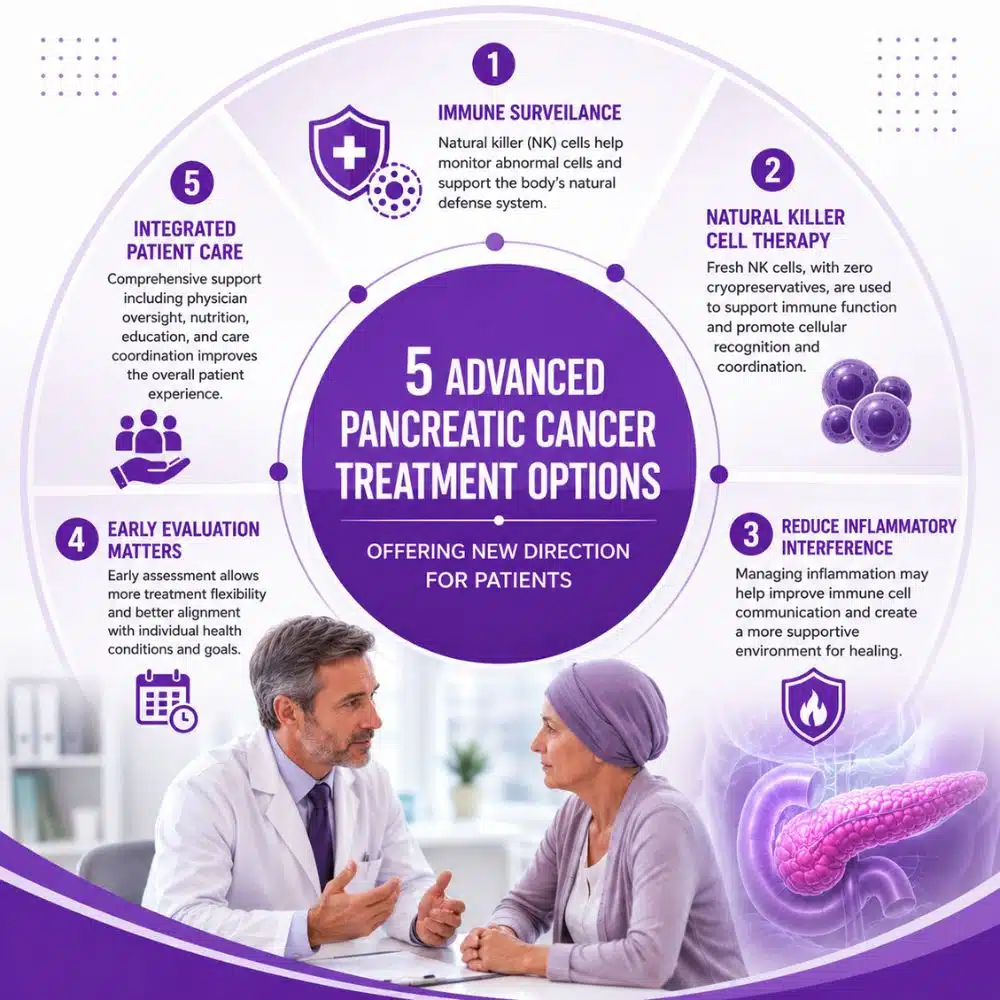
1. Understanding Immune Surveillance
One of the most significant developments in oncology is the growing focus on immune surveillance.
The immune system continuously monitors tissues for abnormal cellular activity. NK cells contribute to this process by helping identify unusual cellular behavior and supporting immune awareness throughout the body.
Researchers continue studying how natural killer cells contribute to immune surveillance and how these specialized immune cells interact with broader biological defense mechanisms.
The National Cancer Institute (NCI) recognizes natural killer cells as important components of the body’s innate immune defense system.
2. Natural Killer Cell Therapy and the Importance of Fresh NK Cells
Among emerging pancreatic cancer treatment options, natural killer cell therapy has attracted growing interest from researchers and patients alike.
Natural killer cell therapy focuses on supporting immune recognition and coordination through approaches designed around existing biological mechanisms.
At the US Mexico Cancer Institute, NK cells are always delivered fresh with zero cryopreservatives. Many patients exploring natural killer cell therapy and nk cell treatment specifically ask about fresh-cell protocols because cell viability, handling, and treatment timing remain important considerations within immune-focused care.
Rather than focusing exclusively on direct intervention, researchers continue evaluating how immune-based therapies may contribute to a more comprehensive care strategy.
As research expands, this area remains one of the most closely followed developments within cancer immunology.
3. Reducing Inflammatory Interference Remains an Important Consideration
Chronic inflammation can influence communication between immune cells and surrounding tissues.
When inflammatory activity becomes excessive, biological signaling may become less coordinated. Researchers continue studying how inflammation affects immune performance and overall cancer biology.
Many clinicians now view inflammation management as an important component of broader treatment planning and patient support.
This area of research continues advancing as scientists learn more about the relationship between inflammation, immunity, and pancreatic cancer progression.
4. Early Evaluation Creates More Treatment Flexibility
Timing often influences the number of options available to patients.
Early evaluation allows physicians to assess important factors such as:
- Current health status
- Treatment history
- Disease progression
- Functional capacity
- Individual treatment goals
These factors help support informed discussions about pancreatic cancer treatment options and future care planning.
For many patients, understanding available choices earlier in the process may provide greater flexibility when making decisions.
5. Integrated Care Extends Beyond Medical Procedures
Cancer care often involves more than treatment alone.
Patients frequently face practical, nutritional, emotional, and logistical challenges throughout their healthcare journey.
Modern care programs increasingly emphasize integrated support that may include:
- Physician oversight
- Patient education
- Nutritional guidance
- Care coordination
- Ongoing communication
For many families, these services help create a more structured and supportive treatment experience.
Why Patients Explore a Cancer Treatment Clinic in Tijuana Mexico
Patients seeking pancreatic cancer treatment often look for programs that combine medical oversight, individualized planning, and comprehensive support.
Individuals evaluating a cancer treatment clinic in Tijuana Mexico often compare physician leadership, treatment philosophy, safety standards, and patient support.
Many patients researching the best cancer clinic in Tijuana Mexico focus on transparency, physician oversight, and individualized treatment planning when evaluating available options.
At the US Mexico Cancer Institute, patient programs are built around:
✔ NK cells are always delivered fresh with zero cryopreservatives
✔ Molecular hydrogen support designed to reduce immune interference
✔ Physician-guided treatment coordination
✔ Treatment protocols guided by COFEPRIS-aligned safety standards recognized by Mexico’s federal health regulatory authority
✔ Personalized support focused on recovery, timing, and patient experience
✔ English-speaking patient assistance throughout the treatment process
✔ Coordinated care planning from evaluation through follow-up
All care is delivered within a regulatory framework overseen by COFEPRIS (Federal Commission for the Protection Against Sanitary Risk), Mexico’s federal health regulatory authority responsible for healthcare oversight and patient protection.
👉 Schedule a Consultation with US Mexico Cancer Institute to learn more about available treatment options and individualized evaluation programs.
Making Informed Decisions While Options Remain Available
Pancreatic cancer often requires patients and families to make important decisions within a limited timeframe.
While no single approach is appropriate for every situation, understanding available options can help individuals evaluate future care more confidently.
As research continues advancing, immune-focused strategies, integrated care models, and individualized evaluations are receiving increased attention within the broader oncology community.
At the US Mexico Cancer Institute, we believe informed decision-making begins with understanding available options, evaluating timing carefully, and building a treatment strategy around each patient’s individual circumstances.
The most valuable step is often beginning the conversation early—while flexibility, planning opportunities, and treatment choices remain available.
👉 Contact US Mexico Cancer Institute to discuss your situation and learn more about available evaluation and treatment planning options.
FAQs
1. What are advanced pancreatic cancer treatment options?
Advanced pancreatic cancer treatment options may include conventional therapies, immune-focused approaches, supportive care strategies, and individualized treatment programs developed according to a patient’s specific circumstances.
2. What is natural killer cell therapy?
Natural killer cell therapy is an immune-focused approach involving NK cells, which are part of the body’s innate immune defense system and are currently being studied within cancer research.
3. What is nk cell treatment?
NK cell treatment refers to treatment strategies involving natural killer cells and their role in immune surveillance. These approaches continue to be studied within the broader field of cancer immunology.
4. Is There a Cancer Cure for Pancreatic Cancer?
Currently, there is no guaranteed cancer cure for pancreatic cancer. Treatment decisions depend on factors such as diagnosis, disease stage, overall health, and physician recommendations. Patients should discuss available treatment options with qualified healthcare professionals.
5. Why do some patients seek care in Mexico?
Patients may explore care in Mexico for a variety of reasons, including access to specialized programs, individualized care models, and comprehensive patient support services.

- NK Cell Therapy in Mexico: Patient Guide for Cancer Treatment in Tijuana - August 25, 2026
- NK Cell Therapy Mexico 6 Essential Standards Patients Should Evaluate Before Treatment - August 18, 2026
- Alternative Cancer Treatments Mexico 6 Essential Questions Patients Should Ask About Evidence and Safety - August 11, 2026