
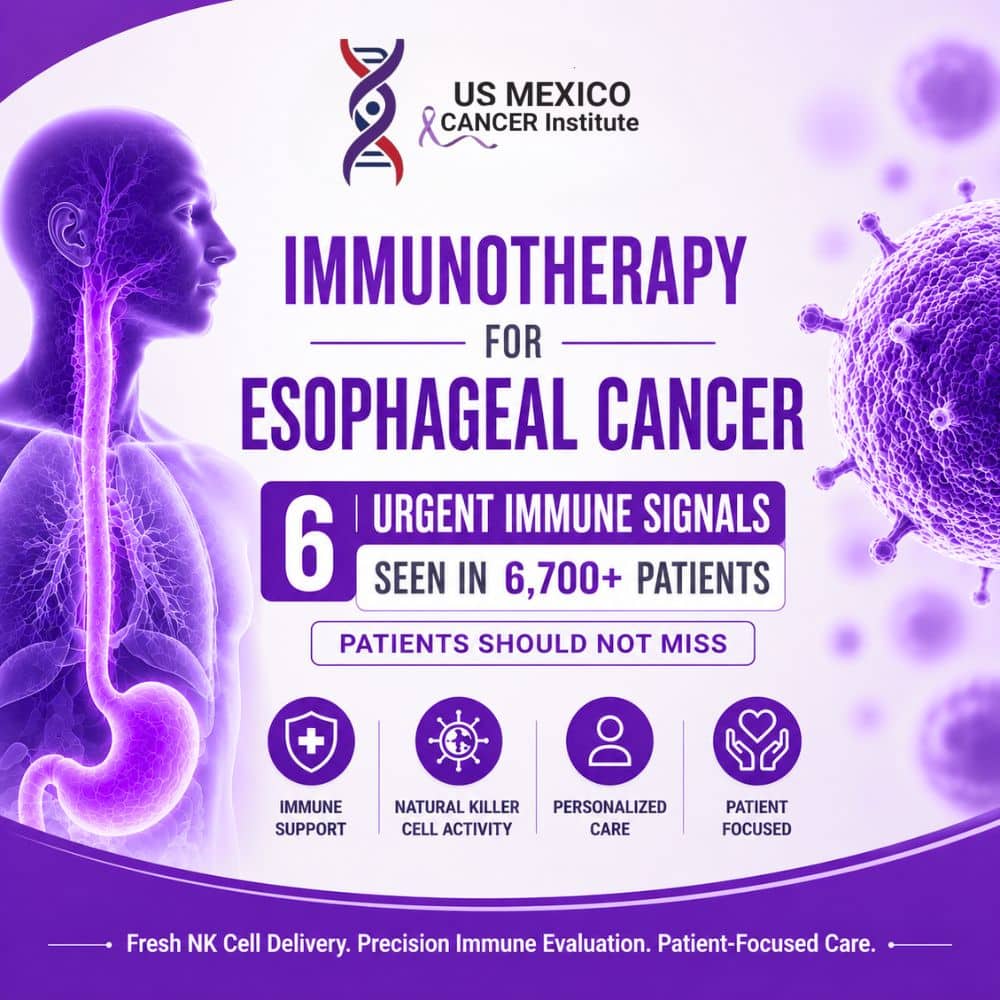
Why Eating Difficulties Often Change Treatment Decisions Faster Than Expected
Immunotherapy for esophageal cancer often becomes part of the discussion after patients begin noticing how quickly daily function can change during treatment.
Unlike many cancers, esophageal disease directly affects swallowing, nutrition, hydration, and physical strength. Even small changes in eating ability may gradually influence recovery capacity and biological responsiveness.
For patients managing stage 4 esophageal cancer, these shifts can affect treatment decisions earlier than many families expect.
At the US Mexico Cancer Institute, many patients arrive after already reviewing multiple forms of esophageal cancer treatment. They understand the diagnosis and available therapies.
What they want to understand is why the body sometimes becomes harder to stabilize during later treatment stages.
This question matters because the immune system depends heavily on overall biological resilience.
Nutritional strain may influence immune signaling.
Weight loss can affect recovery capacity.
Inflammatory stress inside digestive tissues may alter treatment responsiveness over time.
These changes are not always visible through imaging alone.
However, they may still influence whether the body maintains enough immune adaptability for treatment to align effectively.
Understanding these patterns changes how many families evaluate immunotherapy for esophageal cancer.
Why Nutritional Stress May Influence Immune Responsiveness
Patients exploring esophageal cancer treatment are often guided through treatment pathways focused on staging, imaging, procedural sequencing, and symptom management.
These systems remain important.
However, they do not fully explain why some patients lose treatment responsiveness more quickly than others.
At the US Mexico Cancer Institute, we evaluate how nutritional stress and immune responsiveness continue interacting throughout treatment.
The National Cancer Institute explains that natural killer cells are part of the body’s innate immune response and may help identify abnormal cells without prior exposure.
This matters because immune responsiveness may gradually change when the body experiences:
- swallowing difficulties
- chronic inflammation
- reduced nutritional intake
- prolonged biological stress
In esophageal cancer care, these factors may continue affecting how the immune system adapts during therapy.
What we evaluate is whether immune responsiveness still supports stronger treatment alignment while biological resilience remains more stable.
What Families Learn From Real Immune Patterns
In our ebook, “NATURAL KILLER CELLS – A GUIDE FOR FAMILIES AND LOVED ONES OF STAGE 4 CANCER PATIENTS,” we explain that immune exhaustion is often misunderstood.
In many patients, natural killer cells may still remain active, but immune coordination becomes less precise because of inflammation, treatment effects, or prolonged biological stress.
Understanding this distinction helps families evaluate timing, immune readiness, and whether immunotherapy for esophageal cancer still aligns with the body’s condition.
Why Biological Resilience Influences Treatment Timing
At the US Mexico Cancer Institute, we begin by evaluating how the body is functioning during treatment decision-making rather than relying only on diagnosis or staging.
Across thousands of patient evaluations, one pattern appears repeatedly:
The immune system often continues responding during advanced treatment stages.
What changes is how efficiently the body maintains biological resilience under prolonged stress.
This becomes especially important during immunotherapy for cancer treatment because nutritional strain and inflammation may influence how the immune system continues adapting throughout therapy.
In esophageal cancer care, responsiveness may be affected by:
- swallowing limitations
- weight loss
- inflammatory burden
- recovery capacity
- digestive-system stress
Understanding how these factors interact helps families evaluate treatment timing more clearly.
6 Urgent Immune Signals Patients Should Not Miss
1. Swallowing Changes May Influence Biological Stability Earlier Than Expected
One important pattern observed in stage 4 esophageal cancer involves progressive swallowing difficulty gradually affecting biological resilience.
As nutritional intake decreases, patients may experience:
- slower tissue recovery
- increased fatigue
- reduced treatment tolerance
- weaker immune responsiveness
This may influence how effectively the body continues adapting during treatment.
2. Weight Loss May Affect Immune Adaptability
Unintended weight loss affects more than physical appearance.
It may also influence:
- inflammatory balance
- immune signaling efficiency
- energy availability during recovery
- treatment responsiveness
In esophageal cancer care, maintaining nutritional stability may help preserve stronger biological adaptability throughout therapy.
3. Natural Killer Cells May Continue Responding During Advanced Disease
Natural killer cells continue participating in immune surveillance during many stages of treatment.
However, immune activity alone does not always mean immune responsiveness remains equally efficient.
As biological strain increases, patients may experience:
- reduced signaling clarity
- inflammatory interference
- weaker immune communication
This is why nk cell treatment should begin with careful immune evaluation rather than assumptions based solely on diagnosis or staging.
4. Chronic Inflammation May Affect Immune Signaling
Research from the National Institute of Allergy and Infectious Diseases explains that chronic inflammation may interfere with immune signaling pathways.
In patients reviewing top immunotherapy treatments for cancer, this matters because prolonged inflammatory stress may affect:
- treatment responsiveness
- tissue recovery patterns
- immune adaptability during therapy
Understanding inflammatory burden may help families evaluate timing more clearly.
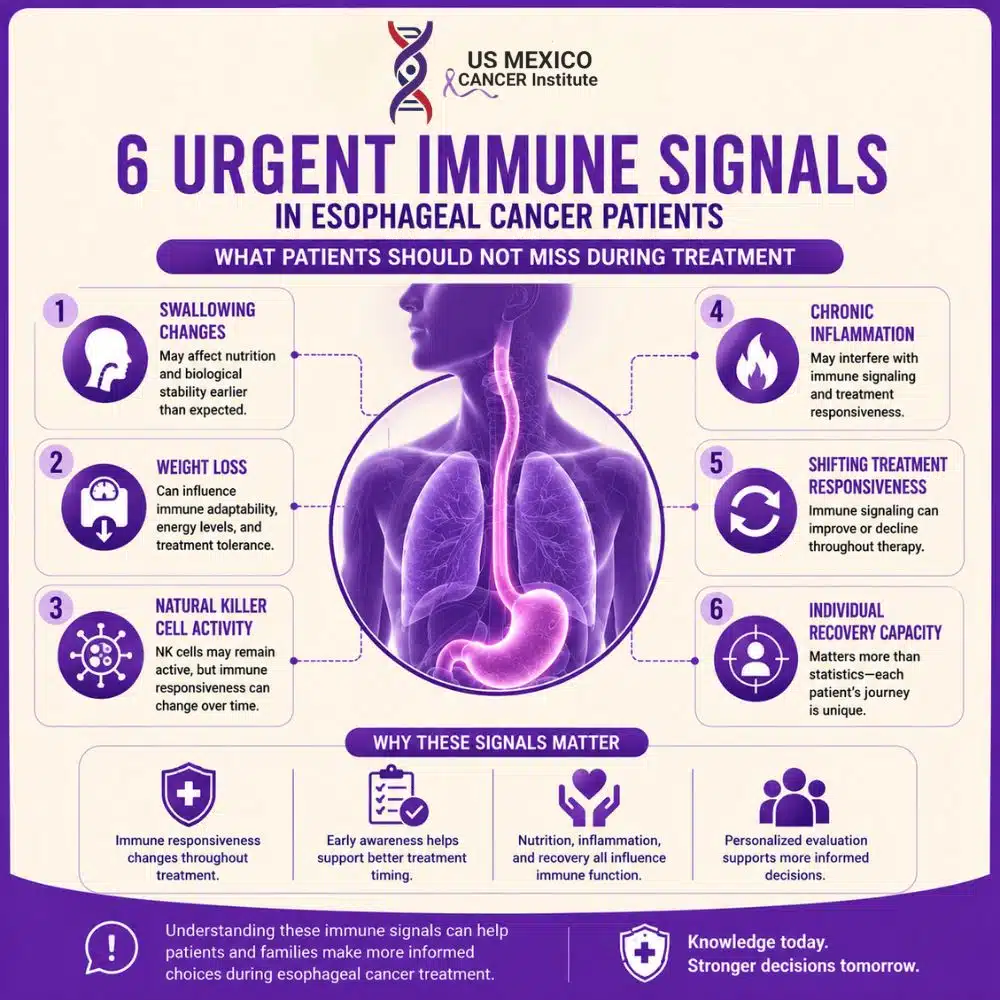
5. Treatment Responsiveness May Shift Throughout Therapy
Immune signaling does not remain static during treatment.
Some patients experience periods where:
- nutritional stability improves
- inflammation temporarily decreases
- recovery capacity becomes stronger
These changes may influence how the body responds during immunotherapy for esophageal cancer and broader immunotherapy for cancer treatment approaches.
6. Individual Recovery Capacity Matters More Than General Statistics
Patients frequently search for averages and generalized survival timelines.
These statistics provide broad context, but they do not define how an individual body continues adapting throughout treatment.
No two patients experience inflammation, nutritional strain, or biological stress in exactly the same way.
This is why esophageal cancer treatment should be evaluated through individualized biological assessment rather than generalized expectations alone.
Why Early Nutritional Stability Matters
Why Esophageal Cancer Symptoms May Affect More Than Swallowing
Some esophageal cancer symptoms may gradually influence hydration, recovery capacity, and immune responsiveness long before major physical decline becomes obvious.
Why Timing Awareness Supports Better Treatment Planning
As biological strain increases, treatment adaptability may continue changing.
Early evaluation may help preserve stronger alignment opportunities before nutritional stress becomes more difficult to stabilize.
Why Patients Choose Our Approach
We differentiate ourselves in ways most providers cannot replicate:
• NK cells are always delivered fresh with zero cryopreservatives for functional potency
• Molecular hydrogen support to reduce immune interference
• National-level medical leadership guiding decisions
• COFEPRIS-aligned safety oversight
• White-glove care that protects timing and reduces stress
At the US Mexico Cancer Institute, precision and safety guide every decision.
Our protocols align with COFEPRIS standards:
Patients searching for the best cancer clinic in tijuana mexico are often looking for structured evaluation and more individualized treatment guidance.
Why Early Evaluation Still Matters
Immune responsiveness continues evolving throughout treatment.
What aligns during one stage of care may not align the same way later as nutritional strain, inflammation, and biological stress continue affecting immune signaling.
At the US Mexico Cancer Institute, we help families evaluate how immune responsiveness and treatment timing continue influencing biological resilience during care decisions.
If you are exploring immunotherapy for esophageal cancer, reviewing esophageal cancer treatment, or evaluating broader immunotherapy for cancer treatment strategies, early evaluation may help preserve stronger treatment alignment opportunities.
Evaluate immune readiness now.
Protect treatment timing now.
Preserve clearer decision-making while stronger biological alignment opportunities still exist.
FAQs
1. What is immunotherapy for esophageal cancer?
It is a treatment approach designed to support the immune system’s ability to recognize and respond to abnormal cells.
2. Why do swallowing difficulties matter during esophageal cancer treatment?
Swallowing problems may affect nutrition, hydration, and biological resilience during therapy.
3. Do natural killer cells remain active during advanced esophageal cancer?
Yes. Natural killer cells may continue participating in immune surveillance, although responsiveness can change over time.
4. What is nk cell treatment?
Nk cell treatment involves evaluating immune readiness and biological coordination before considering immune-based therapeutic approaches.
5. Why do patients search for the best cancer clinic in tijuana mexico?
Many patients are looking for structured evaluation, timing awareness, and more individualized treatment guidance.

- NK Cell Therapy in Mexico: Patient Guide for Cancer Treatment in Tijuana - August 25, 2026
- NK Cell Therapy Mexico 6 Essential Standards Patients Should Evaluate Before Treatment - August 18, 2026
- Alternative Cancer Treatments Mexico 6 Essential Questions Patients Should Ask About Evidence and Safety - August 11, 2026