
Why NK Cells Determine Whether the Immune System Responds or Retreats
People rarely search what are natural killer (NK) cells because they’re curious. They search because something isn’t working the way it should. A diagnosis has changed the conversation. Time feels tighter. And one question rises above all others:
Does the body still know how to protect itself?
At US Mexico Cancer Institute, we see this moment every day. Understanding natural killer (NK) cells isn’t academic—it’s foundational. NK cells are the immune system’s frontline decision-makers. When they function with clarity, the body responds decisively. When they’re suppressed or confused, disease gains space.
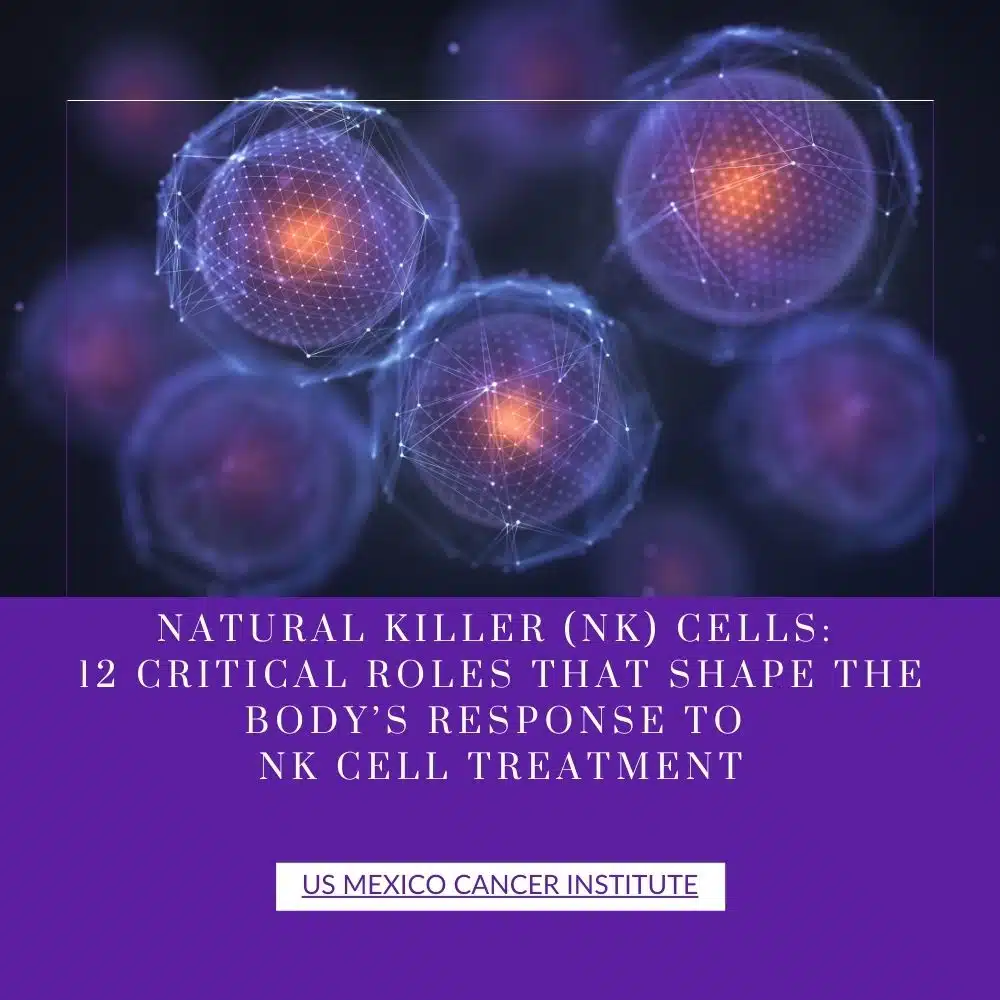
Before anyone considers nk cell treatment, it’s essential to understand the twelve critical roles NK cells play—and how those roles shape whether treatment becomes impactful or arrives too late.
What Are Natural Killer (NK) Cells and Why Their Role Matters
A natural killer cell is a specialized white blood cell designed for immediate action. Unlike immune cells that require training or memory, NK cells respond instinctively. They don’t ask for permission. They evaluate behavior and act.
This is why patients asking what are natural killer (NK) cells often feel clarity for the first time. NK cells operate within the innate immune system—the body’s rapid-response layer that acts before disease escalates.
As we explain in our ebook Natural Killer Cells – A Guide for Families and Loved Ones of Stage 4 Cancer Patients, immune decline is rarely sudden. NK cells are often still present, but overwhelmed by inflammation, oxidative stress, or prolonged immune confusion. When function is restored, the immune system frequently remembers how to respond.
The innate immune architecture that places NK cells at the center of early response is well described in Nature Reviews Immunology, which outlines how NK cells shape immune decisions long before adaptive responses activate.
The 12 Critical Roles of Natural Killer (NK) Cells
1. Early Immune Surveillance
The first and most defining role answers what is the role of a natural killer (NK) cells?
NK cells constantly patrol blood, tissue, and organs, scanning for cells that no longer behave normally.
When a cell loses proper identity markers—through mutation, viral stress, or malignant transformation—NK cells recognize the mismatch immediately. This role defines what is the function of natural killer (NK) cells at its core: identifying danger early.
The National Cancer Institute recognizes this surveillance function as central to how NK cells eliminate abnormal cells without prior immune training.
2. Rapid Decision-Making Without Delay
NK cells don’t wait for immune memory. They respond instantly. This speed allows natural killer cells to act before symptoms appear or tumors establish dominance.
Timing matters because once this rapid response is lost, immune recovery becomes more difficult.
3. Precision Recognition of Abnormal Cells
NK cells identify stress signals, missing surface markers, and abnormal protein expression. This precision explains why nk cells remove threats without harming healthy tissue.
Effective natural killer cell therapy depends on restoring this recognition—not increasing immune aggression.
4. Clean Elimination Through Programmed Cell Death
NK cells eliminate targets by activating apoptosis, allowing abnormal cells to shut down cleanly. This controlled elimination prevents inflammation and preserves surrounding tissue.
This role directly influences how the body tolerates nk cell treatment without added immune stress.
5. Removal of Virus-Infected Cells
NK cells are essential for controlling viral spread. By eliminating infected cells early, NK cells prevent viruses from using the body as a replication host.
This role explains why immune clarity often improves when NK function is restored.
6. Clearance of Cancerous Cells
NK cells detect malignant behavior before tumors become dominant. When functioning properly, natural killer cells prevent abnormal growth from gaining ground.
This role is central to why natural killer cell therapy focuses on restoring function rather than forcing immune activation.
7. Elimination of Senescent “Zombie” Cells
Senescent cells refuse to die and release inflammatory signals that disrupt immune communication. NK cells are uniquely equipped to recognize and remove them.
This clearance often improves energy, clarity, and immune balance before imaging changes appear.
8. Immune Signal Coordination
NK cells communicate with other immune cells through cytokines, helping the immune system decide when to respond and when to stand down.
This coordination role answers what is the role of a natural killer (NK) cells? beyond killing—it’s immune leadership.
9. Regulation of Inflammation
NK cells help prevent immune overreaction. When function is restored, inflammation often decreases rather than increases.
At US Mexico Cancer Institute, we support this role by reducing inflammatory interference so NK signaling remains clear.
10. Protection Against Immune Exhaustion
When NK cells function properly, they reduce the burden placed on other immune components. This prevents immune burnout and supports long-term resilience.
11. Maintenance of Immune Balance
NK cells help maintain equilibrium between response and restraint. Without this balance, immune systems become either aggressive or ineffective.
This role is foundational to understanding What is NK cell treatment?—restoring balance, not overwhelming the body.
12. Timing-Sensitive Defense
The final role of natural killer (NK) cells is timing. NK cells work best when intervention happens early—before immune collapse.
This is why nk cell treatment is about acting while capacity still exists.
Why These Roles Respond Differently to NK Cell Treatment
Not all immune support restores these roles equally. At US Mexico Cancer Institute, immune restoration is built around preserving NK clarity, safety, and timing.
We support NK cell roles by reducing immune interference—especially inflammation and oxidative stress—so recognition and signaling pathways remain intact. Molecular hydrogen support is integrated to help create a lower-noise internal environment where NK cells can function precisely.
Safety and accountability matter. In Mexico, advanced immune-based medical protocols operate under the authority of COFEPRIS, the Federal Commission for the Protection Against Sanitary Risk. This federal oversight establishes defined health standards that protect patients seeking advanced immune options.
Equally important is the care environment. Stress undermines immune response. From coordinated arrival to private accommodations and continuous physician oversight, our white-glove approach is designed to protect immune timing and focus—because NK cell roles respond best when the body is not under unnecessary strain.
Why Patients Choose Our Approach to NK Cell Treatment
We differentiate immune restoration in ways most providers cannot replicate:
• Fresh, never-frozen NK cells for functional potency
• Molecular hydrogen support to reduce immune interference
• National-level medical leadership guiding every decision
• COFEPRIS-aligned safety oversight for patient protection
• A structured, white-glove experience that protects timing
When patients compare options for nk cell treatment, one truth becomes clear: restoring NK cell roles requires precision, safety, and urgency working together.
Act While NK Cell Roles Are Still Active
Understanding natural killer (NK) cells reveals a simple truth: their roles determine whether the immune system responds or retreats. Once these roles collapse, options narrow quickly.
At US Mexico Cancer Institute, we see how timing changes outcomes every day. If you’re considering natural killer cell therapy, now is the moment to act. A private consultation can determine whether restoring NK cell function is still possible—because waiting rarely preserves opportunity.
FAQs
1. What are natural killer (NK) cells?
Natural killer (NK) cells are innate immune cells that recognize and eliminate abnormal, infected, or malignant cells without prior sensitization.
2. What is the role of a natural killer (NK) cells?
Their role includes immune surveillance, precision elimination, coordination, and maintaining immune balance.
3. What is the function of natural killer (NK) cells in treatment?
They help restore immune clarity, remove abnormal cells, and coordinate immune response when function is preserved.
4. What is NK cell treatment?
It is an immune-supportive approach designed to restore NK cell recognition, signaling, and elimination capacity rather than suppress immune activity.
5. Who may benefit most from nk cell treatment?
Patients with remaining immune capacity and manageable inflammatory burden often respond best.

- NK Cell Therapy in Mexico: Patient Guide for Cancer Treatment in Tijuana - August 25, 2026
- NK Cell Therapy Mexico 6 Essential Standards Patients Should Evaluate Before Treatment - August 18, 2026
- Alternative Cancer Treatments Mexico 6 Essential Questions Patients Should Ask About Evidence and Safety - August 11, 2026