
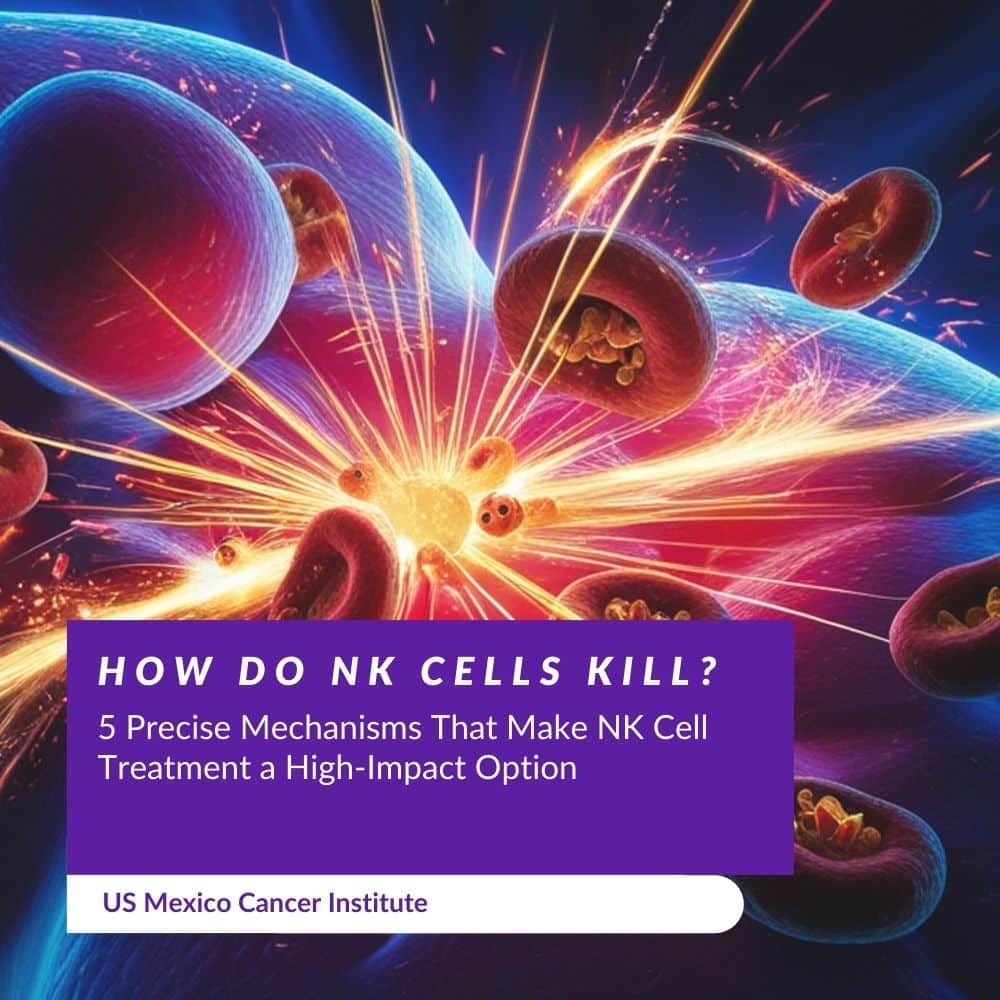
Why Understanding How NK Cells Kill Changes Everything
Most patients don’t start asking how do nk cells kill out of curiosity. They ask because something isn’t working the way it should. Treatments have stalled. Progress has slowed. And beneath the medical language, one question keeps surfacing:
Does the immune system still know how to eliminate what doesn’t belong?
At US Mexico Cancer Institute, we begin every immune conversation with clarity. NK cells are not passive immune participants. They are decisive, precise, and biologically designed to remove threats quietly and efficiently. Understanding how do nk cells kill infected cells, viruses, and cancer cells reveals why nk cell treatment can become a high-impact option—when timing and function still align.
What Makes NK Cells Different From Every Other Immune Cell
A natural killer cell is not trained to remember. It is built to recognize behavior. NK cells respond immediately to danger signals without prior exposure, antibody production, or immune memory.
This is why natural killer cells sit at the center of early immune defense. While other immune responses take time to activate, NK cells decide quickly whether a cell belongs or must be removed.
As outlined in our ebook Natural Killer Cells – A Guide for Families and Loved Ones of Stage 4 Cancer Patients, immune failure is rarely sudden. NK cells are often still present, but overwhelmed by inflammation, oxidative stress, or tumor signaling. When clarity is restored, their ability to eliminate threats often returns.
NK cells operate within the innate immune system—the body’s rapid-response layer—an architecture detailed in Nature Reviews Immunology, which explains how NK cells initiate early elimination before disease gains ground.
How Do NK Cells Kill? The 5 Precise Immune Mechanisms
1. Missing-Self Recognition (The First Kill Signal)
The most fundamental answer to how do nk cells kill begins with recognition. Healthy cells display identification markers known as MHC-I. When cells lose or alter those markers—through mutation, viral infection, or malignant transformation—NK cells detect the absence immediately.
This is how natural killer cells recognize danger without hesitation. When identity disappears, action begins. This mechanism explains how do nk cells kill infected cells before symptoms appear.
The National Cancer Institute describes this early immune surveillance role as a core function of NK cells, allowing rapid elimination without prior sensitization.
2. Perforin-Driven Target Access
Once recognition occurs, NK cells move quickly. They release perforin, a protein that creates microscopic pores in the target cell’s membrane. This step is surgical—not destructive.
Perforin allows NK cells to access the interior of infected or malignant cells without damaging surrounding tissue. This precision is why nk cells eliminate threats without creating systemic inflammation.
This mechanism is central to how do nk cells kill cancer cells while preserving healthy structure.
3. Granzyme-Induced Programmed Cell Death
After perforin creates access points, NK cells deliver granzymes—enzymes that activate apoptosis, the body’s natural self-destruct process.
Rather than exploding cells or poisoning tissue, NK cells instruct abnormal cells to shut down cleanly. This controlled elimination is one reason natural killer cell therapy focuses on restoring NK clarity rather than increasing immune aggression.
For patients already managing inflammation or immune exhaustion, this distinction matters.
4. Death-Receptor Signaling (Silent Elimination)
NK cells also use external signaling pathways to eliminate threats. Through receptors such as FasL and TRAIL, NK cells bind directly to target cells and activate internal death programs.
This method answers an important question patients ask: how do nk cells kill viruses without harming healthy cells? The answer lies in selective signaling—NK cells activate death only in cells that display danger signals.
This pathway allows NK cells to eliminate infected cells without collateral immune activation.
5. Cytokine Coordination and Immune Control
The final mechanism behind how do nk cells kill extends beyond elimination. NK cells release cytokines that coordinate broader immune response, helping the immune system decide when to escalate and when to stand down.
This coordination prevents overreaction. It also explains why nk cell treatment succeeds when immune clarity is restored rather than overridden.
When NK cells function properly, immune response becomes precise instead of chaotic.
Why NK Cell Treatment Works When These Mechanisms Are Preserved
Understanding how do nk cells kill cancer cells is only useful if those mechanisms are still functional. At US Mexico Cancer Institute, immune restoration is designed around preserving and amplifying these exact pathways.
We support NK cell function by reducing interference—particularly inflammation and oxidative stress—that disrupt recognition and signaling. This includes integrating molecular hydrogen support to create an internal environment where NK cells can operate with precision rather than resistance.
Safety and trust remain essential. In Mexico, advanced immune-based medical processes fall under the authority of COFEPRIS, the Federal Commission for the Protection Against Sanitary Risk. This national oversight establishes defined safety standards that protect patients seeking advanced immune support and reinforce accountability where precision matters most.
Just as importantly, immune response is influenced by stress. From coordinated arrival to private accommodations and continuous physician oversight, our care experience is structured to protect timing and immune focus. When stress is reduced, immune clarity improves—and NK mechanisms are given the opportunity to work as designed.
Why Patients Choose Our Approach to NK Cell Treatment
We differentiate immune restoration in ways most providers cannot replicate:
• Fresh, never-frozen NK cells to preserve functional potency
• Molecular hydrogen support to reduce immune interference
• National-level medical leadership guiding every decision
• COFEPRIS-aligned safety oversight for patient protection
• A white-glove experience that protects timing and immune focus
When patients compare options for nk cell treatment, one reality becomes clear: precision, safety, and timing determine whether NK mechanisms succeed—or arrive too late.
Waiting Is the Real Risk
Understanding how do nk cells kill reveals something critical: NK cell treatment works best while these mechanisms are still active. Once immune recognition and signaling collapse, options narrow quickly.
At US Mexico Cancer Institute, we see the difference timing makes every day. If you’re exploring natural killer cell therapy, this is not the moment to wait. A private consultation can determine whether restoring NK cell function is still possible—because delay often closes the window that action keeps open.
FAQs
1. How do nk cells kill infected cells?
NK cells recognize missing identity markers on infected cells and trigger programmed cell death without damaging surrounding tissue.
2. How do nk cells kill viruses?
They eliminate virus-infected cells using perforin, granzymes, and death-receptor signaling before viral spread escalates.
3. How do nk cells kill cancer cells?
NK cells detect abnormal signaling on cancer cells and initiate precise, non-inflammatory elimination mechanisms.
4. What is NK cell treatment?
What is NK cell treatment? It is an immune-supportive approach focused on restoring NK cell recognition, signaling, and elimination capacity rather than suppressing immune activity.
5. Who benefits most from nk cell treatment?
Patients with remaining immune capacity and manageable inflammatory burden often respond best.

- NK Cell Therapy in Mexico: Patient Guide for Cancer Treatment in Tijuana - August 25, 2026
- NK Cell Therapy Mexico 6 Essential Standards Patients Should Evaluate Before Treatment - August 18, 2026
- Alternative Cancer Treatments Mexico 6 Essential Questions Patients Should Ask About Evidence and Safety - August 11, 2026