
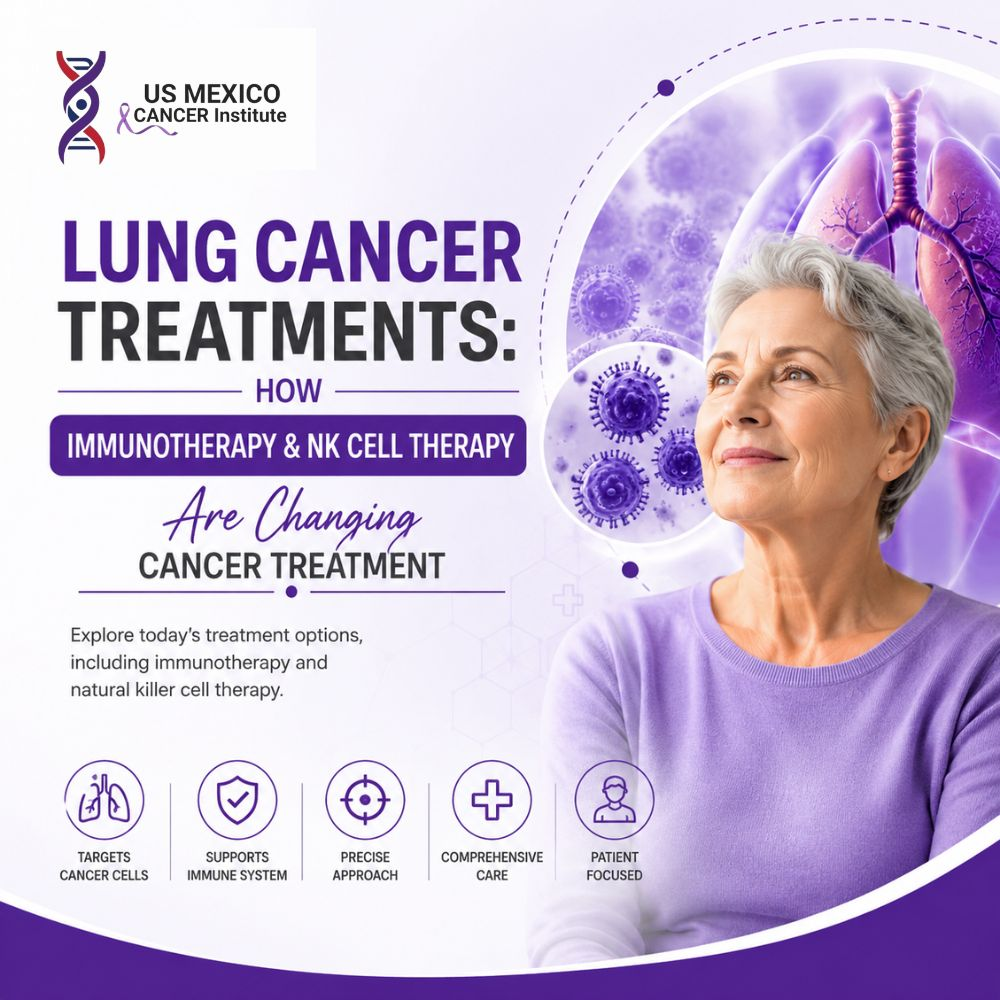
When Traditional Lung Cancer Treatments Aren’t the Whole Story
A lung cancer diagnosis can change everything in an instant. Patients and their families are suddenly faced with difficult decisions, unfamiliar medical terms, and an overwhelming number of lung cancer treatments to consider. While surgery, chemotherapy, and radiation therapy continue to save lives, advances in modern medicine are expanding the range of cancer treatment options available to patients.
One of the most significant developments is immunotherapy for lung cancer, which works differently from conventional therapies by helping the immune system recognize and respond to cancer cells. Among the newest areas of research are lung cancer natural killer cells, an innovative approach that harnesses the body’s own immune defenses to target abnormal cells with greater precision.
At the US Mexico Cancer Institute, we believe that every patient deserves clear, evidence-based information before making treatment decisions. This guide explains today’s lung cancer treatments, how immunotherapy for lung cancer works, and why researchers are increasingly interested in lung cancer natural killer cells as part of the future of personalized cancer treatment.
Understanding Lung Cancer
Lung cancer occurs when abnormal cells grow uncontrollably within the lungs. According to the National Cancer Institute, it remains one of the leading causes of cancer-related deaths worldwide. However, advances in diagnosis, personalized medicine, and cancer treatment continue to improve outcomes for many patients.
There are two primary types of lung cancer:
Non-Small Cell Lung Cancer (NSCLC)
Accounting for approximately 85% of cases, NSCLC includes adenocarcinoma, squamous cell carcinoma, and large cell carcinoma. Treatment depends on the cancer’s stage, molecular profile, and the patient’s overall health.
Small Cell Lung Cancer (SCLC)
SCLC tends to grow and spread more rapidly than NSCLC. Because of its aggressive nature, treatment often includes systemic therapies such as chemotherapy, radiation, and immunotherapy for lung cancer.
Determining the type and stage of lung cancer is one of the most important steps in selecting the most appropriate lung cancer treatments for each individual.
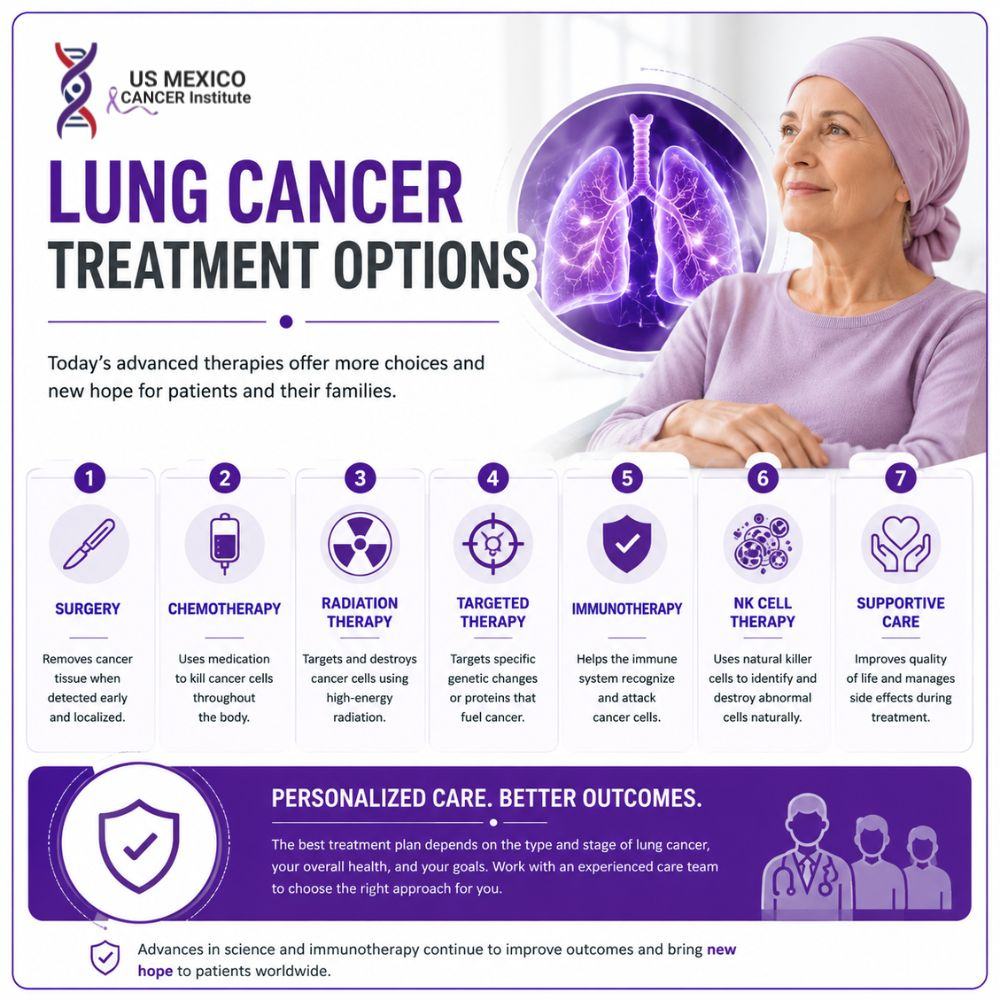
Today’s Standard Lung Cancer Treatments
Modern lung cancer treatments are highly personalized. Physicians often combine multiple therapies based on the patient’s diagnosis, overall health, and treatment goals.
Surgery
For patients diagnosed in the early stages, surgery may offer the best opportunity to remove localized tumors. Procedures range from removing a small portion of the lung to an entire lobe when necessary.
Chemotherapy
Chemotherapy remains one of the most common forms of cancer treatment. These medications destroy rapidly dividing cancer cells and may be used before surgery, after surgery, or for advanced-stage disease. Although effective, chemotherapy can also affect healthy cells, leading to side effects such as fatigue, nausea, and hair loss.
Radiation Therapy
Radiation therapy uses high-energy beams to destroy cancer cells while minimizing damage to nearby healthy tissue. It may be used alone or in combination with surgery and chemotherapy.
Targeted Therapy
Some patients benefit from targeted therapies designed to attack specific genetic mutations found within certain lung cancers. Molecular testing helps physicians determine whether these medications are appropriate.
Immunotherapy
Over the past decade, immunotherapy for lung cancer has become one of the most important advances in oncology. Rather than directly attacking cancer cells, immunotherapy helps the body’s immune system recognize and respond more effectively to cancer. Checkpoint inhibitors have become standard treatment for many patients with advanced lung cancer and continue to improve outcomes for selected individuals.
How Immunotherapy for Lung Cancer Works
Unlike chemotherapy, which attacks rapidly growing cells, immunotherapy for lung cancer focuses on strengthening the body’s natural immune response.
Cancer cells often develop ways to hide from the immune system by using proteins that suppress immune activity. Certain immunotherapy drugs block these signals, allowing immune cells to recognize and attack cancer more effectively.
For many patients, immunotherapy for lung cancer is now used alongside surgery, chemotherapy, or radiation as part of a comprehensive treatment plan. Eligibility depends on factors such as cancer type, stage, biomarker testing, and overall health.
As research continues to advance, immunotherapy for lung cancer has become an increasingly important component of modern oncology. Organizations such as the American Cancer Society provide educational information about how immunotherapy may be used alongside surgery, chemotherapy, radiation therapy, and targeted therapies as part of a comprehensive treatment strategy. Patients are encouraged to discuss all available treatment options with their oncology team to determine the approach that best fits their diagnosis and overall health.
What Are Lung Cancer Natural Killer Cells?
One of the most exciting areas of immunotherapy research involves lung cancer natural killer cells, commonly known as NK cells.
Natural Killer cells are part of the body’s innate immune system and serve as one of its first lines of defense. Unlike some immune cells that require prior exposure to recognize threats, NK cells can naturally identify and destroy many abnormal cells, including certain cancer cells.
Researchers are studying how expanding and activating these cells outside the body before returning them to the patient may enhance the immune response against cancer. Although research continues, lung cancer natural killer cells represent a promising area of personalized cancer treatment that may complement existing therapies rather than replace them.
Learn More About NK Cell Therapy
If you would like to better understand how lung cancer natural killer cells work and what families should know before exploring advanced cancer treatment, we invite you to listen to our audiobook, Natural Killer Cells – A Guide for Families and Loved Ones of Stage 4 Cancer Patients. This educational resource explains NK cell biology, current immunotherapy research, and practical questions to discuss with your healthcare team, helping patients and caregivers make informed decisions.
Potential Benefits of NK Cell Therapy
Although NK cell therapy is still an evolving area of medicine, researchers continue investigating several potential advantages.
These may include:
- Supporting the body’s natural immune defenses
- Targeting abnormal cells with greater precision
- Potentially complementing chemotherapy or immunotherapy for lung cancer
- Personalized treatment planning based on each patient’s condition
- Ongoing research into improving quality of life and treatment outcomes
Because every patient’s diagnosis is different, physicians carefully evaluate whether NK cell therapy may be appropriate as part of an individualized cancer treatment strategy.
Is NK Cell Therapy Right for Everyone?
Not every patient is a candidate for NK cell therapy. Factors such as the type of lung cancer, stage of disease, previous treatments, overall health, and immune function all influence treatment recommendations.
Patients considering advanced lung cancer treatments should discuss all available options with an experienced oncology team. A comprehensive evaluation helps determine whether traditional therapies, immunotherapy for lung cancer, clinical trials, or emerging approaches such as NK cell therapy may be appropriate.
Why Patients Choose the US Mexico Cancer Institute
Choosing where to receive cancer treatment is an important decision. At the US Mexico Cancer Institute, every treatment plan is built around the individual rather than a standardized protocol.
Patients choose the US Mexico Cancer Institute because of our commitment to:
- Physician-led evaluations and personalized treatment planning
- Advanced immunotherapy protocols
- Comprehensive patient education
- English-speaking care teams
- International patient coordination
- Transparent communication
- Evidence-informed treatment recommendations
- Compassionate support for patients and families throughout their journey
Our goal is to help every patient understand their options so they can make confident, informed decisions about their care.
Patients traveling to Mexico for advanced cancer treatment should also consider the regulatory environment in which care is provided. In Mexico, healthcare facilities and medical products are regulated by COFEPRIS (Comisión Federal para la Protección contra Riesgos Sanitarios), the country’s federal health regulatory authority. Choosing a clinic that operates within applicable regulatory standards helps patients make informed decisions about their treatment options while receiving care in a professionally supervised medical setting.
Frequently Asked Questions
1. What are the most common lung cancer treatments?
Common lung cancer treatments include surgery, chemotherapy, radiation therapy, targeted therapy, and immunotherapy for lung cancer. The best approach depends on the type and stage of lung cancer.
2. How does immunotherapy for lung cancer differ from chemotherapy?
Chemotherapy directly attacks rapidly dividing cells, while immunotherapy for lung cancer helps the immune system recognize and respond more effectively to cancer cells.
3. What are lung cancer natural killer cells?
Lung cancer natural killer cells are immune cells that naturally identify abnormal cells. Researchers are studying how activated NK cells may support modern cancer treatment strategies.
4. Can NK cell therapy replace standard treatments?
No. NK cell therapy is generally being studied as a complementary approach and is not considered a replacement for established lung cancer treatments.
5. How do physicians determine the best treatment?
Treatment recommendations are based on the type and stage of lung cancer, molecular testing, overall health, previous therapies, and each patient’s individual goals.
Moving Forward with Confidence
The landscape of lung cancer treatments continues to evolve. Alongside surgery, chemotherapy, radiation, targeted therapies, and immunotherapy for lung cancer, research into lung cancer natural killer cells is expanding our understanding of personalized cancer treatment.
While every patient’s journey is unique, understanding today’s treatment options is an important first step. At the US Mexico Cancer Institute, we are committed to combining patient education, compassionate care, and evidence-informed medicine to help individuals and families navigate their treatment journey with confidence and hope.

- NK Cell Therapy in Mexico: Patient Guide for Cancer Treatment in Tijuana - August 25, 2026
- NK Cell Therapy Mexico 6 Essential Standards Patients Should Evaluate Before Treatment - August 18, 2026
- Alternative Cancer Treatments Mexico 6 Essential Questions Patients Should Ask About Evidence and Safety - August 11, 2026