

Why Immunotherapy for Breast Cancer Requires Careful Decisions
A breast cancer diagnosis can quickly lead to questions about treatment choices, immune health, and timing. Immunotherapy for breast cancer has expanded these discussions because certain therapies help the immune system recognize or respond to cancer cells.
However, immunotherapy is not one treatment, and it is not appropriate for every patient.
Cancer subtype, biomarkers, disease stage, previous therapies, overall health, and current immune function can influence treatment planning. Understanding these differences helps patients separate established medical options from emerging approaches that continue being researched.
At the US Mexico Cancer Institute, we believe every breast cancer treatment discussion should begin with education and careful evaluation. Patients deserve to understand what their diagnosis means, what evidence supports available therapies, and which biological factors may influence treatment decisions.
How Breast Cancer Can Interfere With Immune Recognition
The immune system constantly monitors the body for abnormal cells. Cancer can interfere with this process by changing cellular signals, suppressing nearby immune activity, or creating conditions that make an effective immune response more difficult.
Different immunotherapies address different parts of this problem.
Immune checkpoint inhibitors, for example, block signals that can prevent certain immune cells from responding effectively. The National Cancer Institute’s immunotherapy overview explains that immunotherapy includes several treatment approaches that help the immune system act against cancer.
For breast cancer, some immunotherapies are used for selected patients based on cancer subtype, stage, biomarkers, and other clinical factors.
The phrase new cancer treatment for breast cancer can therefore describe therapies at very different stages of clinical research, regulatory approval, and medical use.
In our ebook, NATURAL KILLER CELLS – A GUIDE FOR FAMILIES AND LOVED ONES OF STAGE 4 CANCER PATIENTS, we explain how natural killer cells participate in immune surveillance, how cancer can interfere with immune coordination, and why treatment timing should be considered alongside each patient’s broader biological condition.
What Families Learn From Real Immune Patterns: Why Treatment Selection Goes Beyond the Tumor
Patients often ask which treatment is strongest. A better question is whether the factors that influence treatment selection and tolerance have been properly evaluated.
Cancer can affect immune activity in different ways. Tumors may suppress immune cells, alter signaling, or create an environment that limits immune responses. Previous therapies can also affect blood counts, organ function, inflammation, and overall treatment tolerance.
For these reasons, responsible treatment planning considers more than tumor location.
At the US Mexico Cancer Institute, we focus on disease characteristics, previous treatments, current health, immune coordination, and timing. This approach helps patients understand whether an immune-focused strategy may be appropriate for discussion.
No single cancer treatment is suitable for every patient. Even established therapies require careful patient selection, diagnostic testing, and medical oversight.
Comparing Established Immunotherapy and Emerging NK Cell Approaches
Patients researching top immunotherapy treatments for cancer may encounter checkpoint inhibitors, monoclonal antibodies, cancer vaccines, adoptive cell therapies, and developing cell-based treatments.
These approaches do not work in the same way.
Checkpoint inhibitors block signals that limit certain immune responses. Other therapies aim to improve immune recognition, target specific biological pathways, or increase the activity of selected immune cells.
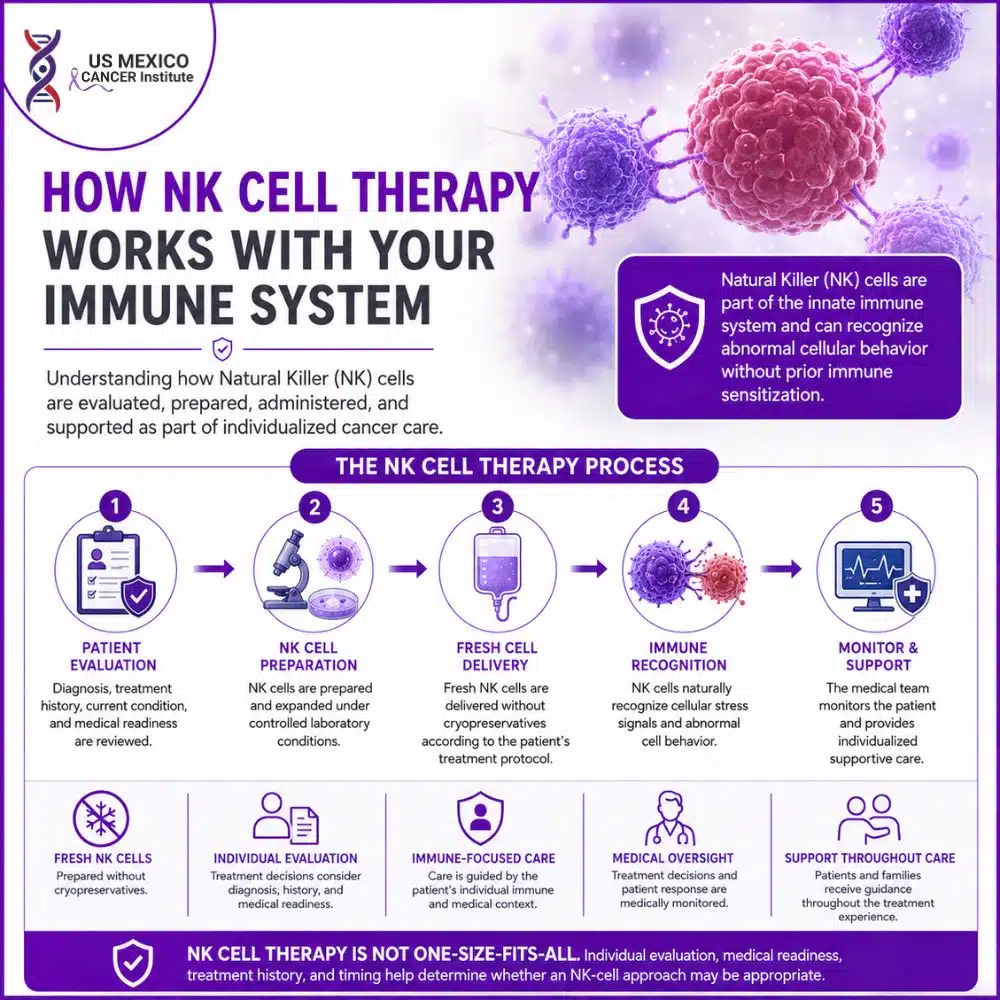
Natural killer cells are part of the innate immune system and can recognize certain abnormal cells without requiring the same antigen-specific activation process used by some T cells.
A peer-reviewed NK cell immunotherapy review indexed in PubMed discusses NK cell biology, barriers that can limit activity against tumors, and developing strategies intended to improve therapeutic applications.
This research has increased interest in Natural Killer (NK) Cell Therapy. However, clinical evidence, regulatory status, protocols, and appropriate applications vary.
At the US Mexico Cancer Institute, our approach begins with medical evaluation rather than assumptions about treatment eligibility.
7 Essential Facts to Understand Before Considering Immunotherapy
1. Breast Cancer Subtype Influences Treatment Options
Breast cancer includes diseases with different biological characteristics.
Hormone receptor status, HER2 expression, triple-negative classification, disease stage, and other findings influence treatment planning. Biomarker testing may also help determine whether selected immunotherapy options should be considered.
For this reason, immunotherapy for breast cancer should never be presented as a universal protocol. Treatment decisions should reflect the patient’s diagnosis, previous therapies, current condition, and relevant testing.
2. Biomarkers Can Help Guide More Precise Decisions
Biomarkers provide information about the tumor or the patient’s biology.
For selected breast cancer patients, testing such as PD-L1 assessment may help physicians determine whether certain immune checkpoint inhibitors could be appropriate.
A biomarker result does not guarantee treatment response. It provides information that can support more precise medical decisions and help oncology teams identify patients who may meet specific treatment criteria.
3. Natural Killer Cells Have a Distinct Immune Role
Natural killer cells participate in immune surveillance and can respond to certain abnormal cellular patterns.
Scientists continue studying how tumors suppress NK cell activity and how cell-based therapies may support or enhance their function.
This research has contributed to interest in Natural Killer (NK) Cell Therapy as an emerging area of immunotherapy.
Patients should understand that NK cell-based therapies continue being researched. Evidence, regulatory status, clinical applications, and treatment protocols vary according to the therapy and jurisdiction.
4. Treatment Timing Can Influence Available Options
Disease progression, previous therapies, immune function, blood counts, inflammation, organ health, and overall condition can change over time.
As these factors change, treatment eligibility and tolerance may also change.
At the US Mexico Cancer Institute, our timing-focused evaluation structure helps patients understand their current medical condition and discuss available options with greater clarity.
Timing awareness does not mean rushing into treatment. It means avoiding unnecessary delays in gathering medical information, completing evaluations, and asking informed questions.
5. Immune Activity Depends on Biological Coordination
An immune response involves communication among cells, signaling molecules, tissues, and biological systems.
Tumors may interfere with this coordination by producing suppressive signals or changing the environment surrounding cancer cells.
Evaluating immune-focused treatment therefore requires more than examining one immune cell type.
At the US Mexico Cancer Institute, we consider factors that may influence immune coordination, including inflammation, previous treatment exposure, and current immune status.
Molecular hydrogen support may be incorporated into our approach to address biological conditions that can interfere with immune function.
6. Screening and Regulatory Oversight Support Responsible Care
Immune-focused treatment should begin with appropriate medical evaluation.
Medical history, medications, laboratory findings, infections, previous therapies, organ function, and other clinical factors can influence treatment planning.
At the US Mexico Cancer Institute, our approach includes extensive infectious and genetic screening and COFEPRIS-aligned safety oversight.
Mexico’s Federal Commission for Protection against Health Risks (COFEPRIS) is responsible for health regulation and oversight across areas within its federal jurisdiction.
Regulatory oversight does not guarantee treatment effectiveness or individual outcomes. It provides an important framework for responsible medical practice, quality processes, and patient safety.
7. Evidence and Biological Fit Matter More Than Novelty
Choosing a breast cancer treatment requires more than finding the newest available therapy.
Patients should ask what evidence supports a treatment for their cancer subtype, whether it is established or continues being researched, what testing is required, what limitations should be considered, and how previous therapies may influence eligibility.
These questions help patients compare top immunotherapy treatments for cancer and emerging approaches without relying on promotional claims.
At the US Mexico Cancer Institute, we believe informed treatment decisions should reflect medical evidence, timing, and patient-specific biological factors.
Why Patients Choose Our Precision and Timing-Focused Approach
Why Patients Choose Our Approach
We differentiate ourselves in ways most providers cannot replicate:
• NK cells are always delivered fresh with zero cryopreservatives for functional potency
• Molecular hydrogen support to reduce immune interference
• National-level medical leadership guiding decisions
• COFEPRIS-aligned safety oversight
• White-glove care that protects timing and reduces stress
When patients compare options, one truth becomes clear:
Precision and timing shape what remains possible.
Our approach to Natural Killer (NK) Cell Therapy centers on medical evaluation, precision immune coordination assessment, extensive screening, and physician-led treatment planning.
Patients deserve clear explanations about what is established, what continues being researched, and which biological factors may influence treatment decisions.
Move Forward With Greater Treatment Clarity
A search for immunotherapy for breast cancer can lead to established therapies, emerging approaches, and claims that are difficult to compare.
The most useful next step is understanding your diagnosis, biomarkers, treatment history, current health, and available options.
At the US Mexico Cancer Institute, we help patients and families evaluate these factors through timing-focused assessment and precision immune coordination.
Cancer biology can change over time, and the factors influencing treatment selection can change as well. Seeking qualified medical evaluation earlier may provide more time to gather information, ask informed questions, and coordinate decisions with your oncology team.
Common Questions About Immunotherapy for Breast Cancer
1. Is immunotherapy for breast cancer available to every patient?
No. Eligibility depends on breast cancer subtype, disease stage, biomarkers, previous therapies, overall health, and the specific immunotherapy being considered. Medical evaluation is necessary before treatment recommendations are made.
2. Can immunotherapy replace standard breast cancer treatment?
Immunotherapy is used for selected patients according to specific clinical indications and may be combined with other therapies. Patients should not stop or replace recommended standard treatment without discussing the decision with their oncology team.
3. What are natural killer cells?
Natural killer cells are immune cells that participate in the body’s response to certain abnormal or infected cells. Researchers continue studying how NK cells may be expanded, supported, or used in cancer treatment strategies.
4. Is Natural Killer (NK) Cell Therapy an established breast cancer treatment?
The evidence and regulatory status of Natural Killer (NK) Cell Therapy vary by treatment protocol, clinical indication, and jurisdiction. NK cell-based therapies continue being researched. Patients should request clear information about evidence, medical oversight, limitations, and regulatory status.
5.. How should patients compare new breast cancer treatment options?
Patients researching a new cancer treatment for breast cancer should consider supporting evidence, relevance to their cancer subtype, required testing, potential limitations, regulatory status, physician qualifications, and how the proposed treatment fits within their broader oncology care.

- NK Cell Therapy in Mexico: Patient Guide for Cancer Treatment in Tijuana - August 25, 2026
- NK Cell Therapy Mexico 6 Essential Standards Patients Should Evaluate Before Treatment - August 18, 2026
- Alternative Cancer Treatments Mexico 6 Essential Questions Patients Should Ask About Evidence and Safety - August 11, 2026