

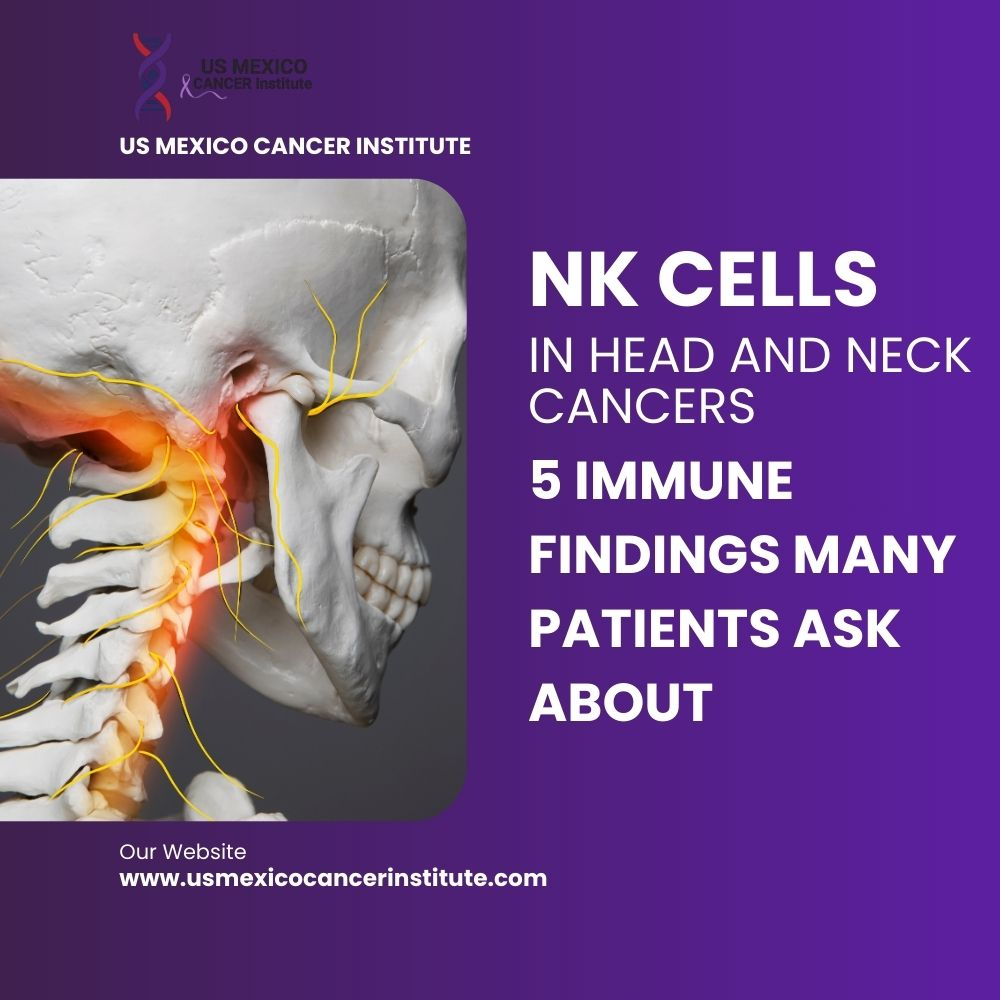
Why Head and Neck Cancers Raise Immune Concerns
When families hear the diagnosis Head and Neck Cancers, the focus often begins with visible symptoms, biopsy results, and selecting a treatment plan. Swallowing difficulties, voice changes, and visible lesions quickly draw attention. However, as decisions progress, families begin asking deeper questions about immune function.
Is the immune system still responding?
Has immune clarity already declined?
Does timing change what remains possible?
At US Mexico Cancer Institute, we frequently meet patients during this stage of uncertainty. Many have been told that treatment options are defined and that immune involvement has already been addressed. What we explain instead is that immune coordination changes gradually, and evaluation often reveals more clarity than expected.
Understanding how cancer natural killer cells behave in Head and Neck Cancers provides structure to these decisions.
Understanding NK Cells in Head and Neck Cancers
A natural killer cell is part of the innate immune system. NK cells respond to abnormal stress signals on cells without needing prior exposure. This rapid recognition allows early immune engagement.
In Head and Neck Cancers, the immune environment is complex. These regions are exposed to constant environmental stress, including infection history, tobacco exposure, and inflammation. Over time, this stress influences immune signaling.
The National Cancer Institute defines natural killer cells as white blood cells capable of eliminating abnormal cells without prior sensitization. This highlights why NK cells remain relevant in immune-focused discussions.
When families consider NK Cell Therapy for Head and Neck Cancer or broader natural killer cell therapy, the central issue is immune coordination. Presence alone does not determine readiness. Clarity determines responsiveness.
As described in our ebook Natural Killer Cells – A Guide for Families and Loved Ones of Stage 4 Cancer Patients, immune overload is often misinterpreted as immune failure. NK cells may remain active but suppressed by chronic inflammation.

5 Immune Findings Many Patients Ask About
In Head and Neck Cancers, immune changes rarely happen all at once. They develop gradually through shifts in inflammation, signaling clarity, and treatment exposure. Many patients search for answers about how NK cells behave, whether immune response remains active, and how timing affects decisions. The five immune findings below explain what changes inside the immune system over time and why early evaluation helps preserve coordination before flexibility narrows.
1. Chronic Inflammation Alters NK Cell Recognition
Inflammation is common in Head and Neck Cancers due to tissue exposure and infection history. Persistent inflammation interferes with NK cell signaling accuracy.
Research supported by the National Institute of Allergy and Infectious Diseases shows that long-term inflammation disrupts innate immune communication pathways, including NK cell coordination.
When inflammation remains elevated, NK cells may misinterpret stress signals. This does not mean they disappear. It means coordination weakens gradually.
2. Head and Neck Cancers Symptoms Often Reflect Immune Stress
Common head and neck cancers symptoms include throat discomfort, swallowing difficulty, voice changes, swelling, and fatigue. While these symptoms reflect tumor presence, they also indicate immune stress.
When immune signaling becomes disorganized, tissue recovery slows and systemic fatigue increases. Understanding this pattern helps families see that immune balance influences symptom progression.
3. Immunotherapy for Head and Neck Cancers Interacts With NK Cells
Many patients ask about immunotherapy for head and neck cancers. These therapies often stimulate immune pathways directly.
However, immune stimulation without coordination can lead to imbalance. NK cells function best when immune signaling remains structured.
At US Mexico Cancer Institute, we assess immune clarity before recommending additional immune-based strategies.
4. NK Cells in Head and Neck Cancers Remain Active but Can Become Suppressed
In NK Cells in Head and Neck Cancers, suppression often occurs before loss. Tumor signaling and chronic irritation release factors that weaken immune coordination.
NK cells may still be present but respond less effectively. This gradual change highlights why evaluation should occur before immune clarity declines further.
5. Timing Determines Whether NK Cell Treatment Remains Appropriate
Families often ask when nk cell treatment should be considered. The answer depends on immune readiness.
NK cells respond most effectively when inflammatory burden remains manageable and signaling clarity exists. Waiting too long allows immune coordination to weaken. Early evaluation preserves flexibility.
How Cancer Natural Killer Cells Shape Head and Neck Decisions
When families ask about cancer natural killer cells, we evaluate several measurable factors:
• Inflammatory burden
• NK cell responsiveness
• Treatment-related immune effects
• Overall immune coordination
This structured evaluation prevents assumption-based decisions. Instead of reacting to urgency alone, we assess whether immune clarity remains measurable.
At US Mexico Cancer Institute, decisions are guided by immune data and timing.
Why Patients Choose Our Approach
We differentiate ourselves in ways most providers cannot replicate:
• Fresh, never-frozen NK cells for functional potency
• Molecular hydrogen support to reduce immune interference
• National-level medical leadership guiding decisions
• COFEPRIS-aligned safety oversight
• White-glove care that protects timing and reduces stress
Our processes align with standards established by COFEPRIS, Mexico’s Federal Commission for the Protection Against Sanitary Risk, which regulates cellular therapies and ensures patient protection.
At US Mexico Cancer Institute, precision and timing guide immune-focused strategies.
How This Information Guides Families Forward
In Head and Neck Cancers, immune coordination often changes gradually. NK cells may remain present even when symptoms progress.
Our role at US Mexico Cancer Institute is to evaluate immune readiness before timing narrows options further. Structured immune assessment allows families to make decisions based on measurable clarity rather than assumption.
Timing Shapes What Remains Possible
In Head and Neck Cancers, immune clarity often declines gradually, not suddenly.
At US Mexico Cancer Institute, we guide families before coordination weakens further. If you are reviewing head and neck cancers symptoms, exploring immunotherapy for head and neck cancers, or considering NK Cell Therapy for Head and Neck Cancer, now is the time to evaluate immune readiness before timing narrows opportunity.
FAQs
1. Do NK cells still function in Head and Neck Cancers?
Yes. NK cells often remain present but may become suppressed by inflammation or tumor signaling.
2. How do head and neck cancers symptoms relate to immune stress?
Symptoms such as fatigue and swelling may reflect immune imbalance in addition to tumor growth.
3. Is NK Cell Therapy for Head and Neck Cancer appropriate for every patient?
No. Immune evaluation determines whether timing and readiness align with treatment goals.
4. How does immunotherapy for head and neck cancers affect NK cells?
Immunotherapy may stimulate immune pathways, but coordination must be assessed to ensure balance.
5. When should families consider nk cell treatment?
As early as possible, before prolonged immune suppression reduces coordination.

- NK Cell Therapy in Mexico: Patient Guide for Cancer Treatment in Tijuana - August 25, 2026
- NK Cell Therapy Mexico 6 Essential Standards Patients Should Evaluate Before Treatment - August 18, 2026
- Alternative Cancer Treatments Mexico 6 Essential Questions Patients Should Ask About Evidence and Safety - August 11, 2026