
What Is NK Cell Treatment?
Families ask this question when the immune system feels uncertain. They are not simply looking for a medical definition. They are trying to understand whether immune coordination still exists — and whether it can still be measured.
When disease disrupts immune balance — through cancer, viral illness, autoimmune shifts, or bone marrow disorders — natural killer cells often remain part of the conversation. These immune cells are part of the innate defense system. They respond early. They do not depend on immune memory. They monitor stress signals across tissues.
At US Mexico Cancer Institute, we guide families who want clarity before options narrow. Understanding immune-based cellular therapy requires understanding how NK cells function across different conditions — and how timing shapes outcomes.
Understanding Natural Killer Cell Function
To understand immune-based NK therapy, we must understand what a natural killer cell is designed to do.
NK cells are cytotoxic lymphocytes. Their role is to recognize cells that display abnormal behavior — whether infected, stressed, or transformed. Unlike T cells, they do not require prior antigen exposure. Instead, they evaluate a balance of activating and inhibitory receptors.
When inhibitory signals disappear and activating signals increase, NK cells release perforin and granzymes. This triggers programmed cell death.
The National Cancer Institute defines natural killer cells as immune cells capable of eliminating abnormal cells without prior sensitization.
That early recognition ability is why NK cells are relevant in:
- Viral infection
- Solid tumors
- Blood cancers
- Autoimmune imbalance
- Chronic inflammatory disease
However, immune signaling is not static. Chronic inflammation, tumor microenvironments, and long-term illness may gradually suppress NK coordination. Suppression does not mean disappearance. It means reduced clarity.
In our ebook, Natural Killer Cells – A Guide for Families and Loved Ones of Stage 4 Cancer Patients, we explain that immune exhaustion is often misinterpreted. Families are frequently told immune function has failed. What we repeatedly observe is different. NK cells are often present but suppressed by inflammatory overload.
This distinction changes how immune therapy is evaluated.
7 Powerful Immune Truths Families Must Know
Immune restoration is not automatic. It follows patterns. These truths clarify how NK cells behave across different diseases and how evaluation determines readiness.
1. NK Cells in Viral Conditions Like HIV
Families researching nk cells and hiv often focus on immune depletion. The role of nk cells in hiv begins early. NK cells detect infected cells before adaptive immunity activates fully.
However, chronic viral exposure changes receptor expression patterns. Studies on hiv natural killer cells show that prolonged inflammation alters activating receptor balance.
Research supported by the National Institute of Allergy and Infectious Diseases confirms that persistent inflammation disrupts innate immune signaling.
The important insight is this: NK cells often remain present in chronic viral illness. Their signaling precision may decline gradually. Measuring that precision helps guide immune-based strategies.
2. NK Cells and Cancer Recognition
Patients exploring nk cells cancer treatment frequently ask whether NK cells directly destroy malignant cells.
Yes. NK cells identify abnormal stress ligands expressed on cancer cells. Understanding how nk cells kill cancer cells reveals why these immune cells are central to surveillance.
They recognize “missing-self” markers — meaning tumor cells that have downregulated normal identity proteins.
However, cancer environments can suppress NK activation through cytokines such as TGF-beta. Measuring inflammatory burden becomes essential before immune-based therapy is considered.
3. Tumor Microenvironment Suppression
When families research tumor treatment, they often focus on structural removal or drug-based targeting. The immune environment receives less attention.
Tumor cells release inhibitory molecules. These molecules blunt NK receptor signaling. Over time, NK responsiveness declines.
Understanding how do natural killer cells kill tumor cells requires examining:
- Receptor expression
- Cytokine profile
- Oxidative stress levels
- Marrow involvement
Evaluation determines whether immune clarity remains structured.
4. Lymphoma and Immune System Involvement
In lymphoma cancer, the immune system itself is altered. NK coordination may fluctuate depending on disease stage and lymphoma treatment cycles.
Families exploring natural killer cells lymphoma should understand that immune suppression is often temporary between treatments.
Measuring immune coordination during recovery windows provides better guidance than assuming immune failure.
5. Chronic Infection and Immune Precision
Patients reviewing tuberculosis treatments and tuberculosis symptoms often overlook immune signaling dynamics.
Research into nk cells tuberculosis shows that prolonged infection increases inflammatory cytokines, which interfere with receptor signaling.
Understanding what causes tuberculosis includes recognizing that immune suppression is often gradual and reversible if inflammation is addressed.
6. Autoimmune Disorders and NK Regulation
In patients seeking treatment for lupus, immune modulation becomes central.
Research on nk cells and lupus indicates that NK function may be reduced or altered rather than absent.
In autoimmune states, immune overactivation and suppression may coexist. Measuring receptor balance and cytokine activity determines whether immune coordination remains adaptable.
7. Ovarian Cancer and Immune Timing
Families researching ovarian cancer treatments and ovarian cancer immunotherapy increasingly explore NK pathways.
Studies involving ovarian cancer natural killer cell activation show NK cells remain part of immune surveillance even in advanced disease.
However, tumor-derived suppression may blunt responsiveness. Early evaluation preserves more structured options.
What Immune-Based NK Therapy Actually Involves
At US Mexico Cancer Institute, immune therapy is never automatic.
Before recommending a cellular immune approach, we evaluate:
- Overall NK cell responsiveness and activation patterns
- Balance between activating and suppressive immune signals
- Cytokine levels that influence coordination
- Total inflammatory burden affecting immune precision
- Oxidative stress markers that interfere with cell signaling
- The effect of ongoing or recent treatments on immune recovery
- Bone marrow function in conditions affecting blood production
This process ensures that therapy aligns with measurable immune readiness.
Timing is not theoretical. It is biological.
Why Zero Cryopreservatives Matter
We differentiate ourselves in ways most providers cannot replicate:
• NK cells prepared with zero cryopreservatives for functional potency
• Molecular hydrogen support to reduce immune interference
• National-level medical leadership guiding decisions
• COFEPRIS-aligned safety oversight
• White-glove care that protects timing and reduces stress
Cryopreservatives can alter cell membrane integrity and receptor signaling. Using zero cryopreservatives supports receptor stability and preserves activation clarity.
Molecular hydrogen reduces oxidative stress that interferes with immune signaling pathways.
Our protocols align with COFEPRIS, Mexico’s Federal Commission for the Protection Against Sanitary Risk.
Precision and timing define our immune strategies.
How Immune Timing Changes Outcomes
Across conditions — viral, oncologic, autoimmune, infectious — NK behavior follows patterns:
- Early activation
- Gradual inflammatory interference
- Suppression of receptor balance
- Reduced signaling precision
Intervention timing determines whether coordination can be restored.
Waiting without evaluation allows inflammatory burden to accumulate. Early measurement preserves options.
Evaluate While Immune Clarity Still Exists
Immune coordination declines gradually, not instantly. NK cells often remain measurable even when disease progresses.
At US Mexico Cancer Institute, we assess immune clarity before flexibility narrows.
If you are asking what immune-based NK therapy means for your situation, the next step is not assumption. It is structured evaluation.
Measure coordination now.
Preserve timing now.
Protect immune clarity while it remains measurable.
Frequently Asked Questions
1. What is NK cell treatment?
It is a structured immune-based strategy that evaluates and supports natural killer cell coordination when immune readiness remains measurable.
2. Do NK cells kill cancer cells?
Yes. They detect abnormal stress markers and initiate programmed cell death.
3. Is nk cells therapy appropriate for every patient?
No. Immune readiness and receptor balance determine suitability.
4. How do NK cells behave in chronic infection?
They respond early but may lose precision due to persistent inflammation.
5. When should families consider immune evaluation?
As early as possible, before signaling suppression deepens.

- What Is NK Cell Treatment? 7 Powerful Immune Truths Families Must Know Before Deciding - March 4, 2026
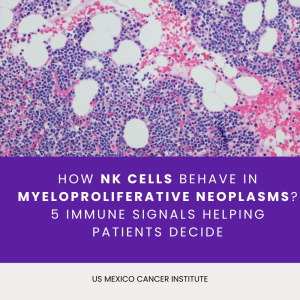
- How NK Cells Behave in Myeloproliferative Neoplasms? 5 Immune Signals Helping Patients Decide - March 2, 2026
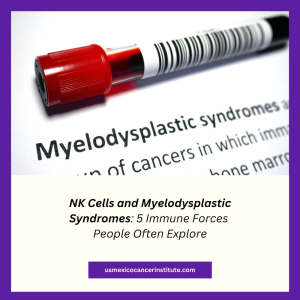
- NK Cells and Myelodysplastic Syndromes: 5 Immune Forces People Often Explore - February 26, 2026