

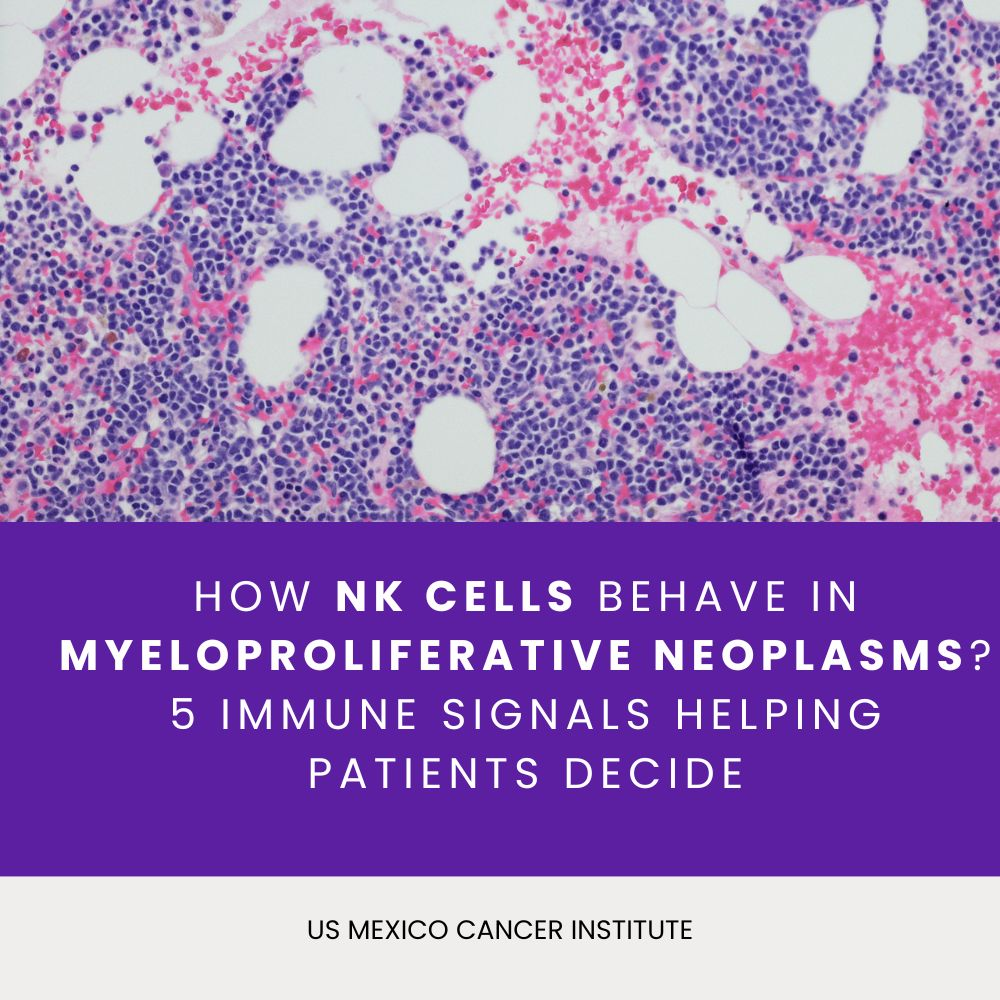
Why Myeloproliferative Neoplasms Change Immune Coordination
Myeloproliferative neoplasms develop inside the bone marrow, where blood cell production and immune signaling are organized together. These conditions are often described in terms of elevated blood counts, clotting concerns, and long-term monitoring. Yet many patients quickly realize something deeper is happening.
Energy changes. Recovery slows. Inflammatory markers rise. The immune system feels strained.
Because these disorders affect the marrow directly, immune balance becomes part of the disease environment itself. Patients frequently search for information about NK Cells and Myeloproliferative Neoplasms, wondering whether immune response remains active and whether timing affects what remains possible.
At US Mexico Cancer Institute, we guide patients who want clarity beyond lab values. They want to understand how cancer natural killer cells behave inside this altered marrow environment and whether immune coordination can still be measured accurately.
Understanding NK cell behavior gives structure to that decision.
What Is Changing Inside the Marrow Environment
To understand the relationship between NK cells and marrow disorders, we must look at the environment where both blood cells and immune cells develop.
In Myeloproliferative neoplasms, bone marrow produces excessive numbers of specific blood cells. This overproduction does more than change counts. It shifts signaling pathways. It increases inflammatory burden. It alters how immune cells communicate with each other.
A natural killer cell operates as an early detector. It recognizes abnormal stress patterns on cells without needing prior exposure. NK cells depend on balance between activating and inhibitory signals. When that balance shifts, NK cells lose precision.
The National Cancer Institute defines natural killer cells as immune cells capable of destroying abnormal cells without immune memory.
In marrow disorders, NK cells often remain present in circulation. However, the crowded and inflamed marrow environment interferes with their signaling accuracy.
The core question becomes:
Is immune coordination still structured enough to respond?
In our ebook, Natural Killer Cells – A Guide for Families and Loved Ones of Stage 4 Cancer Patients, we explain that immune exhaustion is often misunderstood. Families are frequently told that once marrow disorders progress, immune function has collapsed. What we have seen repeatedly is different.
In many patients, NK cells remain present but suppressed by chronic inflammatory signals and marrow interference. Suppression is not the same as absence. This distinction is important because it shapes timing. When coordination still exists, even if reduced, immune clarity may still be measurable.
This understanding reframes how patients approach evaluation. Instead of assuming immune loss, we assess immune readiness directly.
5 Immune Signals Helping Patients Decide
In Myeloproliferative neoplasms, immune changes develop gradually. These five immune signals reflect what patients commonly explore and what we evaluate carefully before recommending immune-based strategies such as natural killer cell therapy.
1. Persistent Inflammation Disrupts NK Cell Signaling Balance
Inflammation is one of the most consistent features of Myeloproliferative neoplasms. Elevated cytokines, oxidative stress, and marrow irritation create a constant inflammatory state.
Research from the National Institute of Allergy and Infectious Diseases confirms that prolonged inflammation interferes with innate immune signaling pathways, including NK cell coordination.
NK cells rely on balanced signaling between activation receptors and inhibitory receptors. Chronic inflammation tips that balance. When activation signals remain high for long periods, NK cells begin to respond less precisely.
Reducing immune interference is often more effective than increasing immune stimulation.
2. Marrow Overcrowding Changes Immune Communication
In Myeloproliferative neoplasms, excessive blood cell production creates physical and signaling congestion within the marrow.
This congestion changes oxygenation, nutrient availability, and cytokine patterns. NK cells operate within this microenvironment. When signaling becomes crowded, their ability to interpret stress markers declines.
This does not mean NK cells disappear. It means the environment limits clarity.
Early evaluation identifies how much coordination remains intact.
3. Myeloproliferative Neoplasms Symptoms Reflect Immune Strain
Common myeloproliferative neoplasms symptoms include fatigue, headaches, clotting risk, and general weakness. These are often explained structurally. However, they also reflect immune stress.
Persistent inflammation increases metabolic demand. Elevated immune activation contributes to systemic fatigue. When immune signaling remains elevated without resolution, resilience decreases.
Understanding the immune component of symptoms helps patients recognize when coordination may still be measurable.
4. Myeloproliferative Neoplasms Treatment Influences Immune Windows
Every myeloproliferative neoplasms treatment plan affects immune behavior. Medications that regulate blood cell production may suppress certain immune pathways. Others may alter cytokine patterns.
These treatments create windows of suppression and partial recovery. NK cell clarity may fluctuate during these phases.
At US Mexico Cancer Institute, we measure immune readiness during recovery windows before recommending nk cell treatment.
Timing must align with immune stability.
5. NK Cells Remain Measurable but Responsiveness Changes
Many patients assume immune collapse occurs early. In reality, NK cells often remain measurable long after structural abnormalities appear.
The issue becomes responsiveness. NK cells may recognize abnormal stress signals but respond more slowly or less precisely.
When responsiveness remains measurable, immune-based strategies may still align with patient goals.
Delaying evaluation reduces clarity over time.

How Cancer Natural Killer Cells Shape Patient Decisions
When patients ask about cancer natural killer cells, we evaluate immune readiness systematically.
We assess:
• NK cell activation markers
• Inflammatory burden
• Cytokine balance
• Treatment-related immune effects
• Overall immune coordination
This structured approach prevents assumption-driven decisions. Instead of reacting to blood counts alone, we evaluate immune behavior directly.
At US Mexico Cancer Institute, immune-based strategies are built on measurable coordination.
Why Patients Choose Our Approach
We differentiate ourselves in ways most providers cannot replicate:
• NK cells prepared with zero cryopreservatives for functional potency
• Molecular hydrogen support to reduce immune interference
• National-level medical leadership guiding decisions
• COFEPRIS-aligned safety oversight
• White-glove care that protects timing and reduces stress
NK cells prepared with zero cryopreservatives maintain stronger receptor integrity and signaling stability. Molecular hydrogen reduces oxidative stress that interferes with immune clarity. National-level oversight ensures every immune decision is guided by evaluation.
Our protocols align with COFEPRIS, Mexico’s Federal Commission for the Protection Against Sanitary Risk, which regulates cellular therapies and patient protection.
Precision and timing define our immune strategies.
How This Information Helps Patients Move Forward
Immune coordination in marrow disorders shifts gradually. NK cells often remain present longer than expected.
Structured immune evaluation clarifies whether coordination remains stable enough to support immune-focused strategies.
At US Mexico Cancer Institute, we measure immune readiness before flexibility narrows.
Protect Immune Timing While Clarity Remains
In Myeloproliferative neoplasms, immune coordination declines gradually, not instantly. NK cells may remain measurable even when inflammation persists.
At US Mexico Cancer Institute, we assess immune readiness while flexibility still exists. If you are reviewing myeloproliferative neoplasms treatment or considering natural killer cell therapy, do not delay evaluation.
Measure coordination now.
Protect immune timing now.
Preserve options while clarity remains measurable.
FAQs
1. Do NK cells still function in Myeloproliferative neoplasms?
Yes. NK cells often remain present but may lose clarity due to inflammation and signaling shifts.
2. What are common myeloproliferative neoplasms symptoms?
Fatigue, headaches, clotting concerns, and weakness are common symptoms.
3. How does myeloproliferative neoplasms treatment affect NK cells?
Treatment can influence immune signaling patterns and create recovery windows.
4. Is natural killer cell therapy suitable for all patients?
No. Immune readiness and timing determine suitability.
5. When should immune evaluation happen?
As early as possible, before prolonged inflammatory stress reduces coordination.

- How NK Cells Behave in Myeloproliferative Neoplasms? 5 Immune Signals Helping Patients Decide - March 2, 2026
- NK Cells and Myelodysplastic Syndromes: 5 Immune Forces People Often Explore - February 26, 2026
- What NK Cells Reveal in Multiple Myeloma? 6 Immune Insights Families Are Looking For - February 24, 2026