
Why Families Search Cancer Natural Killer Cells
Families do not search cancer natural killer cells casually. This question usually appears when standard explanations stop providing clarity, outcomes feel uncertain, and families need to understand what still matters inside the immune system.
At US Mexico Cancer Institute, we meet families at this exact moment every day. Many arrive believing the immune system has already stopped working. What we explain instead is that immune systems often become overwhelmed long before they stop functioning. NK cells frequently remain present, even when options feel limited.
Understanding cancer natural killer cells reshapes how families evaluate timing, immune readiness, and next steps. This guide explains the immune insights families need when decisions cannot be delayed.
Understanding Cancer Natural Killer Cells Clearly
A natural killer cell is a white blood cell that belongs to the innate immune system. Unlike immune cells that require prior exposure or immune memory, NK cells respond immediately to abnormal cellular behavior.
NK cells continuously monitor tissues, blood, and organs for signals that a cell has lost normal regulation. These signals may result from genetic damage, viral stress, chronic inflammation, or malignant transformation.
NK cells are recognized globally as a core component of innate immune defense. The National Cancer Institute explains that natural killer cells can identify and respond to abnormal cells without prior immune sensitization, which is why they remain relevant even when other immune responses slow. This recognition role reinforces why families evaluating cancer natural killer cells should focus on immune clarity rather than assuming immune absence.
When families hear about natural killer cell therapy or nk cell treatment, the conversation is not about replacement. It is about whether immune clarity still exists. As explained in our ebook Natural Killer Cells – A Guide for Families and Loved Ones of Stage 4 Cancer Patients, immune overload is often mistaken for immune failure. NK cells are frequently still present but suppressed.
7 Immune Insights Families Need When Options Are Limited
When options feel limited, clarity becomes essential. These seven immune insights help families understand what still matters inside the immune system, how natural killer cells behave under stress, and why timing shapes what remains possible.
At US Mexico Cancer Institute, we use these insights to guide evaluation and decision-making while immune clarity still exists.
1. Immune Overload Is Often Misread as Immune Failure
One of the most important insights families learn is that immune exhaustion does not equal immune absence. NK cells often remain present even late in disease.
Chronic inflammation, repeated treatments, and prolonged stress interfere with immune signaling. NK cells lose clarity before they disappear. Understanding this distinction prevents unnecessary delay and missed evaluation windows.
2. NK Cells Respond Without Immune Memory
Another reason cancer natural killer cells matter is their independence from immune memory.
NK cells do not require prior exposure to recognize abnormal behavior. This allows them to remain active even when immune systems are strained or delayed. This characteristic explains why NK cells remain part of immune-focused conversations when timing plays a defining role
3. Timing Shapes Immune Readiness
NK cells respond best when immune clarity still exists. Waiting until prolonged suppression develops narrows options that were previously available.
At US Mexico Cancer Institute, early immune evaluation helps determine whether nk cell treatment aligns with the patient’s current immune state. Timing often determines opportunity.
4. Inflammation Interferes With Immune Recognition
Inflammation creates immune noise. When inflammatory signaling remains elevated, NK cell recognition becomes less accurate.
Prolonged inflammation interferes with immune signaling accuracy and reduces coordination between immune pathways. Research supported by the National Institutes of Health shows that chronic immune interference disrupts innate immune communication, including NK cell signaling, which explains why reducing immune noise often restores immune clarity more effectively than stimulation. This reinforces why immune balance remains central when families consider nk cell treatment timing.
5. Immune Balance Matters More Than Intensity
Escalation does not restore immune coordination. NK cells function best when immune systems are regulated, not pressured.
This understanding helps families move from reaction to evaluation.
6. NK Cells Influence Immune Coordination
NK cells help guide how immune responses escalate, stabilize, and resolve. Their role is not isolated. They influence immune balance across systems.
Understanding this coordination helps families see why immune clarity matters across different cancers.
7. Individual Evaluation Guides Decisions
No two immune systems respond the same way. Families benefit most from individualized immune evaluation rather than assumption.
This approach defines how we guide care at US Mexico Cancer Institute.

How These Insights Apply Across Cancer Types
The immune principles above apply across the cancers families most often ask about. Below is how cancer natural killer cells connect to each condition.
Brain Tumors
Families researching Brain tumors, what causes brain tumors, or brain tumors treatment often ask whether immune pathways still function within the central nervous system.
NK cells face signaling challenges in brain environments, yet immune clarity may still exist. Conversations around NK Cell Therapy for Brain Tumors focus on immune readiness and timing rather than assumption.
Renal Cell Carcinoma
In Renal Cell Carcinoma, immune signaling plays a significant role. Families exploring renal cell carcinoma treatment or renal cell carcinoma symptoms often encounter immune-based discussions.
Understanding NK Cell Mechanisms in Renal Cell Carcinoma helps families evaluate whether immune pathways remain responsive.
Gastric Cancer
Families researching Gastric Cancer, gastric cancer treatment, or gastric cancer symptoms often face late-stage immune suppression.
NK Cells in Gastric Cancer are influenced by inflammatory burden. Reducing immune interference supports clearer evaluation.
Melanoma
Melanoma, melanoma cancer, and melanoma treatment are closely associated with immune response discussions.
NK Cells in Melanoma support immune surveillance. Understanding immune balance early helps families assess timing before options narrow.
Head and Neck Cancers
In Head and Neck Cancers, chronic inflammation and immune signaling disruption are common.
Families researching head and neck cancers symptoms or immunotherapy for head and neck cancers often ask about NK Cell Therapy for Head and Neck Cancer as immune readiness becomes a concern.
Multiple Myeloma
Multiple Myeloma significantly affects immune environments. Families researching multiple myeloma treatment or multiple myeloma symptoms often encounter immune fatigue.
Discussions around NK Cell Therapy for Multiple Myeloma focus on immune clarity rather than immune strength.
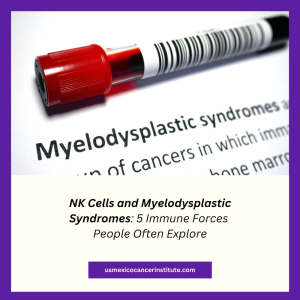
Myelodysplastic Syndromes
Families asking what is myelodysplastic syndromes or exploring myelodysplastic syndromes treatment are often navigating immune dysfunction.
Understanding the Role of NK Cells in Myelodysplastic syndromes helps families assess timing and remaining immune coordination.
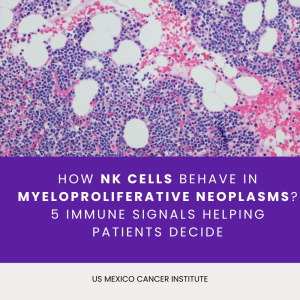
Myeloproliferative Neoplasms
In Myeloproliferative neoplasms, immune regulation and inflammation are central considerations.
Families researching myeloproliferative neoplasms symptoms or myeloproliferative neoplasms treatment often explore NK Cells and Myeloproliferative Neoplasms to understand immune balance.
Why Patients Choose Our Approach
We differentiate ourselves in ways most providers cannot replicate:
• Fresh, never-frozen NK cells for functional potency
• Molecular hydrogen support to reduce immune interference
• National-level medical leadership guiding decisions
• COFEPRIS-aligned safety oversight
• White-glove care that protects timing and reduces stress
At US Mexico Cancer Institute, safety oversight matters as much as immune strategy. Our processes align with standards established by COFEPRIS, Mexico’s Federal Commission for the Protection Against Sanitary Risk, which governs cellular therapies and health product safety. This alignment supports transparency, patient protection, and confidence for families making time-sensitive decisions around natural killer cell therapy.
When families evaluate options, one truth becomes clear: precision and timing shape immune outcomes.
How This Guide Helps Families Move Forward
This guide provides a clear immune framework families can rely on. Each condition-specific article expands one area of immune understanding while preserving cohesion.
At US Mexico Cancer Institute, our role is not to push decisions. It is to guide families toward informed evaluation while immune clarity still exists.
Timing Matters Now
Understanding cancer natural killer cells changes how families evaluate next steps.
At US Mexico Cancer Institute, we see how clarity leads to better decisions while immune capacity still remains. If you are reviewing nk cell treatment or immune-focused options, now is the moment to seek individualized insight before immune clarity narrows.
FAQs
1. What are cancer natural killer cells?
They are immune cells that help identify abnormal cellular behavior without immune memory.
2. Do NK cells still function when options feel limited?
Often yes. NK cells are frequently suppressed rather than absent.
3. Is natural killer cell therapy the same for every cancer?
No. Individual immune evaluation determines appropriateness.
4. How does inflammation affect nk cells?
Inflammation interferes with immune recognition and coordination.
5. When should families consider immune evaluation?
As early as possible, before prolonged suppression develops.

- How NK Cells Behave in Myeloproliferative Neoplasms? 5 Immune Signals Helping Patients Decide - March 2, 2026
- NK Cells and Myelodysplastic Syndromes: 5 Immune Forces People Often Explore - February 26, 2026
- What NK Cells Reveal in Multiple Myeloma? 6 Immune Insights Families Are Looking For - February 24, 2026